
By Suleman Chaudhry
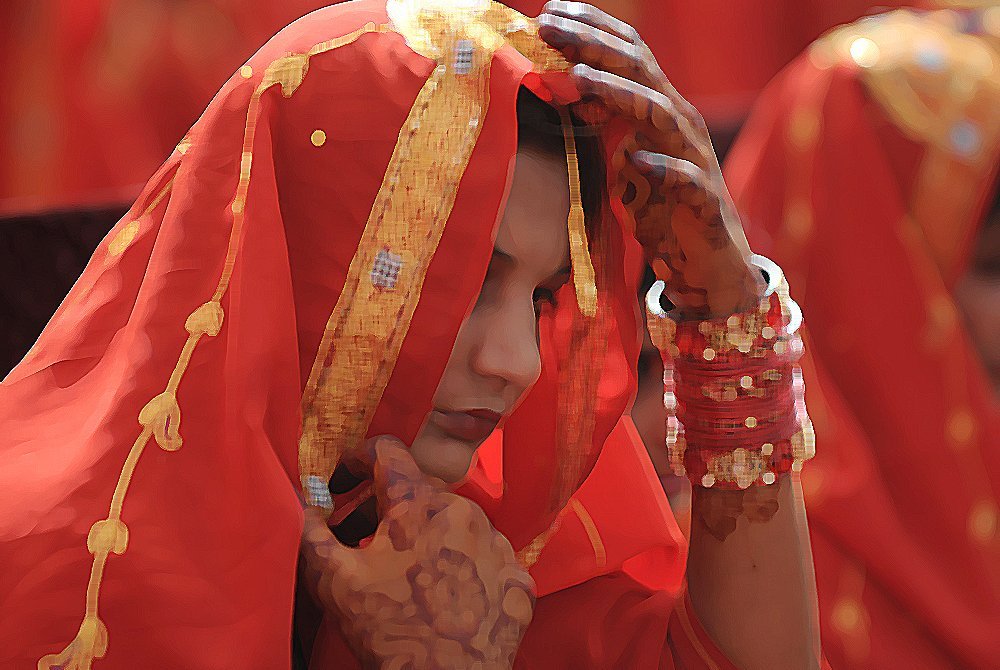
LAHORE: Pakistan faces the daunting task of eliminating child marriage, as the country is home to nearly 19 million child brides. 1 in 6 young women in Pakistan were married in childhood, putting their health and well-being at risk and compromising their future. According to the latest report released by UNICEF, titled “A Profile of Child Marriage in South Asia,” it presents the latest situation of underage marriage in the region.
The report used data collected from women aged 20 to 24 years who were married before the age of 18. The legal age of marriage for females in Pakistan is 16, except for Sindh province, where the minimum age is 18. Out of 19 million, 4.6 million were married before the age of 15, and 18.9 million were married before the age of 18.
The report found that South Asia is the region with the highest number of child brides, accounting for around 290 million child brides, which represents 45 per cent of the global total.
The agency mentioned that recent decades have seen remarkable progress in reducing child marriage in this region. However, the combined impact of the COVID-19 pandemic, economic shocks, conflict, and climate change threatens to erode these hard-won gains. Reaching the global SDG target to end child marriage by 2030 will only be possible if progress to eliminate this harmful practice is accelerated.
Around one in four young women in South Asia were first married or in a union before their 18th birthday, and child brides in South Asia are more likely to live in poor households, have less education, and reside in rural areas, the report said.
Child marriage is less common among boys in the region, though it does occur. In Nepal, nearly 1 in 10 young men were married in childhood. Around one in four young women in South Asia were first married or in a union before their 18th birthday.
Don’t forget to Subscribe our channel & Press Bell Icon.
The report also highlighted the health issues of child brides in the region, indicating that three in four child brides in the region give birth while they are still adolescents, and over a third give birth before they turn 18. South Asia leads the world in progress on reducing child marriage. However, acceleration is required to meet the target of eliminating child marriage by 2030; compared to the last decade, the rate of decline would need to be seven times faster. The vast majority of child brides in South Asia are out of school. In many places, marriage and schooling are viewed as incompatible.
In some countries in South Asia, child brides are more likely to report that wife-beating is justified and to experience such violence themselves. Around one in four young women in South Asia were first married or in a union before their 18th birthday. The numbers of child brides in millions for specific countries are: India 216.6 million, Bangladesh 41.6 million, Pakistan 19.4 million, Nepal 5.3 million, Afghanistan 4.0 million, Sri Lanka 983,400, Bhutan 79,200, and Maldives 39,700.
Regarding the benefits of avoiding child marriage, the report pointed out that girls from wealthier families have benefited more compared to those from poor families. Child brides in South Asia are more likely to live in poor households, have less education, and reside in rural areas.
However, the report pointed out that poverty and illiteracy are driving factors behind child marriage, with 20 percent from rural and 15 percent from urban areas, while 27 percent belong to the poorest and 10 percent belong to the richest. 25 percent of Pakistani brides have no education, while only 10 percent have secondary or higher education.

Click here to read the July issue of Republic Policy Magazine.
Many child brides marry someone within five years of their own age; however, some are in marriages with large age gaps. In Pakistan, child brides are married to men who are at least 10 years older. In Pakistan, 4 percent of grooms were younger than their child brides, 44 percent were up to 4 years older, 34 percent were 5 to 9 years older, and 18 percent were 10 or more years older.
Three in four child brides in the region give birth while they are still adolescents, and over a third give birth before they turn 18. The vast majority of child brides in South Asia are out of school.
The profile of child marriages in South Asia also indicated that access to reproductive health services for child brides varies across countries. In Pakistan, child brides are less likely to have a skilled attendant at birth, the report said.
Girls who marry in childhood face immediate and lifelong consequences. They are less likely to remain in school and face an increased risk of early pregnancy, which, in turn, increases the risk of child and maternal health complications and mortality, according to UNICEF’s reports.
The practice can also isolate girls from family and friends and exclude them from participating in their communities, taking a heavy toll on their mental health and well-being.
Subscribe our website for latest updates:
https://republicpolicy.com/shop/
Read More