
In a bold escalation of global trade tensions, former U.S. President Donald Trump announced that his administration would impose an additional 10% tariff on any country that aligns itself with the policies of BRICS—a bloc of major developing nations now positioning itself as a counterweight to Western-led institutions.
The statement, posted on Trump’s Truth Social platform, came as BRICS leaders kicked off a high-profile summit in Rio de Janeiro. The former president issued a stark warning: “Any country aligning themselves with the Anti-American policies of BRICS will be charged an ADDITIONAL 10% Tariff. There will be no exceptions.”
Although Trump didn’t elaborate on what constitutes “Anti-American policies,” the timing of his message—mere hours after BRICS leaders released a joint statement criticizing rising tariffs—left little doubt about the target of his warning.
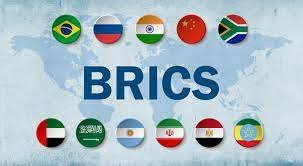
The BRICS group, originally formed in 2009 with Brazil, Russia, India, China, and later South Africa, has expanded rapidly. The current summit in Brazil includes newer members like Egypt, Ethiopia, Iran, Saudi Arabia, Indonesia, and the United Arab Emirates. With over 30 countries expressing interest in joining the bloc, BRICS now represents over half the global population and 40% of the world’s economic output.
At the summit’s opening, Brazilian President Luiz Inácio Lula da Silva emphasized BRICS’ growing role in reshaping the global order. Comparing the bloc to the Cold War-era Non-Aligned Movement, Lula said, “With multilateralism under attack, our autonomy is in check again. BRICS is the heir to that legacy.”
Lula also condemned global protectionism, pointing indirectly at Trump’s trade-first approach. In his remarks, he urged BRICS to push for reform of outdated global institutions like the United Nations Security Council and the IMF, asserting that current governance models no longer reflect a multipolar world.
The BRICS joint statement issued on Sunday addressed several international issues. The group expressed concern over rising trade barriers, denounced attacks on Iran’s civilian infrastructure, condemned violence in Gaza, and called out terrorism in Indian-administered Kashmir. It also advocated for the inclusion of Ethiopia and Iran into the World Trade Organization and emphasized restoring the WTO’s capacity to resolve trade disputes.
Further initiatives from the summit include a proposal to launch the BRICS Multilateral Guarantees program under the bloc’s New Development Bank. The goal is to reduce financing costs and increase investment among member states. In a separate statement, BRICS leaders also addressed the risks of artificial intelligence, calling for regulation to ensure ethical use, data privacy, and fair compensation models.
Despite internal differences—ranging from regional rivalries to conflicting foreign policies—BRICS leaders attempted to project unity. Indian Prime Minister Narendra Modi and South African President Cyril Ramaphosa attended in person. However, Chinese President Xi Jinping opted to send his premier, and Russian President Vladimir Putin appeared virtually, due to an ICC arrest warrant linked to the Ukraine conflict.
Brazil, which will also host the upcoming UN Climate Summit, used the BRICS gathering to spotlight environmental issues. Lula’s administration announced that China and the UAE had expressed strong interest in investing in the proposed Tropical Forests Forever Facility—an ambitious effort to finance the protection of endangered tropical ecosystems.
Trump’s aggressive tariff warning comes just days before his administration’s July 9 deadline to finalize new trade deals and enforce punitive tariffs. His stance reflects an intensifying effort to isolate countries diverging from the U.S.-led global order, even as emerging powers like BRICS push for greater autonomy, economic equity, and institutional reform on the world stage.
As the BRICS summit concludes, the growing divide between established Western alliances and an increasingly assertive Global South is becoming more pronounced. Whether Trump’s tariff threats deter countries from engaging with BRICS—or drive more into its orbit—remains to be seen. But one thing is clear: the global balance of power is shifting, and BRICS is no longer content to sit on the sidelines.