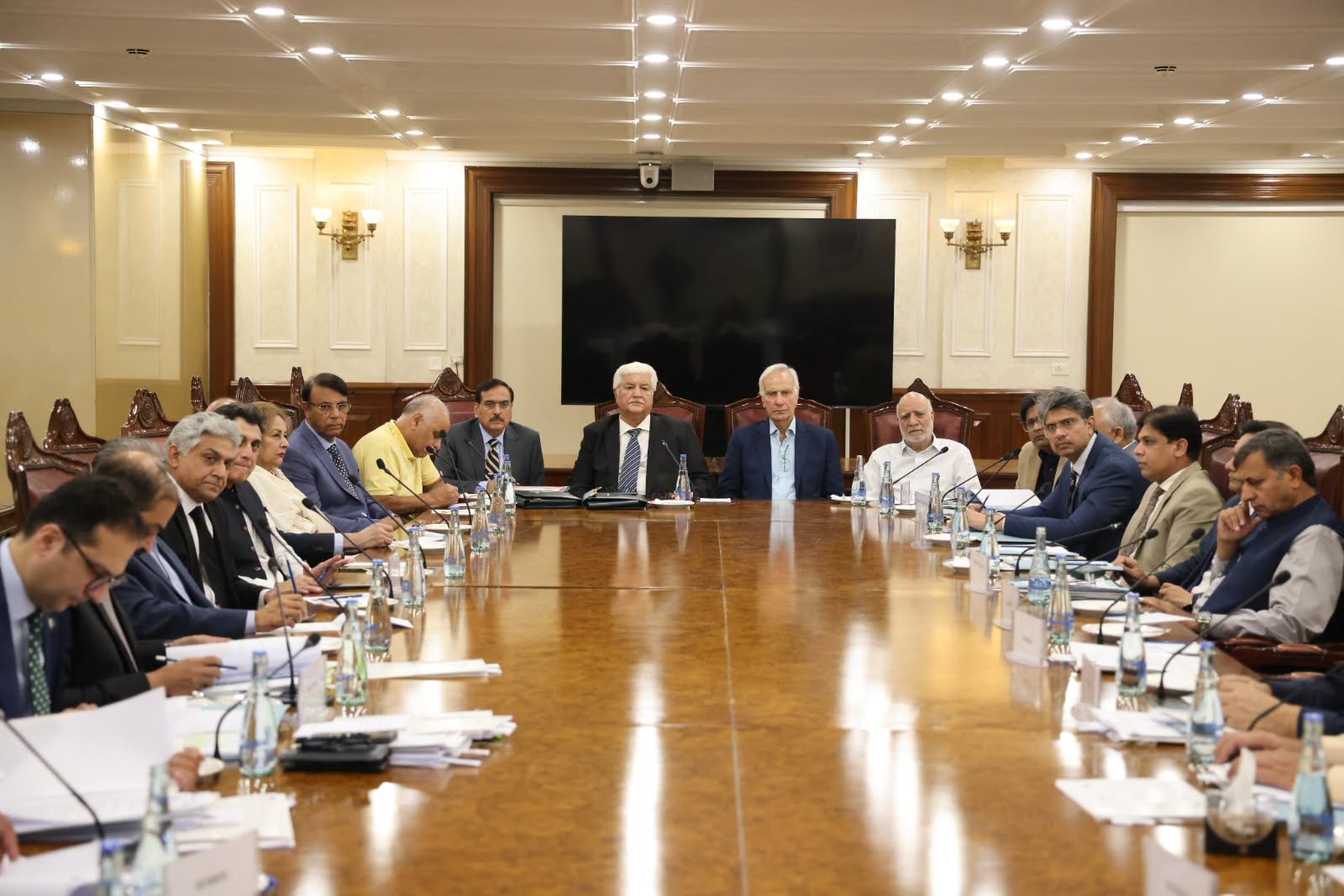
Finance Minister Muhammad Aurangzeb on Monday highlighted climate change and population growth as Pakistan’s two “most critical existential challenges,” underlining their centrality to the country’s long-term economic prospects. Speaking at the opening of the two-day Pakistan Population Summit 2025 in Islamabad, Aurangzeb stressed that while short-term economic recovery remains important, Pakistan’s vision of a three-trillion-dollar economy by 2047 cannot be realised without addressing these twin pressures.
Aurangzeb emphasised that Pakistan has long understood the “what” and “why” of population challenges; the true task lies in the “how” of implementation. He underscored that population growth constrains real economic gains, noting that while GDP figures may rise, unchecked population expansion dilutes per capita progress. Harnessing the demographic dividend, particularly Pakistan’s youth who comprise 64% of the population, is essential for sustainable development.
The minister also addressed climate risks, noting that recent floods alone are expected to reduce GDP by 0.5% this year. He highlighted the role of finance ministries in mainstreaming climate and population policies through budgeting and planning, while technical ministries design policy frameworks. Aurangzeb called for integrated, cross-sectoral action to combat stunting, learning poverty, and urban sanitation deficits, emphasising female workforce participation as a driver of growth.
Digital innovation was presented as a key engine for economic transformation, with Aurangzeb pointing to AI, blockchain, Web 3.0, and global crypto participation as avenues to empower youth. He stressed the need for a supportive regulatory framework and public-private partnerships that link financing to measurable outcomes rather than mere expenditure.
On funding, Aurangzeb highlighted Pakistan’s growing self-reliance, citing domestic financing of flood relief without international appeals. He also welcomed multilateral support, including the World Bank’s $2 billion annual commitment, and urged Pakistan to develop investable projects to fully utilise such resources.
The minister concluded that Pakistan’s path to sustainable growth depends on harnessing human capital, addressing climate vulnerabilities, and prioritising performance-based financing—ensuring that both population management and climate resilience become central pillars of national development.
Keywords: Pakistan population climate economy youth development stunting finance innovation
<a href=”http://republicpolicy.com”>Follow republicpolicy.com</a>