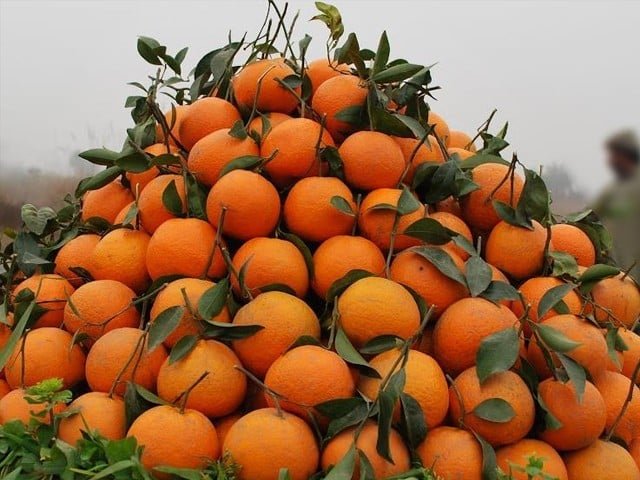

The All Pakistan Fruit and Vegetable Exporters, Importers and Merchants Association has set an ambitious target of exporting 300,000 tonnes of kinnow this season, aiming to earn $110 million in foreign exchange. This comes after 250,000 tonnes were exported last year, generating $95 million. While the bumper crop of 2.7 million tonnes indicates strong production growth compared to last season’s 1.7 million tonnes, export levels remain significantly below the 550,000 tonnes achieved five years ago.
Experts point to the lack of research and reliance on old citrus varieties as the primary reason for the decline. Introducing climate-resilient and export-friendly varieties such as seedless kinnow, kinnow gold, kinnow late, mandarin nova, and mandarin clementine, alongside improved planting material, can help farmers meet global market standards. Programs like the Australia Pakistan Agriculture Sector Linkages initiative have shown that certified nurseries, quality control, modern packing houses, and cold treatment practices increase international acceptance and competitiveness.
Logistical challenges also limit export potential. The suspension of trade with Afghanistan has disrupted land routes to Central Asia and Russia, forcing reliance on costly and time-consuming alternatives through Iran, with freight rates already up by 100 percent.
To unlock the full potential of Pakistan’s kinnow sector, the government must develop a national-level strategy. Short-, medium-, and long-term plans should focus on strengthening research and development, acquiring new varieties from global partners, upgrading processing units, promoting modern irrigation methods, and improving supply chain efficiency. With coordinated efforts, Pakistan has the potential to raise kinnow export earnings to $400 million within five years, ensuring sustainable growth for farmers and enhanced foreign exchange earnings for the country.