
Tariq Mahmood Awan
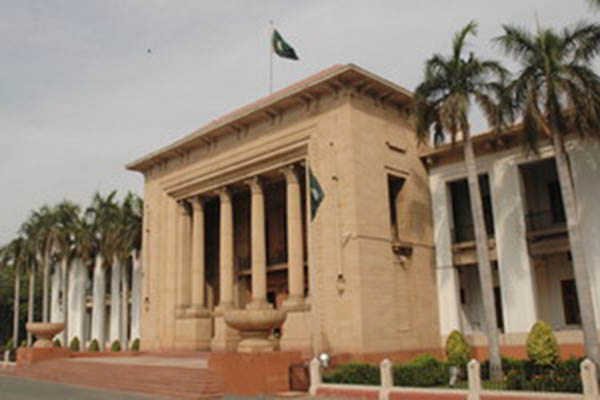
In any federal parliamentary system of governance, the legislature is mandated to perform two fundamental functions. One function is to legislate on the subjects assigned to it. The second function is to hold the executive accountable for its use of authority on the subjects enumerated to it for legislation. In Pakistan these functions are distributed through the constitutional scheme which defines federal and provincial jurisdictions. The Constitution gives the provinces wide law-making powers on residual subjects in line with schedule IV of the constitution of Islamic Republic of Pakistan. At the same time Article 130 (6) and Article 140-A stress that the provincial executive and local governments must remain accountable to the provincial legislature. Despite the autonomy provided for the local governments, they are still accountable to the provincial legislature, at least, constitutionally. This scheme looks good in theory but the lived reality of the Punjab Assembly shows a different picture.
The Punjab Assembly is perhaps the least empowered democratic institution in Pakistan, along with other provincial assemblies. This weakness is not accidental. It is built into the structure of the governance system. The Assembly may have constitutional authority to legislate and to hold the executive accountable but it does not have the institutional power to enforce its authority. The entire design of the provincial system is structured in such a way that the Assembly functions only as a symbolic body. It is expected to legislate and to oversee the executive but its hands remain tied because the executive that it is expected to supervise does not correspond to it.
The Assembly has two inherent powers. First it can legislate on all residual subjects not included in the federal legislative list. Second it can hold the political executive and the bureaucratic executive accountable for implementation of these laws. Accountability tools are available. Question hours can be held. Adjournment motions can be moved. Departments can be questioned. Committee systems can investigate. Public Accounts Committees can audit. These tools exist on paper but the structure of power prevents them from being effective. Committees cannot summon key officials. Legislators cannot question the most powerful officers. Oversight becomes cosmetic. The structure defeats the spirit of the Constitution.
For many years the Punjab Assembly has not been able to exercise independent legislative power. Private member bills rarely become law. Public bills dominate the agenda. These bills originate from departments. Cabinets approve them. Bureaucracies draft them. The Assembly only stamps them. This means that legislative independence is limited. The Assembly is not a law making house in the true sense. It is mostly a platform where pre drafted decisions are passed through the formal process.
Executive accountability is even weaker. The Punjab Assembly cannot hold the Chief Secretary accountable, as the latter is a federal civil servant. It cannot question the federal Pakistan Administrative Service or the Police Service of Pakistan officers who run the provinces. It cannot demand explanations for administrative failures. It cannot enforce responsibility for misuse of authority. Public Accounts Committees cannot call federal officers who serve even inside Punjab. They cannot enforce decisions on departments that headed by the federal services. The entire provincial oversight structure stands compromised. The Assembly is expected to ensure accountability but the federal officers who implement government decisions are not answerable to it. This proves, even the defeat of the very concept of the parliamentary oversight. It happens, because , there is a unitary bureacuracy in palce in a federal parliamentary Pakistan.
This problem becomes even deeper when we move from the provincial tier to the local tier. Article 140-A requires political devolution. It requires financial devolution. It requires administrative devolution. Local governments must have power to make decisions. They must have power to manage resources. They must have authority to hold their officers accountable. But in Punjab district governments are largely run by federal officers as deputy commissioners and assistant commissioners. These officers do not report even to the provinces, let alone to the local governments. Then, they do not even report to the provincial Assembly. They only report to the federal establishment division for their terms and conditions of services. So the province cannot supervise them. The Assembly cannot supervise them. Local governments cannot supervise them. A democratic system becomes meaningless when the implementers are not accountable to elected institutions.
This misalignment between the political executive and the bureaucratic executive destroys the entire purpose of governance. A Chief Minister is expected to run the province. A Cabinet is expected to set policy. The Assembly is expected to scrutinize the use of authority. But none of these roles can be performed when the officers who run districts or manage departments are not accountable to provincial authority, being the federal civil servants. The Chief Minister cannot remove them. The Cabinet cannot question them. The Assembly cannot discipline them. Their corruption cannot be checked. Their negligence cannot be corrected. Their administrative failures cannot be reviewed. This makes all accountability tools irrelevant and hollow. Thus, this structure fails the governance system.
When the political government in the federation and in the province belong to the same party, some problems get managed. They get managed through informal political channels. But this is not structural accountability. It is temporary management. It does not create stable governance. It does not create lawful accountability. It does not strengthen institutions. It creates dependence on political alignment instead of constitutional alignment. When governments change the entire system collapses again.
The real issue is structural misalignment. The provincial political executive and the federal bureaucratic executive working in the provinces, do not share the same DNA. The federal bureaucratic executive does not correspond to the provincial legislature. Officers who implement provincial policy should come from a provincial civil service that corresponds to the elected provincial government. This alignment must be rooted in the federal scheme of the Constitution. The Constitution gives the provinces the authority to run their own executive. It expects that provincial subjects will be governed by provincial officers. It expects that accountability will be exercised by the provincial legislature. None of this is happening in Punjab. This is the core problem.
To strengthen the Punjab Assembly reforms must start with executive alignment. The political executive must align with the bureaucratic executive. The bureaucratic executive must align with the Assembly. Provincial civil services must be strengthened. They must be rooted in provincial law. They must be accountable to the Chief Minister. They must be answerable to the Cabinet. They must be under the oversight of the Assembly. Only then can committees function. Only then can Public Accounts Committees hold officers accountable. Only then can questions be answered. Only then can administrative corruption be controlled. Only then can the provincial governance structure perform effectively.
Empowering the Punjab Assembly is not only a provincial need. It is a national need. A weak provincial legislature weakens the entire federal structure. A weak provincial legislature weakens local governments. A weak provincial legislature weakens democratic accountability. A weak provincial legislature weakens service delivery. Without executive alignment the Assembly will remain a ceremonial institution. With executive alignment the Assembly can become a constitutional institution. This is the only path toward synchronized governance. This is the only path toward functional accountability. This is the only path toward improved public service.