
Mudassir Rizwan
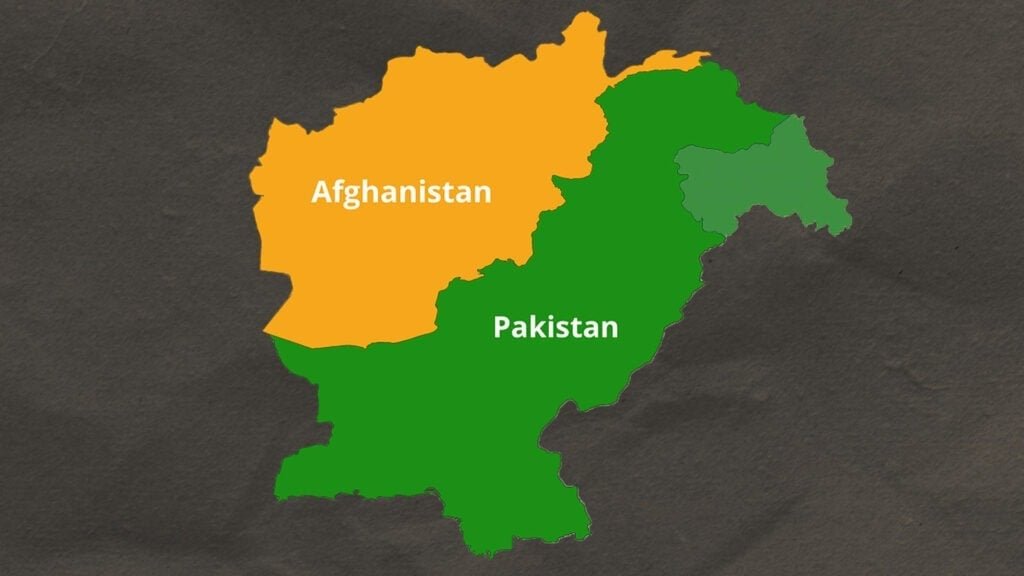
For years, Pakistan has consistently warned that militant groups operate from Afghan territory, posing serious threats to its national security. These warnings were frequently contested by Kabul and often lost amid competing narratives. The latest monitoring report submitted to the United Nations Security Council, however, marks a decisive turning point in this discourse. It does not simply echo Pakistan’s position; it validates it in clear and unambiguous terms. The Taliban’s longstanding claim that Afghan soil is not being used by terrorist groups is explicitly described as “not credible,” while the continued presence and operational activity of outfits such as the Tehreek-e-Taliban Pakistan (TTP) is documented in stark detail. This shift transforms the debate from perception-driven arguments to evidence-based assessment, giving Pakistan’s position international legitimacy.
The report’s findings leave little room for ambiguity. Multiple militant organisations remain active inside Afghanistan, with TTP singled out as the most immediate and persistent threat to Pakistan. The scale of violence attributed to the group in 2025 alone, running into hundreds of attacks, underscores that the issue is far from residual or isolated. It is a structural and entrenched problem. Importantly, the report notes that many of these attacks are either planned or facilitated from Afghan territory, directly corroborating Pakistan’s long-held stance on the existence of cross-border sanctuaries.
Equally significant is the report’s scrutiny of Taliban assurances. Since returning to power, the Afghan leadership has repeatedly pledged that its territory would not be used to threaten other states. Pakistan relied on these assurances, especially after playing a key role in facilitating the US-Taliban truce that helped end two decades of conflict. The UNSC monitoring team’s conclusion that such assurances lack credibility is therefore more than a diplomatic observation; it is a direct indictment of unfulfilled commitments. This explains why trust between Islamabad and Kabul has steadily eroded, and why repeated tensions along the border have become a recurring feature of bilateral relations.
The report reveals that the challenge is not only a security failure but also a political one. Internal divisions within the Taliban leadership regarding the TTP’s treatment are highlighted. Some leaders recognise the negative impact of TTP activity on relations with Pakistan, while others remain hesitant to take decisive action. This indecision has consequences beyond bilateral diplomacy. Frequent border closures, trade disruptions, and rising security incidents have tangible economic costs, affecting both nations. The report underlines that instability does not fall solely on Pakistan; Afghanistan itself bears significant financial and social consequences.
The international dimension of the report is equally crucial. Alongside the TTP, the continued presence of Al Qaeda, ISIL-K, and other regional groups underscores that the threat is systemic, not episodic. While the Taliban may have reduced the public visibility of some actors, the operational environment remains permissive for regrouping, training, and planning attacks. This scenario was a core regional concern at the time of foreign troop withdrawals, and the UNSC report confirms that these fears were well-founded. The findings suggest that international monitoring and accountability mechanisms are essential to prevent the resurgence of terrorist networks that exploit weak governance and porous borders.
For Pakistan, the UNSC report represents validation but not resolution. Being proven right does not eliminate the threat, nor does it compel immediate action from Kabul. What it does provide is leverage. A UN-mandated body formally questioning Taliban claims and documenting the persistence of cross-border militancy significantly narrows the space for denial. The issue can no longer be framed as a bilateral dispute or dismissed as perception; it is now an internationally recognised security concern backed by evidence.
The urgency lies in the next steps. Pakistan’s demand remains consistent and limited: Afghan territory must not be used by any group to launch attacks across the border. This is a basic obligation under international norms, and the UNSC report strengthens Pakistan’s case for sustained pressure on Kabul to honour it. Diplomatic engagement, incentives, and regional cooperation all have a role to play, but accountability cannot be ignored. Promises without enforcement have repeatedly failed, and the report highlights that time alone has not moderated Taliban behaviour. Four years after the US withdrawal, militancy has not diminished through benign neglect; it has adapted and evolved. The cost of inaction is measured not only in lives lost but also in deepening mistrust and economic disruption on both sides of the border.
The report serves as a pivot point for regional security. It confirms Pakistan’s warnings while raising the stakes for Afghanistan and the broader international community. The UNSC’s assessment puts Kabul on notice, not by a neighbour it frequently accuses of bias, but by the international system itself. Should this documented evaluation fail to translate into concrete steps to rein in militant outfits, the consequences will extend far beyond Pakistan’s borders. The question will no longer be whether Pakistan’s concerns are justified, but how long the region can sustain the impact of ignored cross-border threats.
Accountability, enforcement, and international engagement are now indispensable. Regional stakeholders, including the Taliban, must recognise that tolerance for unmonitored militant activity has reached its limit. The UNSC report provides a framework for action: verification, monitoring, and structured pressure. Pakistan can now seek more robust support to ensure that Afghan territory is not a haven for violence. It also reinforces the message that cross-border militancy is not merely a bilateral irritant; it is a threat to regional peace, economic stability, and international norms.
In conclusion, the UNSC monitoring report validates Pakistan’s long-standing concerns about cross-border militancy and exposes the shortcomings of Taliban commitments. It documents an entrenched threat, highlights political failures within Afghanistan, and signals the urgency of enforceable solutions. The report should serve as both a warning and a roadmap. Failure to act will carry human, economic, and geopolitical costs. Conversely, constructive engagement, backed by credible international pressure, offers a path toward mitigating the threat, strengthening regional trust, and ensuring that Afghanistan does not remain a base for attacks against Pakistan.