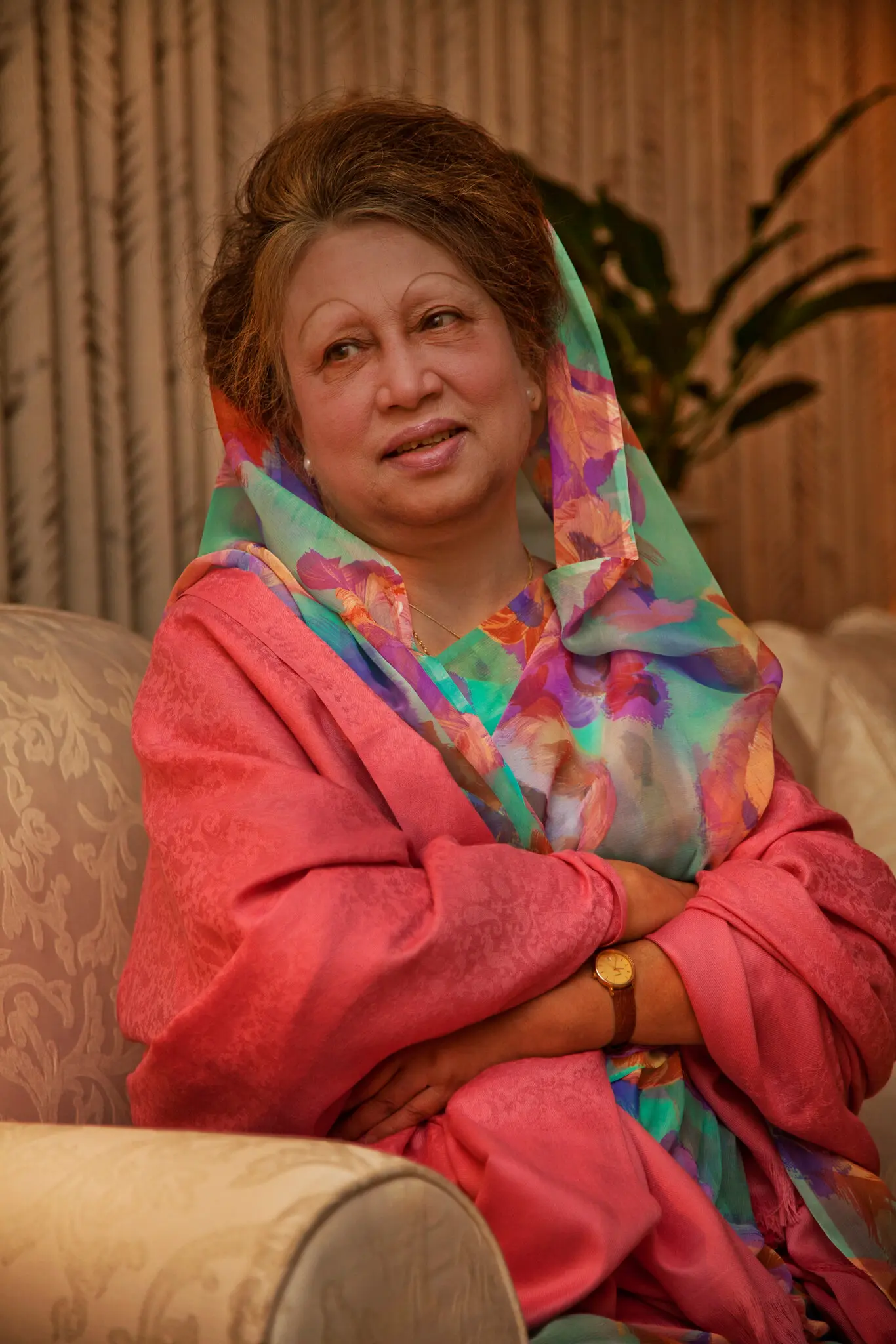

Bangladesh’s first female prime minister and a towering figure in its political history, Begum Khaleda Zia, passed away on Tuesday after a long struggle with illness, her party, the Bangladesh Nationalist Party (BNP), announced. She was 80.
According to the BNP, Khaleda Zia died at around 6:00am, shortly after the Fajr prayer. Doctors said she had been suffering from multiple serious health conditions, including advanced liver cirrhosis, heart and chest problems, diabetes, and arthritis. Party leaders and supporters across the country expressed deep grief, offering prayers for her soul.
Interim leader Muhammad Yunus described her as a “great guardian” of the nation, crediting her steadfast leadership with helping Bangladesh resist undemocratic forces. Former prime minister Sheikh Hasina, her long-time political rival, also expressed condolences.
Despite years of ill health and imprisonment, Khaleda Zia had vowed late last year to take part in the upcoming February 2026 elections. However, her condition worsened in recent weeks, and she was hospitalised before eventually passing away.
The government has declared three days of state mourning. Funeral prayers will be held in Dhaka, after which she will be laid to rest beside her late husband, former president Ziaur Rahman.
Khaleda Zia’s death marks the end of an era defined by fierce political rivalry, democratic struggle, and her historic role as the first woman to lead Bangladesh.