Ahmed Naveed
There are many ways a state can fail its citizens. It can fail through incompetence, through corruption, through indifference. But perhaps the cruelest failure is the one that leaves elderly people waiting for money they have already earned while bureaucrats shuffle papers and universities claim financial constraints despite having surplus funds sitting idle.
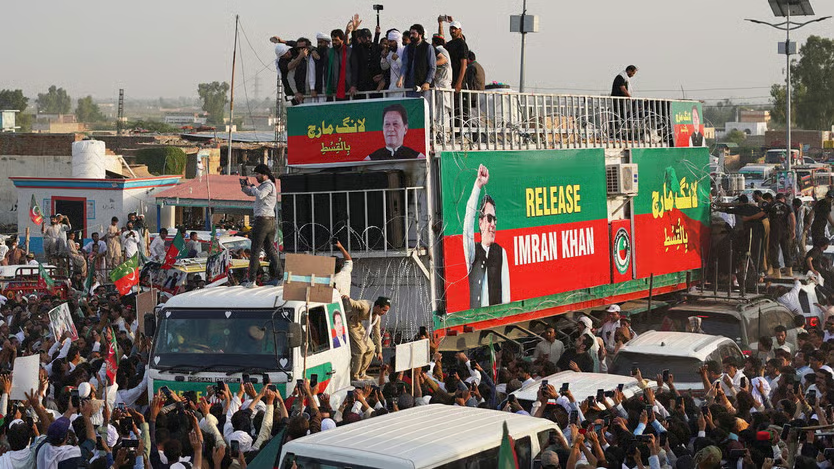
The retired employees and teachers of Federal Urdu University of Arts, Science and Technology gathered outside Karachi Press Club recently. They were not asking for charity. They were not demanding special privileges. They were asking for their pensions, withheld for the past five months. Some of their colleagues had already died while waiting. Imagine spending your final days worrying about how your family will survive because the institution you served for decades cannot be bothered to process your payments on time.
The problem is not new. The federal ombudsman examined this matter in October 2024 and issued clear instructions. The ombudsman’s office noted that the bottleneck was caused mainly by the university’s financial mismanagement. After investigating, the federal body instructed Fuuast to use surplus funds from its Islamabad campus to clear the liabilities of former staffers at the Karachi campus. The solution was identified. The path forward was mapped. The authority to act was granted. And yet nothing happened.
This is not a case of insufficient funds. This is not a case of disputed claims. This is a case of bureaucratic lethargy disguised as administrative process. The university has money. The retirees have legitimate claims. The ombudsman has given explicit directions. What remains missing is the basic human decency to treat elderly former employees with the respect they deserve.
For many senior citizens, pensions represent their only source of income. They built their lives around the promise that faithful service would be rewarded with financial security in old age. They did not ask for wealth. They asked for dignity. They worked when they were young and strong. Now they are old and vulnerable, and the institution they served has abandoned them at precisely the moment they need support most.
Consider the mathematics of cruelty here. Five months without income for a retired teacher or administrator means five months of borrowing from relatives, five months of skipping medications, five months of anxiety about rent and groceries, five months of humiliation. Some did not survive those five months. They died waiting for bureaucrats to complete paperwork that should have been routine.
The broader context makes this situation even more troubling. Pakistan faces legitimate challenges with pension financing. The number of retirees continues to grow. The public exchequer remains fragile. Pension reform is certainly needed. Fraudulent claims must be identified and eliminated. These are serious policy questions that require thoughtful solutions.
But withholding legitimate pensions when funds are demonstrably available is not pension reform. It is institutional cruelty masquerading as fiscal prudence. The Federal Urdu University case exposes the difference between genuine financial constraints and bureaucratic dysfunction. When surplus funds exist in one campus while retirees from another campus go unpaid despite explicit federal instructions, the problem is not money. The problem is management.
This pattern repeats itself across Pakistan’s public sector. Government departments routinely delay pension payments, gratuity settlements, and other retirement benefits. Retirees spend months navigating offices, submitting documents multiple times, pleading with officials who treat their desperation as an inconvenience. The system operates as if retirees are supplicants begging for favors rather than employees claiming what they have rightfully earned.
The economic distress gripping Pakistan makes these delays even more unconscionable. Inflation has devastated purchasing power. Essential goods cost more each month. Healthcare expenses continue rising. Housing remains expensive. In this environment, withholding income from the most vulnerable citizens is not just administrative failure. It is moral failure.
The Fuuast employees’ issue must be resolved immediately. The university administration should be held accountable for ignoring federal ombudsman instructions. The surplus funds in Islamabad should be transferred to clear Karachi liabilities without further delay. Every day of continued delay represents another day of suffering for people who have already given their working lives to public service.
But this cannot stop with one university. Every government department delaying pension payments to former employees must ensure immediate transfer of dues. Transparency must replace opacity. Efficiency must replace lethargy. Respect must replace indifference. Retirees should not have to protest outside press clubs to receive money they have already earned.
Pakistan needs pension reform. The current system is financially unsustainable. Tough decisions about future pension structures may be necessary. But reform of future policy cannot justify present cruelty. While policymakers debate long-term solutions, retirees are dying while waiting for checks that should have arrived months ago.
The state owes its retired employees more than this. It owes them the dignity of timely payment. It owes them the courtesy of efficient administration. It owes them the basic decency of treating their needs as urgent rather than inconvenient. Bureaucratic lethargy may be a systemic problem, but its consequences are intensely personal. Every delayed pension is a family struggling to survive. Every ignored instruction is another elderly person losing faith in institutions they once served.
The Federal Urdu University case is not exceptional. It is emblematic. And that is precisely why it demands immediate resolution and systematic reform.