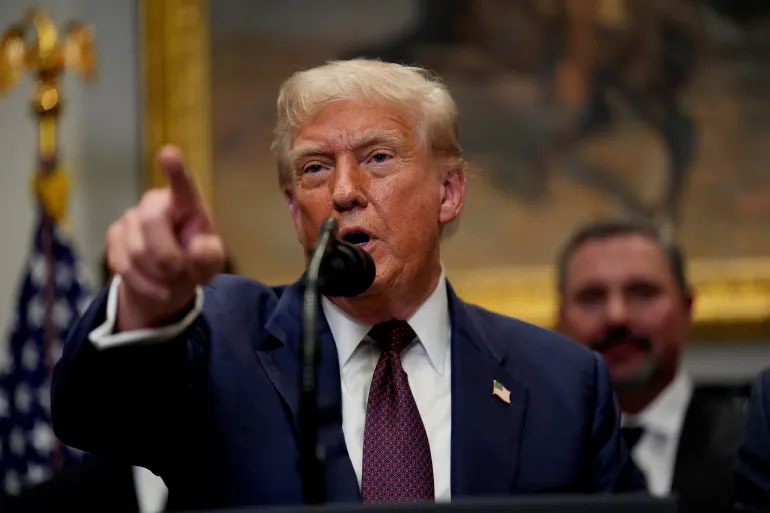

U.S. President Donald Trump’s warning of a U.S. “armada” heading toward Iran has heightened concerns over potential military action in the Middle East, pushing global oil prices higher amid fears of supply disruption. Speaking to reporters on Air Force One Thursday, Trump said, “We have a big flotilla going in that direction just in case. We’ll see what happens,” while reiterating calls for Tehran not to restart its nuclear program.
The announcement immediately affected energy markets. Brent crude futures rose 1.8% to $65.20 per barrel, while U.S. West Texas Intermediate futures gained 1.8% to $60.44. Analysts said fears over possible Iranian interference in the Strait of Hormuz—a key chokepoint for global oil shipments—were driving the increase.
Trump’s comments come as Iran faces domestic unrest, with nationwide protests leaving at least 5,002 dead and nearly 27,000 arrested, according to the Human Rights Activists News Agency. The demonstrations, which began in Tehran on December 28, are fueled by frustration over economic hardship and currency devaluation.
Energy experts note that Iran remains a major OPEC producer, exporting over 3 million barrels of crude daily. While Tehran could leverage its control over the Strait of Hormuz, China’s role as Iran’s main oil buyer—accounting for roughly 90% of exports—remains a stabilizing factor.
Analysts caution that while a U.S. military strike could temporarily disrupt markets, the current global oil oversupply limits long-term impact. Nonetheless, geopolitical tensions in the Gulf are expected to keep energy markets on edge, with price volatility likely to continue as both sides signal their intentions.