
Mubashar Nadeem
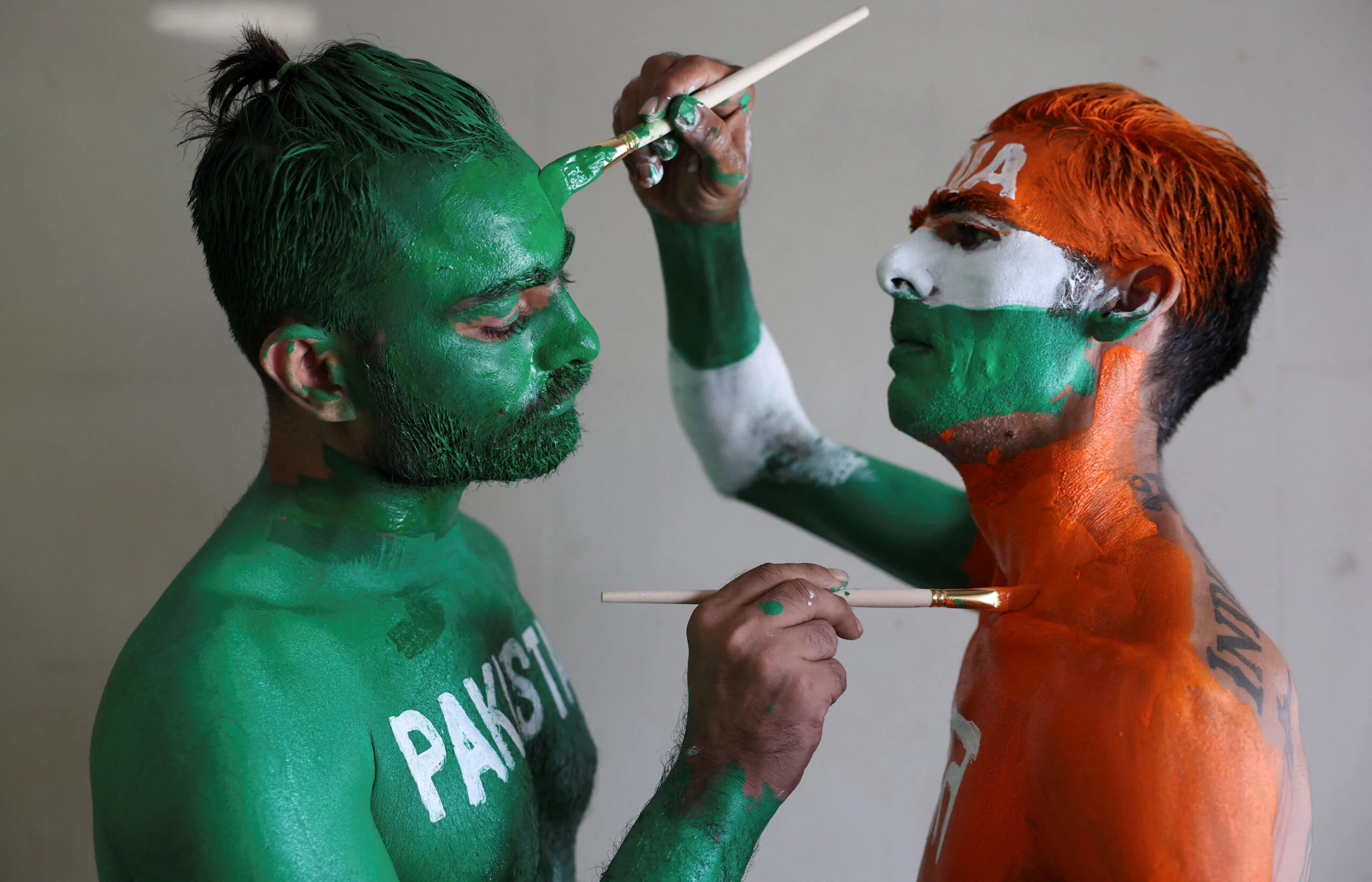
Cricket has long been sold as a bridge between rival nations, a game capable of softening political edges and creating rare moments of shared joy in divided regions. Yet the treatment of Bangladesh ahead of the upcoming Twenty20 World Cup exposes how far the sport has drifted from that ideal — and how deeply it has fallen under Indian influence.
Bangladesh’s decision to refuse playing its World Cup matches in India was not unprecedented, reckless, or unreasonable. It was a political and security-based choice, similar to decisions India itself has taken repeatedly in recent years. Yet the response from the International Cricket Council (ICC) was swift and punitive: Bangladesh was replaced by Scotland, effectively punished for standing its ground. The message was unmistakable — some countries’ concerns are negotiable, others are expendable.
At the heart of the controversy lies the ICC’s selective morality. Bangladesh requested that its matches be shifted to co-host Sri Lanka, citing security and political sensitivities amid heightened tensions with India. The request was flatly rejected. Contrast this with India’s refusal to travel to Pakistan for the Champions Trophy last year, a stance that the ICC not only accepted but facilitated by rearranging fixtures so that Pakistan played its matches in Sri Lanka. No threats of replacement, no ultimatums, no consequences. That difference alone lays bare the double standards governing global cricket.
The Bangladesh episode did not emerge in isolation. Tensions between Dhaka and New Delhi escalated after the ouster of Sheikh Hasina’s government last year. Elections are due in Bangladesh during the World Cup, making the political climate even more sensitive. In refusing to play in India, Bangladesh was doing precisely what India has done before: using cricket as a vehicle to convey a political and security message. Yet when India does it, it is framed as prudence; when Bangladesh does it, it becomes defiance.
The hypocrisy deepened with the role of the Board of Control for Cricket in India (BCCI), arguably the most powerful body in world cricket. The controversy was triggered when the BCCI asked Indian Premier League franchise Kolkata Knight Riders to release Bangladesh pacer Mustafizur Rahman due to “recent developments” — a vague phrase widely understood to be political. That move sent a clear signal that Bangladesh players were no longer welcome in India’s domestic ecosystem, further validating Dhaka’s security concerns. Yet the ICC chose to ignore this context entirely.
What followed was an extraordinary show of imbalance. Instead of mediating, negotiating, or seeking compromise — the very role a global governing body should play — the ICC simply complied with India’s preferences. Bangladesh accused the ICC of hypocrisy, and with reason. The organisation that routinely speaks of neutrality and inclusivity showed neither. It treated Bangladesh not as a full member with rights and concerns, but as a dispensable participant.
This is not an isolated pattern. Time and again, tournaments involving South Asian teams descend into controversy, and almost invariably, the outcome favours India. Whether it is venue changes, scheduling advantages, broadcast arrangements, or security exemptions, India’s position is treated as sacrosanct. Smaller boards are expected to adapt, compromise, or suffer the consequences. The result is a cricketing hierarchy where influence outweighs principle.
The irony is painful. Cricket was once a tool to ease tensions between India and Pakistan, to open channels where diplomacy failed. Today, it has become another arena where power politics play out openly. Bangladesh’s hint that it may take the matter to the Court for Arbitration in Sport is telling. When a full member board feels it has no recourse within the ICC’s own structures, the institution’s credibility stands seriously eroded.
Supporters of the status quo may argue that India’s financial contribution to world cricket justifies its sway. That argument, however, confuses revenue with legitimacy. Governance based on money rather than fairness eventually hollows out institutions. If the ICC continues to operate as an extension of Indian cricket interests, it risks losing its moral authority altogether.
Bangladesh’s stand, regardless of its immediate outcome, has exposed an uncomfortable truth: world cricket no longer operates on equal rules. Security concerns are valid only when raised by powerful boards. Political messaging through cricket is acceptable only when it serves Indian interests. Everyone else must comply or be replaced.
At a time when the sport faces challenges ranging from overcrowded calendars to declining competitiveness, this politicisation is deeply damaging. The ICC has a choice to make — either reaffirm its role as an impartial guardian of the game or openly accept its transformation into a body guided by power politics.
For cricket to reclaim its soul, the world’s boards must push back against these double standards. Otherwise, the game risks becoming yet another casualty of geopolitics, where principles are sacrificed and only influence wins.