
Safia Ramzan
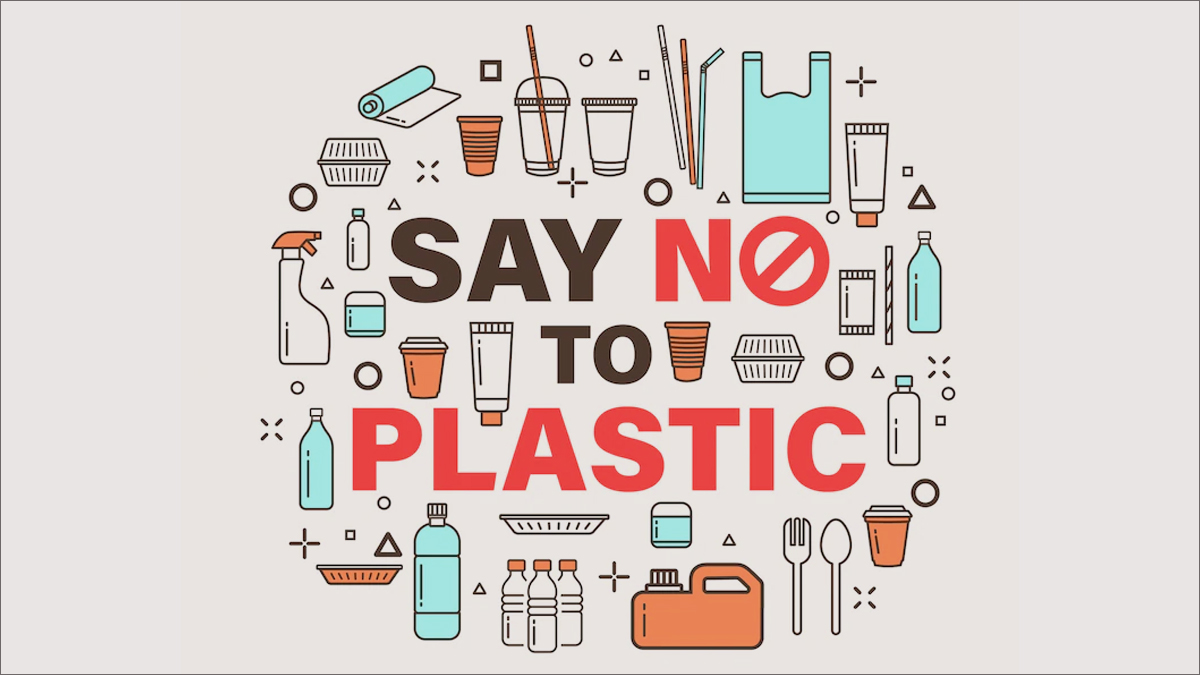
Plastic has quietly become one of the most invasive substances on the planet. It wraps our food, lines our kitchens, fills our streets, flows through our rivers and now, disturbingly, shows up inside the human body. For decades, the public has been told a comforting story: if we recycle responsibly, the plastic problem can be controlled. But this narrative, as former US environmental official Judith Enck argues in The Problem with Plastics, is deeply misleading. Recycling, far from being a solution, has become a convenient distraction while plastic production continues to grow without restraint.
The uncomfortable truth is that recycling has never worked at the scale promised. Only a small fraction of plastic ever makes it back into new products. The rest is buried in landfills, burned — often in the open — or swept into oceans by rivers and storms. Plastic is not like glass or metal, which can be recycled repeatedly with relative ease. It exists in thousands of different chemical forms, mixed with dyes, additives and layers that make sorting and reprocessing expensive and inefficient. In many cases, recycling plastic costs more than producing it fresh from fossil fuels.
To sustain the illusion, the plastics industry has repeatedly promoted new “solutions”. The latest buzzword is chemical recycling, marketed as a technological breakthrough that can supposedly handle plastic waste that traditional recycling cannot. In practice, these facilities process only tiny quantities of plastic and often convert it into fuel rather than reusable material. Burning plastic-derived fuel may shift waste statistics on paper, but it adds to air pollution and carbon emissions in reality. This is not circularity; it is rebranding pollution as innovation.
Pakistan is experiencing the fallout of this global failure in painfully visible ways. Single-use plastic dominates everyday life, from shopping bags and food wrappers to disposable cups and cutlery. Waste collection systems are overstretched or absent in many cities, and plastic waste quickly finds its way into drains and nullahs. During monsoon rains, clogged drainage systems turn routine downpours into urban floods, damaging homes, spreading disease and paralysing transport. Rivers, already under stress, carry plastic downstream to the sea, where it enters marine ecosystems and food chains.
Much of Pakistan’s plastic waste is handled by informal waste pickers — men, women and even children who sort through garbage without protective equipment, job security or legal recognition. Their work recovers some recyclable material and provides a fragile livelihood, but it cannot compensate for the sheer volume of plastic being produced and discarded every day. Expecting informal labour to solve a structural environmental crisis is both unrealistic and unjust.
Government responses have been inconsistent. Plastic bag bans have been announced with fanfare in several provinces, only to fade due to weak enforcement and lack of affordable alternatives. Shopkeepers revert to plastic because it is cheap, light and readily available. Manufacturers continue producing it because there is little regulatory pressure not to. Meanwhile, responsibility is subtly shifted onto consumers, who are told to “choose better” even when better choices barely exist. This focus on individual behaviour conveniently absolves producers and policymakers of accountability.
Globally, the pattern is the same. Recycling campaigns emphasise personal responsibility while ignoring the fact that plastic production is rising year after year. Fossil fuel companies, facing long-term declines in energy demand, are increasingly investing in plastics as a growth market. Without limits on production, recycling becomes a losing battle — a mop trying to contain a flood.
What is needed is not better messaging but a change in direction. Plastic pollution must be tackled at its source. Governments need to place firm limits on new plastic production, particularly for unnecessary single-use items that exist solely for convenience or marketing. Producers should be held responsible for the waste their products generate, through extended producer responsibility laws that require them to collect, recycle or safely dispose of plastics they put into the market.
Deposit-return schemes for packaging, clear labelling that actually informs consumers, and penalties for excessive or deceptive packaging should become standard practice. In Pakistan, waste segregation must be strengthened at the household and municipal level, while open burning and unregulated incineration should be strictly controlled. Just as importantly, locally made, affordable alternatives — cloth bags, paper packaging, refill systems — need active support, not just rhetorical endorsement.
Public awareness campaigns have a role, but they cannot replace regulation. Plastic pollution is not primarily the result of careless consumers. It is the outcome of policy choices that prioritise cheap production over environmental and public health. As long as recycling is treated as a cure-all, governments will avoid confronting the harder truth: that the plastic crisis is driven by overproduction.
The illusion of recycling has bought the world time, but at a heavy cost. That time is now running out. If governments continue to delay real action, plastic will remain not just everywhere around us, but permanently embedded in the systems that sustain life itself.