
Arshad Mahmood Awan
The Iranian rial’s catastrophic collapse to 1.5 million per dollar marks one of history’s most dramatic currency failures, rivaling the Weimar Republic’s 1923 hyperinflation when the German mark disintegrated from 9 to 4.2 trillion per dollar. This raises a critical question: is Iran’s economic catastrophe the result of deliberate external sabotage or self-inflicted wounds from government mismanagement?
The answer appears to be both, though disentangling their respective contributions reveals uncomfortable truths about modern economic warfare.
US Treasury Secretary Scott Bessent’s public boasting about deploying sanctions for “immediate maximum impact” to “collapse Iran’s already buckling economy” removes any pretense about American intentions. This isn’t diplomatic pressure—it’s deliberate economic destruction.
The January 2026 Treasury Department press release exposed precisely how this strangulation operates. At the system’s core lies the “rahbar” network—specialized companies established by Iranian banks to manage international transactions after being excluded from standard banking systems. These companies became Iran’s financial lifeline, facilitating tens of billions in annual trade through creative workarounds.
The US systematically dismantled this network. UAE-based HMS Trading, acting as Shahr Bank’s international front, coordinated commercial activities through numerous shell companies. These entities enabled Iranian oil sales abroad despite existing sanctions, working with major players including the National Iranian Oil Company, Naftiran Intertrade, and Triliance Petrochemical.
By sanctioning these companies and their authorized representatives, America effectively severed Iran’s remaining connections to international commerce. The simultaneous restriction of Iran’s foreign currency access—neither confirmed nor denied by Washington—delivered the knockout punch. Iranian merchants took to the streets in late December 2025 as their businesses collapsed and savings evaporated.
Yet blaming everything on American sanctions absolves Tehran of responsibility for its own economic mismanagement. Even under extreme external pressure, government policies significantly determined how devastating that pressure became.
Iran’s economy showed fragility before the latest sanctions escalation. Structural problems—including inefficient state enterprises, corruption, misallocated subsidies, and poor monetary policy—created vulnerabilities that sanctions exploited rather than created. A healthier economic foundation would have provided greater resilience against external shocks.
The government’s response to sanctions often worsened situations. Price controls created black markets. Currency restrictions fueled panic. Lack of transparency eroded confidence. While belt-tightening may address some domestic policy flaws, Tehran has shown limited appetite for the difficult reforms required.
Iran now faces what it perceives as an existential military threat, with formidable US naval forces massing in the region. This understandably shifts government priorities away from economic reform toward survival. When your primary concern is preventing invasion or military strikes, currency stabilization becomes secondary.
This creates a vicious cycle: economic collapse weakens Iran’s regional position, making military confrontation more likely, which further prevents addressing economic fundamentals, accelerating the collapse.
Russia offers a potential roadmap. Despite facing comprehensive Western sanctions after invading Ukraine, Russia’s economy currently grows at double the rate of countries sanctioning it. How? Diversifying its productive base, pivoting eastward for economic cooperation, and developing alternative payment systems outside Western control.
Iran possesses similar options but has implemented them less effectively. The 25-year agreement with China, signed in late 2025, envisions $400 billion in Chinese investment over 25 years in exchange for stable oil supplies. This provides a foundation for reducing dollar dependence by settling oil transactions in renminbi.
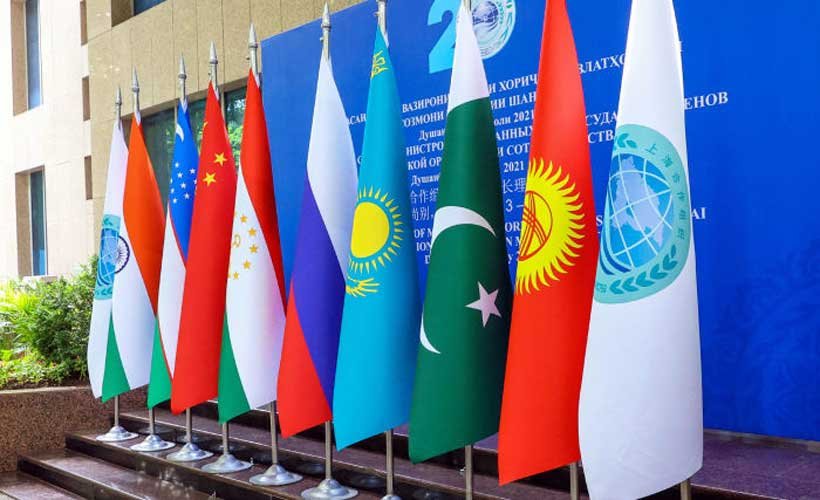
Yet implementation remains sluggish. Iran hasn’t fully leveraged its BRICS membership (Brazil, Russia, India, China, South Africa) for expanded trade relationships. These countries collectively represent massive markets hungry for energy and willing to bypass Western financial systems.
Short-term solutions exist. Currency swap arrangements with China—customized contracts exchanging cash flows between parties—could provide immediate liquidity relief while bypassing dollar-denominated systems. Iran possesses leverage: China needs reliable energy supplies and wants to expand renminbi usage globally.
Longer-term strategies require painful domestic reforms: eliminating inefficient subsidies, restructuring state enterprises, improving transparency, and developing non-oil economic sectors. Russia succeeded partly because it had diversified before sanctions intensified. Iran remains dangerously oil-dependent.
The rial’s collapse stems from both external economic warfare and domestic policy failures. America’s sanctions regime aims explicitly at economic destruction, not behavior modification. This represents a form of collective punishment affecting ordinary Iranians more than government officials.
But Tehran’s mismanagement created the vulnerabilities America exploited. A well-managed economy with diversified trade relationships, reduced oil dependence, and sound monetary policy would weather sanctions far better.
Iran faces genuine threats requiring serious responses. But economic collapse serves nobody’s interests except those wishing Iran’s destruction. Tehran must simultaneously resist external pressure while implementing reforms that reduce susceptibility to that pressure. The alternative is watching the rial’s death spiral continue until economic collapse achieves what sanctions alone couldn’t: regime change through popular desperation.
The remedies exist. Whether Iran possesses the political will to implement them while managing existential military threats remains the trillion-rial question.