
Pakistan has imported 54 GW of solar panels. Four out of five households still don’t have any.
Pakistan’s energy landscape is witnessing an interesting transformation. On the one hand, grid sales are dropping. On the other hand, the shadow grid is emerging, led by the highest rate of solar adoption in the world. Pakistan has imported solar capacity of 54 GWh, out of which 51 GWh has been deployed in industry, households, etc. Yet out of 4 crore households in Pakistan, only 70 lakh (17%) households have solar capacity. As provincial governments have launched schemes to increase solar adoption, some predictions suggest that it will account for only 1.3% of the total households in Pakistan
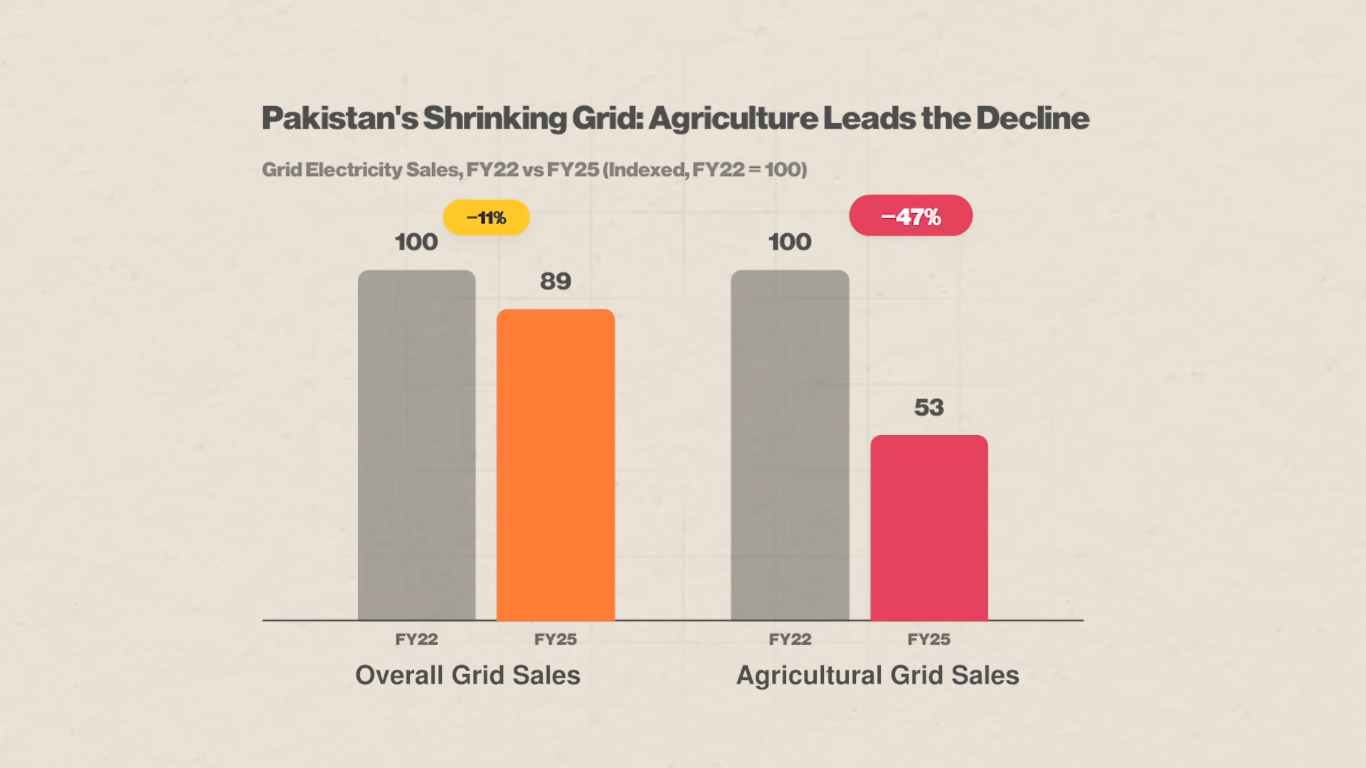
The dropping grid sales are making electricity expensive for non-solarized consumers. In just three years, Grid sales have dropped by 11%. Most importantly, the agriculture sector is leading the drop: in agriculture, the consumption of grid electricity has dropped by 47% in just 3 years; people have installed panels for tubewells and abandoned expensive electricity from the national grid. According to official estimates, non-solarized consumers pay Rs 3 per unit extra for this drop. Because in Pakistan’s energy bill, 61% payment is made for capacity whether electricity is generated or not.
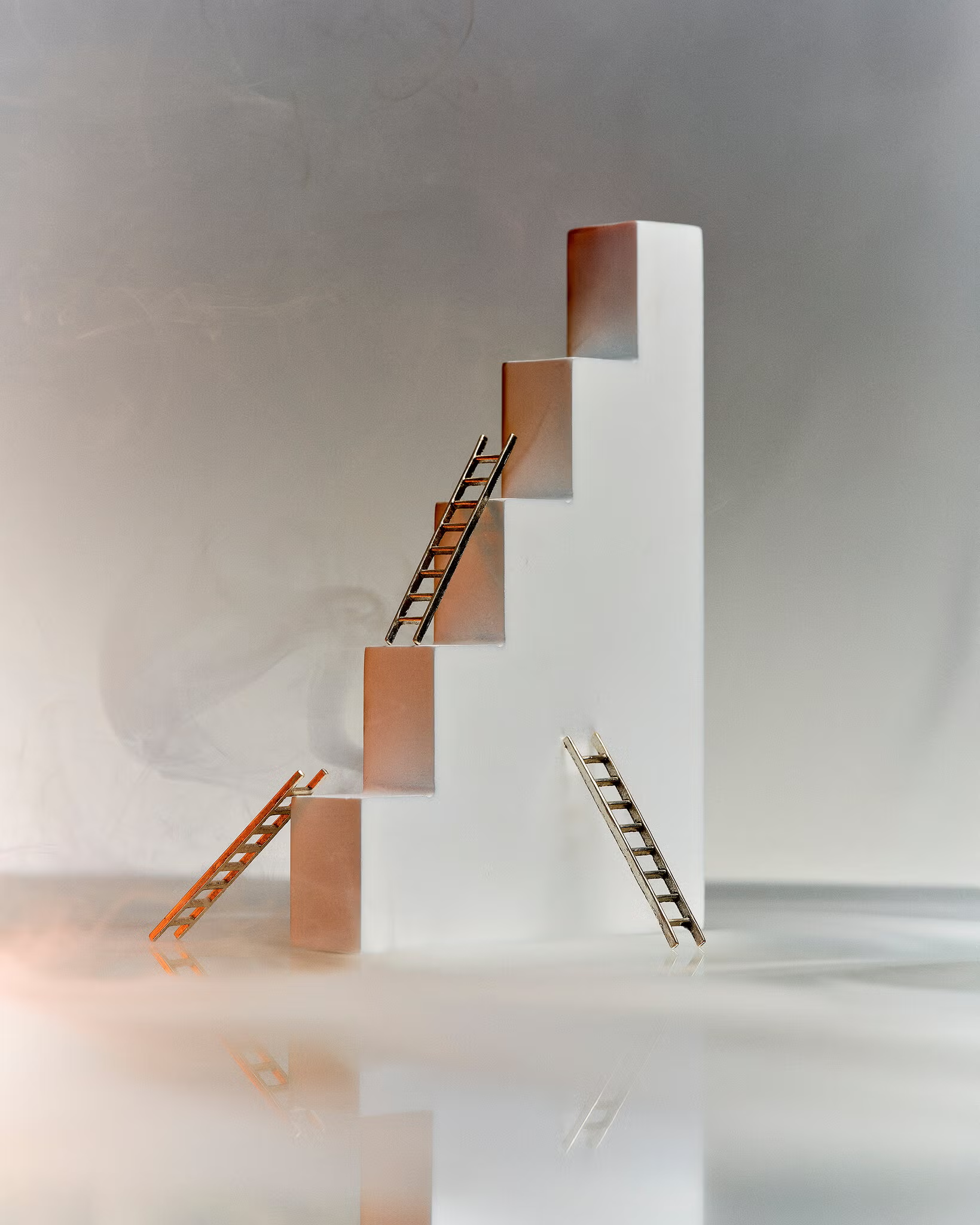
This large-scale adoption is very inequal in nature. Nearly 80% of households cannot afford a solar system. Only one quintile whose annual income is 9.8 lac can afford the solar. Most sadly, this quintile is making electricity expensive for the non-solarized consumers.
Solar adoption correlates with the electricity consumption. The high-income group with income 50,000 – 200,000 consumes 80% of electricity. And the bottom income group with an income of 15000 consumes merely 38% of electricity.
Also, the government has no role in the solar adoption. According to the research by Pakistan&Accounting, Pakistan spent $14 billion dollars on importing solar, of which only 3.4% was financed by the formal credit institutions. The rest of the credit was paid by Pakistanis from their savings.