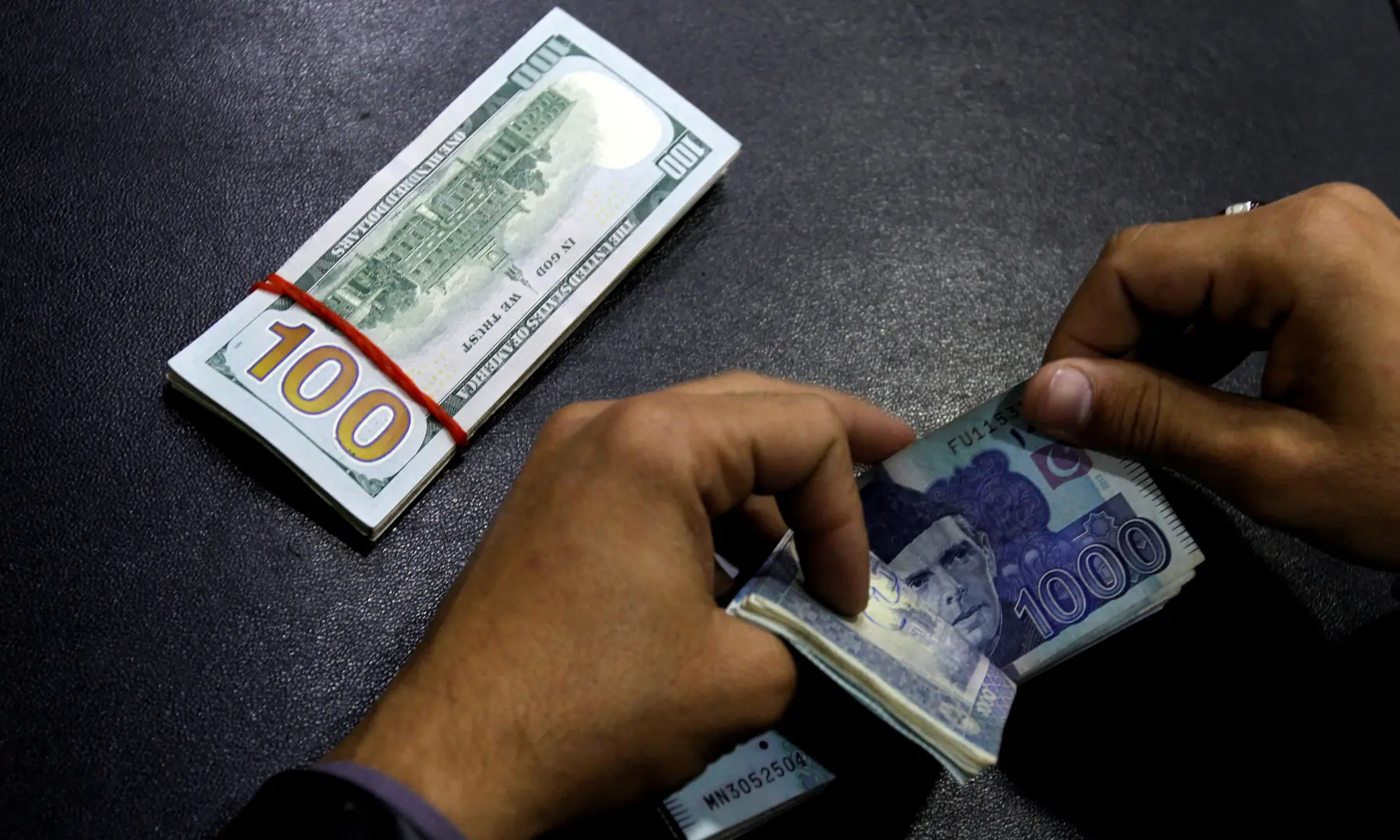

Pakistan has reportedly asked Washington for a $10 billion currency-swap facility, drawn from the US Treasury’s Exchange Stabilisation Fund. The timing is hard to ignore. The United States is at war with Iran. Pakistan has positioned itself as a channel between the two adversaries. And Islamabad, once again, appears to be testing whether geopolitical usefulness can be converted into economic breathing room.
Almost nothing about the deal has been made public — not its structure, its pricing, its maturity, or what it could actually be used for. It may never be finalised. Even if it is, the money may never be drawn. None of that makes the request insignificant. If anything, the mere possibility of such a facility says something important about how influence and liquidity now move together on the world stage.
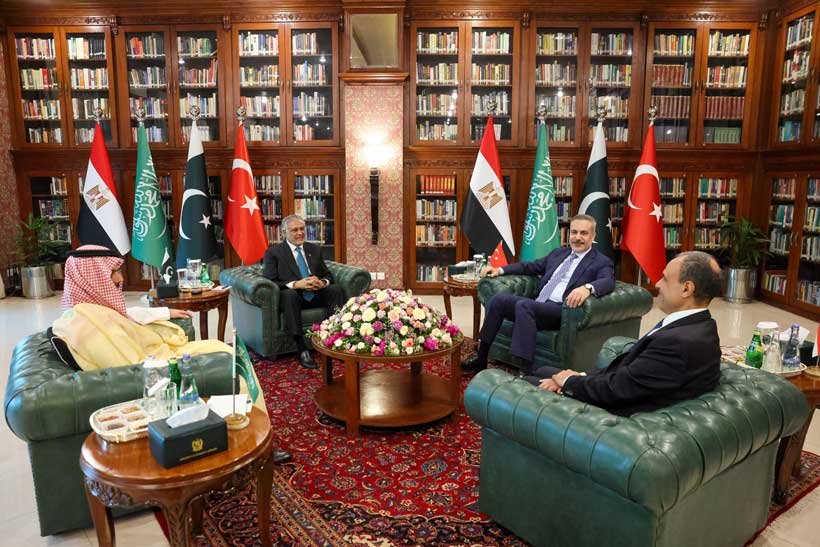
This wouldn’t be uncharted territory for Pakistan. The country already relies on a currency-swap arrangement with China, and a parallel facility with Washington would place it squarely between two rival monetary systems. Beijing’s swap lines are built to spread the renminbi’s use internationally and deepen China’s political reach. Washington’s dollar facilities exist to protect the dollar’s central role in global finance — and to reward the countries it considers strategically worth rewarding. Pakistan may welcome the extra cushion either arrangement provides. But cushion is not the same thing as a strategy.
What a Currency Swap Actually Is
A bilateral swap line is simply a standing agreement between two central banks to exchange currencies temporarily, up to a set ceiling. Agreeing to a $10 billion line doesn’t hand Pakistan $10 billion — it grants the right to request funds later, under conditions both sides accept in advance.
If Pakistan ever draws on it, the mechanics are straightforward: the State Bank hands over rupees, receives dollars at an agreed rate, and uses them to shore up domestic banks, cover imports, or calm a jittery currency market. When the arrangement matures, the transaction reverses — rupees come back, dollars go out, and any interest owed gets paid. A swap, in other words, is not aid. It is a loan waiting to be triggered, and once triggered, it becomes a liability like any other.
The proposed US facility differs in one important respect from a typical central-bank swap: it would run through the Treasury’s Exchange Stabilisation Fund rather than the Federal Reserve’s usual network. Until the fine print emerges, nobody outside the negotiating room really knows whether this would function like a short-term swap, a balance-of-payments cushion, or something closer to a loan.
Still, the history of how the Fed has handled swap requests is instructive. During the 2008 financial crisis, it extended swap lines to exactly four emerging economies — Brazil, Mexico, Singapore, and South Korea — and turned away the rest. Brown University political scientist Aditi Sahasrabuddhe has argued that financial need alone didn’t explain the list; alignment with American economic preferences did. Her later research found that something even less quantifiable mattered too: personal trust between central bankers. Countries with strong relationships got bigger, less restrictive access. Everyone else paid more for less. The global financial safety net, in other words, isn’t neutral. It runs on relationships as much as on need.
Two Currencies, Two Kinds of Power
For Washington, extending dollars abroad isn’t pure generosity — it protects the dollar’s dominant role and shields American banks with global exposure. There’s a political payoff too. Researchers Yumi Park and Sujeong Shim found that governments receiving Fed swap lines during 2008 saw their domestic approval ratings rise, even as approval fell in countries left out, largely because a steadier currency gave those governments more room to act. Citizens rarely understand the mechanics of a swap line. They notice a currency that isn’t collapsing.
China has spent the past decade and a half building an equivalent tool of its own. Its swap network exploded after 2008; by 2020, an IMF study counted 91 participating countries and nearly $1.9 trillion in combined capacity, much of it driven by Beijing. China’s own officials describe the goals plainly: internationalise the renminbi, support trade, and provide a stability cushion — with some swaps, Pakistan’s included, doubling as balance-of-payments relief.
This is not neutral plumbing. Every trade settled in renminbi, every reserve manager willing to hold it, chips away at global dependence on the dollar. And swap lines carry political weight too — research covering 38 countries with Chinese swap agreements found a measurable, if modest, drift toward Beijing’s foreign-policy positions after signing, especially among financially fragile states. Pakistan itself didn’t show a statistically distinct shift in that study, likely because its alignment with China was already so close there was little room left to move.
The Iran Factor
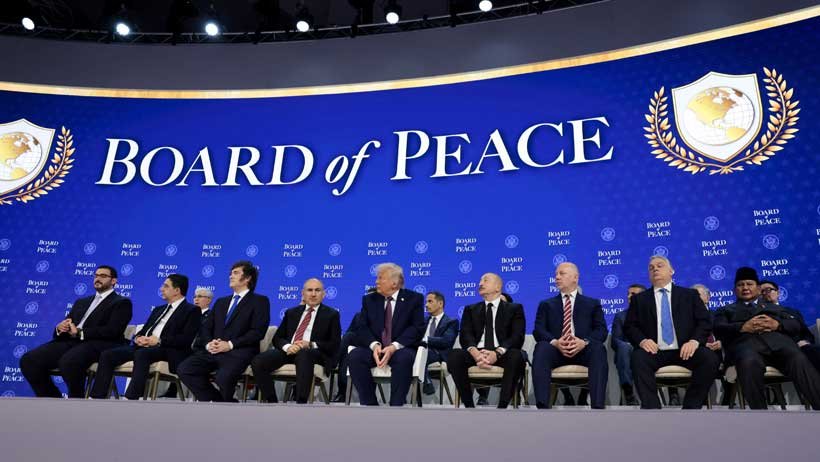
None of this can be separated from the war next door. Pakistan’s usefulness to Washington right now rests almost entirely on its ability to talk to both Washington and Tehran when almost nobody else can. Its geography — bridging South Asia, China, Iran, Afghanistan, and the Arabian Sea — makes that role harder to replace than money alone would suggest.
For the US, a financially steadier Pakistan is a more useful mediator, and a Pakistan less dependent on Beijing for emergency support is a strategic win in its own right. For Pakistan, the appeal is obvious: a credible dollar backstop calms markets, buys the central bank room to manoeuvre, and reinforces its parallel push to return to international capital markets. There is no public evidence of an explicit trade — money for a specific position on Iran or China — and Pakistan’s own history offers a warning against reading too much permanence into a moment of strategic attention. Washington’s interest in Islamabad has risen and fallen with regional crises before. What Pakistan actually has to offer right now is its position as a bridge. Losing that position, by picking a side, would destroy the very leverage it’s trying to cash in.
Liquidity Isn’t a Development Plan
It’s worth being blunt about what a swap line can and cannot do. An undrawn facility is contingent financing — not new reserves sitting in a vault. Once drawn, it’s a debt like any other, and repeated rollovers can quietly turn a short-term tool into something resembling permanent borrowing while flattering a country’s headline reserve numbers.
Pakistan’s own experience with China illustrates the limits. It signed its swap agreement in December 2011 and began drawing on it in 2013; by 2020, the IMF found Pakistan and Mongolia together accounted for most of the roughly $8 billion still outstanding across China’s overseas swap network. The arrangement bought time and supported trade in regional currencies — but renminbi cannot simply pay off dollar-denominated debt. One recent study found that markets initially reacted positively when Pakistan signed its swap with China, narrowing bond spreads — but that confidence eroded over time as investors grasped the currency’s practical limits.
The lesson isn’t to reject either facility. It’s to use each for what it’s actually good for: renminbi liquidity for trade with China, dollar liquidity for dollar-denominated obligations and market stabilisation. The IMF’s own research reaches a similarly sober conclusion — swap lines are a useful addition to the global safety net, but there’s little evidence they improve macroeconomic policy on their own. Used carelessly, they can even let governments postpone reforms they should be making anyway.
What Pakistan Should Actually Do With This
If the US proposal moves forward, four principles should guide how Pakistan handles it. First, transparency: the public deserves to know the facility’s legal structure, currency, interest rate, maturity, and permitted uses — and the same standard should apply retroactively to the Chinese swap. Second, discipline: draw on it only in genuine liquidity stress, not to fund an import binge, and report gross reserves, net reserves, and swap liabilities separately so nobody can quietly inflate the picture. Third, precision: use renminbi for China-linked trade and dollars for dollar debts, rather than treating the two as interchangeable. Fourth, purpose: treat any breathing room as a chance to fix underlying weaknesses — a narrow export base, costly energy dependence, weak domestic revenue collection — not as a reason to delay fixing them.
Above all, Pakistan should resist letting either facility become an exclusive commitment. Having access to both networks is only valuable if Islamabad retains the ability to say no when the terms attached don’t serve its own interests. Diversification is worth something because it creates options — not because it lets a country auction its foreign policy to whoever bids highest.
The $10 billion American facility, like the existing Chinese one, could genuinely help. But its real value would lie in breaking a familiar pattern — one in which every reserve crisis produces a fresh emergency appeal, and every geopolitical flashpoint produces a temporary windfall that solves nothing structural. Washington and Beijing will keep using money to build influence. Pakistan’s task is to use their money to build something that lasts.