
Hague Court Orders India to Uphold Indus Waters Treaty, Suspend Work on Its Hydropower Project
The Permanent Court of Arbitration (PCA) on Monday ordered India to uphold the Indus Waters Treaty (IWT) with Pakistan and suspend work on a hydro project in occupied Kashmir.
Water and the IWT have remained a contentious issue between the two countries since New Delhi’s unilateral abeyance of the accord in April last year, a move followed by a brief military conflict in May 2025. Pakistan had termed any attempt to suspend its water share an “act of war,” noting the treaty contains no provision for unilateral suspension, and later argued India’s action violated the 1969 Vienna Convention on the Law of Treaties.
In its ruling, the PCA backed Pakistan’s position, declaring the IWT remains fully in force, finding India had no justification for ending or suspending the agreement. The Hague-based court issued both an award on the status of the treaty in light of India’s abeyance decision, and a separate order on Pakistan’s March 4 application for interim measures concerning the Ratle hydro-electric plant.
In a press release detailing its findings, the PCA said it had examined the potential grounds on which India could suspend or terminate the treaty, including those India cited publicly, and unanimously found that none of these grounds could justify suspension or termination. The court declared the treaty “remains fully in force, and India must observe its obligations under the treaty, including those relating to the design and operation of its hydro-electric projects on the Western Rivers.”
The IWT allocates the eastern rivers, Ravi, Beas, and Sutlej, to India, while the western rivers, Indus, Jhelum, and Chenab, are largely allocated to Pakistan. The 1960 agreement also established mechanisms for data-sharing and dispute resolution.
During proceedings, Pakistan asked the court to address the design of certain components of run-of-river hydro-electric projects that India is permitted to construct on the western rivers before they flow into Pakistan. The interim measures application specifically concerned India’s Kishenganga Hydro-Electric Plant (KHEP) and Ratle Hydro-Electric Plant (RHEP), both of which are also subject to separate proceedings before a World Bank-appointed neutral expert, expected to issue a final decision in July 2027 on whether they comply with the treaty.
The PCA unanimously decided to impose measures prohibiting India from concreting the RHEP dam wall and power intake structure above certain levels until 90 days after the neutral expert’s final decision. It also imposed a reporting requirement related to the RHEP construction schedule, to remain in effect until shortly after that decision. Two other measures requested by Pakistan were declined.
The court noted that the treaty “does not provide for one party to terminate or suspend the operation of the treaty, or for ‘abeyance,'” and that it remains in force unless modified or terminated by both countries jointly through a further treaty.
The Court of Arbitration was chaired by Professor Sean D. Murphy of the United States, with fellow members Professor Wouter Buytaert of Belgium, Professor Jeffrey P. Minear of the United States, Judge Awn Shawkat Al-Khasawneh of Jordan, and Dr Donald Blackmore of Australia.
Pakistan Welcomes Findings
Islamabad said it had taken note of the press release and welcomed the PCA’s finding that India remains bound by and must observe its obligations under the treaty, according to the information ministry. It also welcomed the finding on the Ratle plant and the measures ordered by the court. The government said it would give careful consideration to the full award and decision once published, and how these might help find a pathway back to engagement under the treaty.
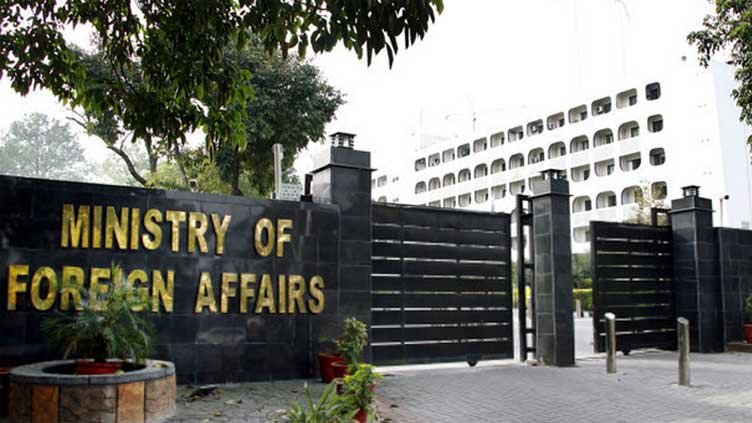
India, officially a member of the intergovernmental court, said it did not recognise the court and categorically rejected the verdict. “This so-called Court of Arbitration has no jurisdiction whatsoever to pronounce on India’s sovereign decisions,” India’s Ministry of Foreign Affairs said in a statement. While India did not make written or oral submissions in response to Pakistan’s application, the PCA said it sought to consider India’s positions to the extent they could be discerned from India’s statements and conduct outside the proceedings, including government communications to Pakistan and the neutral expert, and public statements by Indian officials.
India Has No Grounds to Suspend IWT
The PCA examined possible grounds for India’s action under customary international law and found no rule allowing a state to unilaterally terminate or suspend a treaty based on sovereignty, as India had argued. The court identified three narrow grounds on which a state could unilaterally suspend or terminate a treaty: material breach by a party, fundamental change of circumstances, and the effect of armed conflict, and found none applied here.
On India’s claim that Pakistan violated the treaty’s cooperative spirit by refusing to negotiate modifications, the court found no provision obliged Pakistan to enter such discussions, and therefore this could not constitute a material breach. After reviewing correspondence between the two governments, the court found Pakistan had in fact been willing to discuss treaty modifications with India.
On India’s allegations of cross-border terrorism, cited when it unilaterally suspended the treaty last year, the PCA noted the treaty “does not address terrorism or the use of force” and governs only rights and obligations regarding the Indus waters. The court said it found no evidence that the alleged terrorism had impeded India’s ability to construct hydro-electric projects on the western rivers, noting instead that India has built, and continues to build, many such projects, including in recent years. “Even if India’s allegation was assumed to be true, they would not establish a material breach of the treaty by Pakistan,” the court said.