
A More Confident Beijing and a Pragmatic Washington Are Finding Room for Stability
Relations between the United States and China appear to be entering a more stable phase after years of trade disputes, technological restrictions and geopolitical confrontation. The shift does not mean that the two powers have resolved their fundamental differences. Rather, both increasingly seem to recognise that permanent confrontation carries costs neither can comfortably bear.
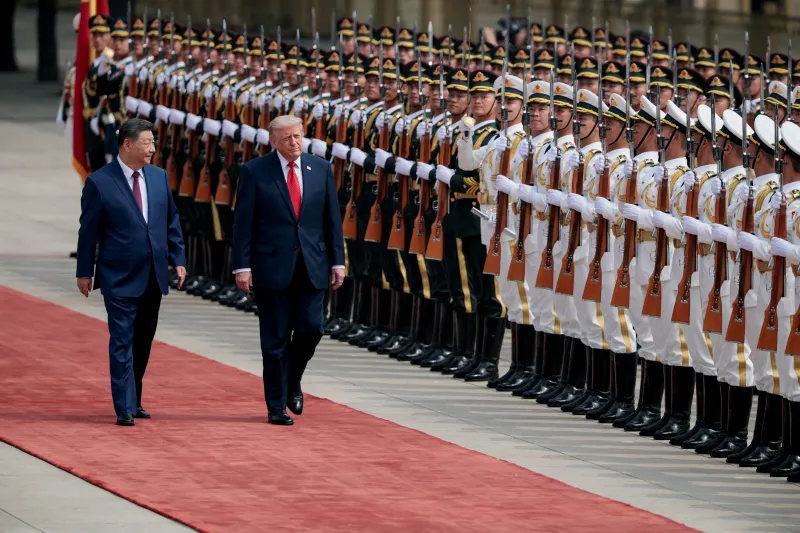
When Chinese President Xi Jinping and U.S. President Donald Trump met in Beijing in May, they agreed to pursue what they described as a relationship of “constructive strategic stability.” The concept is important because it provides, for the first time in more than a decade, a broadly accepted framework for managing the relationship. Its purpose is not to eliminate competition but to prevent competition from turning into uncontrolled confrontation or military conflict.
This represents a significant change, particularly in Beijing. China previously resisted Washington’s description of the relationship as one of “strategic competition,” fearing that the concept was intended to contain its rise. Beijing now appears more willing to accept competition as an unavoidable feature of relations between the world’s two most powerful countries. The difference is that China increasingly believes such competition can be managed without threatening its development.
The emerging détente, therefore, is not a return to partnership. Nor is it a grand bargain. It is something more modest and perhaps more realistic: an attempt to place a floor beneath the relationship.
Why Stability Keeps Returning
The movement toward stability cannot be explained only by the personal relationship between Trump and Xi. Structural realities are also pushing Washington and Beijing toward restraint.
Over the past eight years, relations have repeatedly moved from confrontation back toward some form of accommodation. The 2018 trade war was followed by the Phase One agreement in 2020. Relations deteriorated sharply during the pandemic, before Presidents Joe Biden and Xi attempted to stabilise them in Bali in 2022 and again in San Francisco in 2023. Trump’s tariffs in 2025 produced another confrontation, yet the two countries eventually returned to negotiations.
There is a straightforward reason for this pattern: the relationship has become too consequential for either country to allow it to collapse.
Complete economic separation would be enormously expensive. The two economies remain deeply connected through trade, technology, manufacturing and global supply chains. At the same time, both countries possess enough military power to make direct conflict potentially catastrophic. Economic interdependence and nuclear deterrence therefore impose powerful limits on confrontation.
Attempts at economic separation have also proved more difficult than expected. American restrictions have altered supply chains, but they have not removed China from them. Chinese companies have expanded production networks through other countries, while American and Chinese industries remain dependent on one another in important areas. Emerging technologies, particularly artificial intelligence, are likely to create new forms of mutual vulnerability even as older dependencies are reduced.
A More Confident China
Another major factor is China’s changing perception of its own strength.
When Washington intensified economic and technological pressure during Trump’s first presidency, many in China feared that prolonged confrontation with the United States could seriously obstruct the country’s development. Eight years later, those fears have weakened.
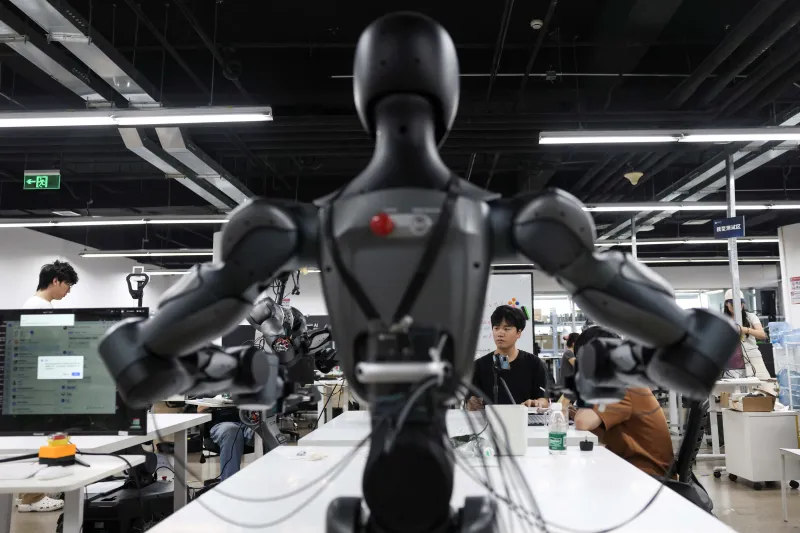
China still faces significant economic difficulties, particularly in property and traditional industries. Yet its advanced manufacturing and high-technology sectors have continued to develop. Restrictions on access to American semiconductors have also accelerated efforts to build domestic alternatives. These developments have encouraged a belief in Beijing that China can withstand American pressure more effectively than previously assumed.
That confidence could have two very different consequences. A stronger China might become more assertive. But the argument emerging in Beijing is that greater confidence can also encourage restraint. If Chinese leaders no longer believe that Washington can prevent China’s development, they may feel less pressure to respond aggressively to every American action.
In this interpretation, confidence makes managed competition easier. Beijing can accept disagreements with Washington without treating every dispute as part of an existential struggle.
Building Guardrails
Strategic stability will nevertheless require more than improved political rhetoric.
Military communication is particularly important. Regular contact between the two militaries, stronger crisis-management mechanisms and clearer rules for encounters at sea and in the air could reduce the danger that an accident develops into a larger confrontation. Cooperation may also be possible in areas such as space safety, while more sensitive questions involving nuclear weapons and military applications of artificial intelligence will require gradual engagement.
Relations also need stronger connections below the presidential level. Academic exchanges, easier travel, fewer unnecessary restrictions and greater interaction among students, scholars and institutions could provide additional stability when political relations deteriorate.
The most dangerous issue remains Taiwan. It is the dispute most capable of turning strategic rivalry into direct military conflict. Beijing’s desire for unification, political developments in Taiwan and uncertainty surrounding Washington’s future policy create a particularly dangerous combination. Any lasting détente will therefore depend heavily on preventing the Taiwan question from crossing the threshold into war.
Competition Without Conflict
The United States and China are unlikely to become close partners. Their economic interests, political systems, security priorities and visions of international order will continue to generate competition.
But rivalry does not have to mean permanent crisis.
The emerging détente rests on a relatively simple recognition: neither side can eliminate the other as a major power, neither can completely protect itself from the other’s economic and technological influence, and neither can afford a military confrontation.
Strategic stability is therefore not about friendship. It is about learning to compete within limits.
The coming meetings between Xi and Trump provide an opportunity to turn that understanding into practical arrangements—reducing economic friction, strengthening military communication, improving crisis management and keeping the most dangerous disputes under control.
For two powers capable of profoundly damaging each other and the wider international system, merely keeping their rivalry within manageable boundaries may sound like a modest ambition.
In reality, avoiding a new Cold War—and especially avoiding a hot one—could itself be a major diplomatic achievement.