
Solar supplied around 20pc of Pakistan’s electricity in 2025 as consumers increasingly turn to cheaper alternatives amid high grid tariffs
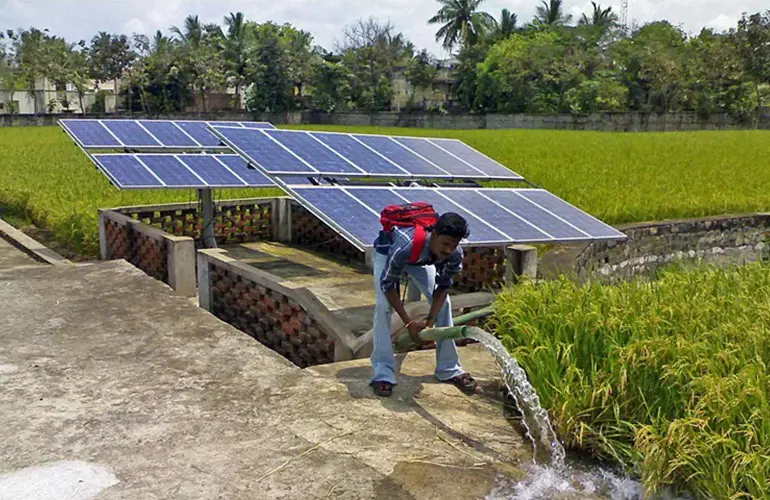
Pakistan’s accelerating transition towards solar energy is reshaping the country’s electricity market, reducing reliance on grid-supplied power while creating new financial pressures for utilities and Chinese-backed coal power projects, according to a Bloomberg report.
The shift is particularly visible in industrial areas such as Port Qasim near Karachi, where rooftop solar installations have become widespread among businesses seeking to reduce electricity costs.
Zaheer Allana, who owns a packaging factory in the area, said solar panels now generate around one-fifth of his facility’s electricity. He told Bloomberg that nearly all available rooftop space had been utilised and that the business would install even more solar capacity if additional space were available.
According to Allana, solar-generated electricity costs his business less than one-third of grid power, making energy savings increasingly important for profitability.
Solar’s Share of Electricity Generation Rises Sharply
Data cited by Bloomberg from energy think tank Ember showed that solar accounted for approximately 20 per cent of Pakistan’s electricity generation in 2025, compared with around 3pc at the beginning of the decade.
High electricity tariffs, unreliable grid supplies and increasingly affordable Chinese solar equipment have contributed to the rapid expansion.
Pakistan consequently emerged as China’s third-largest solar export market last year, according to the report.
The transition is also extending beyond solar panels. Customs figures cited in the report showed that Pakistan’s battery imports from China increased by nearly 150pc during the first half of the year, reaching approximately $392 million.
Falling Grid Demand Creates Financial Challenge
While consumers benefit from cheaper self-generated electricity, the rapid transition presents difficulties for Pakistan’s conventional power system.
Muhammad Mujahid, executive director of Lahore-based clean technology importer Innovo Corp., warned that every consumer shifting away from the grid increases the financial burden remaining within the electricity system.
He described the trend as potentially creating a “death spiral” for utilities.
NEPRA figures cited by Bloomberg showed electricity consumption across Pakistan’s distribution companies was almost 12pc lower during the 12 months ending July 2025 compared with three years earlier.
Mujahid said the speed and scale of the transition had surprised policymakers.
Chinese-Financed Coal Projects Face Additional Pressure
The decline in grid demand also has implications for Chinese-backed electricity projects developed in Pakistan.
According to the report, overdue payments owed to Chinese power plants had exceeded $1.5 billion by August, while outstanding project debt associated with China-financed coal assets stood at $3.1 billion last year.
At the Port Qasim coal-fired power plant, overdue payments had reportedly approached $300 million by June.
The facility is among seven coal-fired plants delivered by China in Pakistan since 2017, representing investment of approximately $9.6 billion, according to Bloomberg.
Kevin Gallagher, a professor of global development policy at Boston University, observed that Pakistan had previously been a major destination for China’s overseas coal-power expansion but was now also experiencing a rapid transition towards Chinese-supplied green technologies.
Pakistan Seeks Longer Debt Repayment Period
Energy Minister Awais Leghari said Pakistan was seeking an extension in the repayment period for power-sector debt rather than asking creditors to reduce the amount owed.
He said Islamabad was not seeking a haircut on the existing obligations but wanted repayments spread over a longer period.
According to Bloomberg, Chinese officials have so far shown limited willingness to offer substantial concessions that could impose losses on Chinese state-owned companies and financial institutions.
Possible alternatives reportedly being considered include refinancing existing obligations and finding new uses for under-utilised power plants.
Pakistan’s solar expansion therefore presents a complex challenge for the power sector: consumers and businesses are gaining access to cheaper electricity, while declining grid demand is placing additional strain on a conventional electricity system carrying substantial fixed costs and debt obligations.