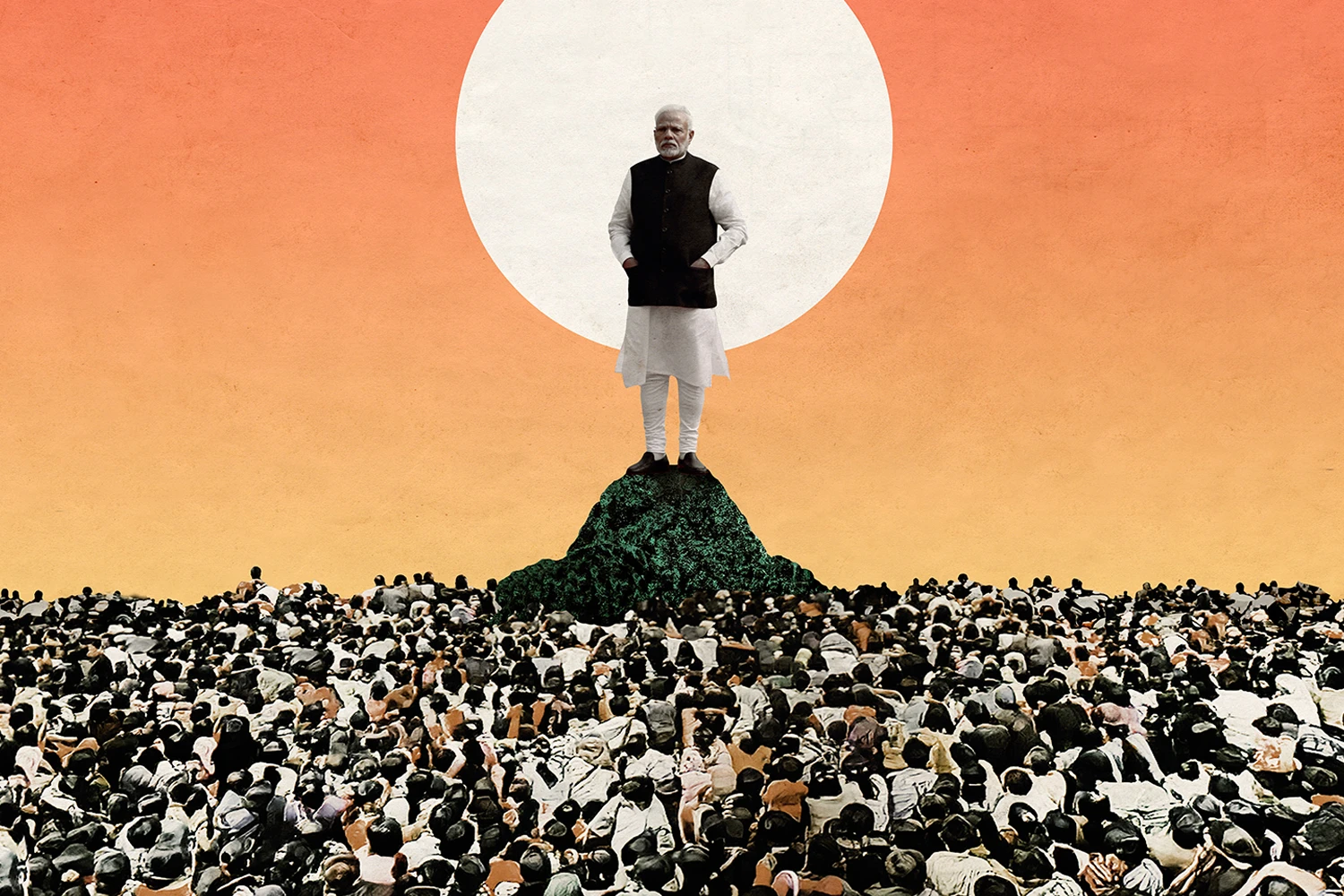

In a recent development, India unveiled its grand vision of Akhand Bharat, an ambitious concept representing Greater India. As a symbolic representation of its hegemonic aspirations, the BJP government adorned the walls of the new parliament building in New Delhi with a mural that not only encompasses Indian territories but also incorporates parts of Pakistan, conveniently fitting into their narrative of an expanded domain. The installation has sparked condemnation from the Foreign Office (FO), which has aptly emphasized the need for India to adopt a more peacemaking role. While this stance is commendable, it is imperative to garner support from the international community.
FO Spokesperson Mumtaz Zahra Baloch astutely shed light on India’s expansionist ideology and the mural’s significance as a somber reminder of lost territories. When coupled with the notion of Akhand Bharat, it becomes evident that India seeks to reclaim what it perceives as rightfully theirs. Numerous reports have already exposed India’s oppressive treatment of its minorities and its persistent agenda against Pakistan, most notably in the contentious region of Kashmir. The recent capture of Yasin Malik, a prominent Kashmiri leader, has made headlines, with alarming revelations of fabricated charges and the denial of his right to a fair trial. Shockingly, there are even indications of the state’s intention to impose the death penalty on Mr. Malik based on trumped-up allegations, with only the judiciary standing as a barrier against this grave injustice.
India’s actions not only undermine the principles of justice and fairness but also fuel an atmosphere of animosity and discord. The international community must not turn a blind eye to the plight of Kashmiris and the systematic repression perpetrated by the Indian state. It is imperative that global support and intervention be mobilized to prevent further escalation and to ensure the preservation of human rights and fundamental freedoms.
The concept of Akhand Bharat, with its expansionist connotations, represents a dangerous shift in India’s approach towards its neighboring countries. By encroaching upon the territorial integrity of Pakistan, India demonstrates a disregard for the principles of sovereignty and peaceful coexistence. It is crucial for the international community to address this provocative action and call for a more constructive and inclusive approach in the region.
India’s insistence on an overreaching dominion not only poses a threat to regional stability but also undermines the prospects for peace and collaboration. Rather than perpetuating a hostile narrative, India should focus on fostering mutual understanding, dialogue, and reconciliation. It is high time that the Indian government reflects upon its responsibilities as a regional power and embraces a path that promotes harmony and cooperation.
The international community must unite in condemning India’s expansionist agenda and demand a commitment to peaceful resolutions and respect for international norms. Upholding justice and the rule of law should be paramount, with a collective effort to ensure that no individual or community suffers at the hands of oppressive policies and unjust practices.
As we navigate these critical times, it is imperative to counter divisive narratives and work towards a future where nations coexist in harmony, embracing diversity and celebrating mutual progress. The world is watching, and the voices of reason and justice must prevail. Let us stand together to advocate for a world where peace, respect, and cooperation triumph over discord and aggression.
Don’t forget to Subscribe our channel & Press Bell Icon.
Let us pause for a moment to acknowledge the unfolding drama orchestrated by the self-proclaimed largest democracy in the world. India, donning the mask of a global leader, somehow manages to evade scrutiny from the international community regarding the legitimate concerns and evidence presented by Pakistan, exposing its troublesome trajectory. Despite mere condemnations echoing across diplomatic corridors, the lack of substantial action against India raises alarm bells. With the introduction of new ideological inclinations, the specter of heightened conflict looms large.
Pakistan has diligently played its part, persistently shining a spotlight on the multitude of injustices. We remain committed to this mission in the future as well. However, it is high time that the world awakens from its slumber and recognizes the elaborate charade that India has orchestrated for decades.
It is ironic that a nation projecting itself as a beacon of democracy and progress finds itself shielded from accountability while treading a treacherous path. The international community must summon the courage to confront the claims and evidence presented by Pakistan. Mere lip service is no longer sufficient, as India’s actions demand a robust and resolute response.
The façade meticulously constructed by India for far too long must be exposed. This is not a time for timid whispers, but a moment that calls for a resounding voice, demanding transparency and justice. The world must not turn a blind eye to the disturbing realities that lie beneath the carefully curated image of India.
As a responsible global citizen, it is our duty to illuminate the dark corners and unravel the intricacies of India’s intricate masquerade. The repercussions of this charade extend far beyond the borders of the subcontinent, casting a shadow of uncertainty and instability on the international stage. It is imperative that the international community rises to the occasion and takes decisive action.
While India boasts of its democratic credentials, it conveniently evades accountability and shirks responsibility. This double standard raises questions about the integrity and sincerity of the global order. It is a paradox that the largest democracy in the world stands unscathed despite its troubling actions.
The time for complacency and indifference has long passed. The international community must rally together, leaving no room for ambiguity or hesitancy. It is time to unveil the truth and hold India accountable for its missteps. Let us cast aside the veil of ignorance and demand a world where principles of justice and fairness reign supreme.
In this age of interconnectedness, the world cannot afford to ignore the glaring discrepancies and injustices perpetrated by any nation, no matter how powerful or influential. It is our collective responsibility to challenge the status quo and strive for a world where truth prevails over deception and genuine leadership trumps superficial displays.
As we navigate through the intricate webs of global politics, we must remain vigilant and resolute. The path to justice may be fraught with challenges, but it is a journey we must undertake together. Let us seize this moment to rewrite the narrative, to foster a world where transparency, accountability, and righteousness guide our actions. The time for change is now.
In conclusion, it is crucial to shed light on the actions and ideologies of India, the self-proclaimed largest democracy in the world. Despite its global leadership position, the international community has failed to address the claims and evidence presented by Pakistan regarding India’s problematic path. Mere condemnations without substantial action have allowed India to continue its deceptive façade, further increasing the threat of conflict.
While Pakistan has consistently highlighted the injustices and played its part in exposing the truth, it is imperative for the world to awaken and acknowledge the long-standing charade maintained by India. The actions and ambitions of India must be scrutinized, and genuine accountability must be demanded.
The time has come for the international community to see beyond the illusion created by India and take meaningful action to address the injustices committed. It is only through collective awareness and intervention that we can hope to rectify the skewed dynamics and pave the way for a more just and peaceful world.
Subscribe our website for latest updates:
https://republicpolicy.com/shop/
Read More