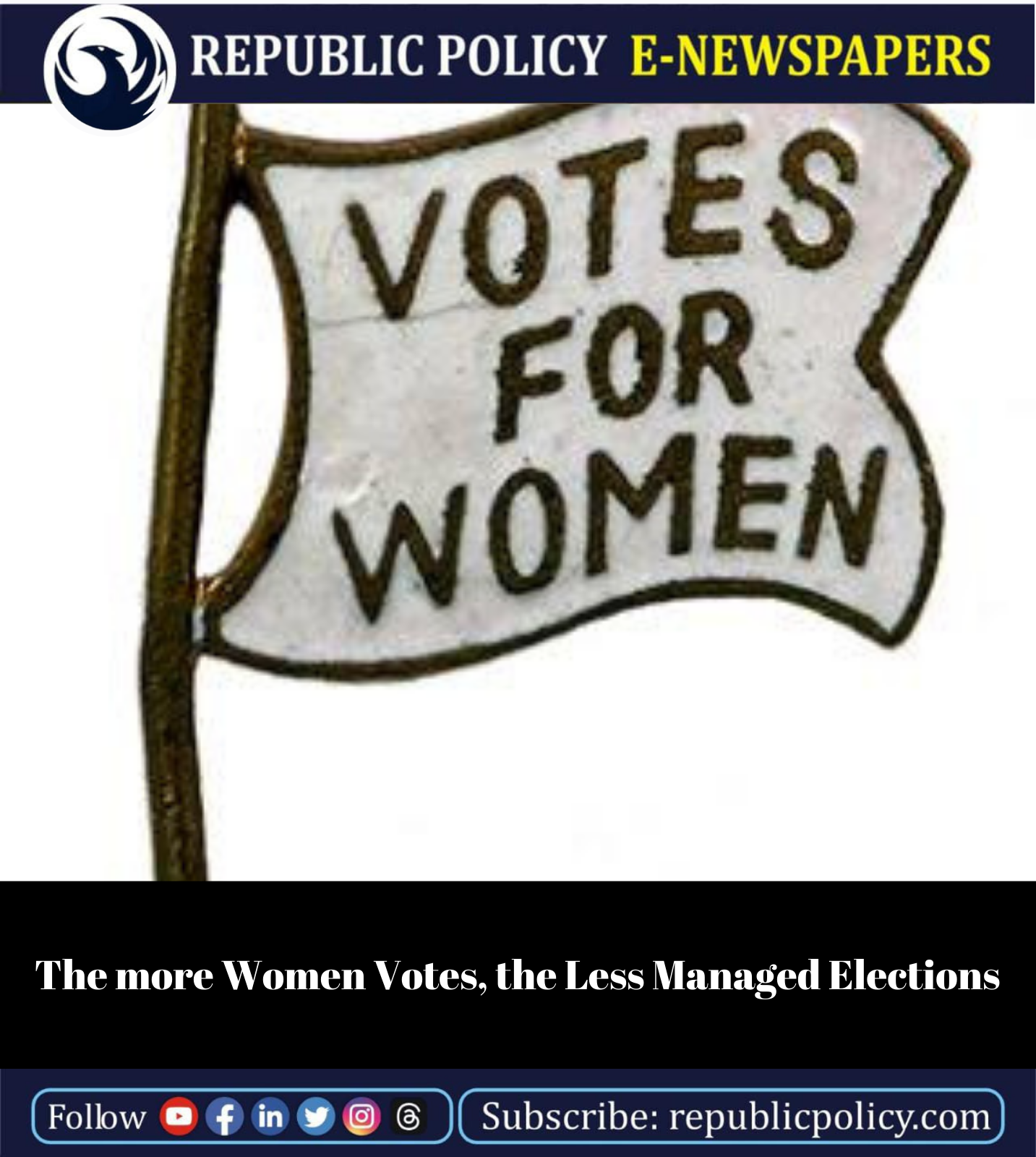

According to some sources, women in Pakistan face many barriers to political participation, such as social norms, cultural traditions, patriarchal structures, religious beliefs, lack of education, mobility, and identity documents, and violence and intimidation. These factors may affect how women exercise their right to vote, whether they vote at all, and whether they vote independently or under the influence of men.
Some studies suggest that women’s voting behavior in Pakistan varies by region, class, ethnicity, and urban-rural divide. For example, women in urban areas may have more access to education, employment, media, and civil society than women in rural areas, which may increase their political awareness and autonomy.However, this does not necessarily mean that urban women are free from male influence or pressure. Some reports indicate that there is a higher gender gap in voter turnout in metropolitan cities than in rural constituencies, which may reflect the persistence of patriarchal norms and practices in urban settings.
Moreover, women’s voting behavior may also depend on the political context, the electoral system, the party platforms, the candidates’ characteristics, and the campaign strategies.For instance, women may be more likely to vote for parties or candidates that address their concerns and interests, such as health, education, water, inflation, security, and women’s rights. Women may also be influenced by the presence of female candidates or leaders in the political arena, as well as by the mobilization efforts of political parties, civil society organizations, media outlets, and election observers.
Therefore, it is difficult to generalize or simplify women’s voting behavior in Pakistan. There may be some educated, independent and urban women who have started voting independently without man’s influence, but there may also be many others who still face challenges and constraints in exercising their political agency. Similarly, there may be some rural or illiterate women who have defied social norms and voted according to their preferences, but there may also be many others who have been excluded or coerced by male relatives or local elites.
It is also hard to predict how the increasing participation of independent women voters would affect the management of elections in Pakistan. On one hand, it could enhance the legitimacy and credibility of the electoral process and the democratic system by ensuring greater representation and inclusion of women’s voices and perspectives. On the other hand, it could also create tensions and conflicts among different groups and actors who may resist or oppose the empowerment of women in politics. It could also pose logistical and security challenges for the election authorities and observers who would have to ensure a conducive and safe environment for women voters.