
Tariq Mahmood Awan
The Crown, the Gora, designed and knitted the social fabric of the Indian subcontinent, especially the western regions that would later become Pakistan. This social fabric was not natural. It was manufactured with purpose, precision, and political intent. The British created a three-tiered social structure that helped them maintain control over a vast and diverse population. They established landlords, they established religious lords, and they established a westernized urban population in the cities. Each category served a strategic function for the colonial power.
Landlords were used to manage and discipline the rural population. They collected revenue, enforced loyalty, and acted as local rulers on behalf of the Crown. Religious sentiment in the region was strong, so the British cultivated and empowered religious leaders, clergy, pirs, and peers, to regulate religious emotions that could potentially turn against them. Alongside these groups, they created a westernized urban class. This class was influenced by English language, English way of life , and English administrative ideas. Many were sent to the UK for education and returned carrying British thinking, British attitudes, and British loyalty, to be recruited in bureaucracy, army & judiciary .
This three-tiered system allowed the British to control society from every corner. Landlords managed the villages, religious leaders managed the emotions and beliefs of the people, and westernized elites managed the state machinery. It was a complete system of social engineering, firmly rooted in colonial needs, not in the identity of the local population.
The genuine local heroes, the real resisters of British oppression, were suppressed. Many were hanged, murdered, or thrown into prisons. Historical records show that those who challenged colonial rule in the 1930s and 1940s were jailed in large numbers. When Pakistan came into being in 1947, many of those same individuals were still behind bars, and kept there. Independence changed the rulers, not the system. The British handed over power to those who resembled them. Local British eras, the brown British eras, replaced the white Britishers. The colonial logic remained intact.
The transformation society needed never happened. Pakistan inherited the colonial state, but it also inherited the colonial social structure. The state began operating over an untransformed society, and that combination could never produce true independence. The mindset stayed colonial. The people who enjoyed honor, status, and influence within society and the state were mostly products of Gora colonization . They belonged to the same classes created by the British, landlords, religious lords, and westernized urban elites.
Pakistan needed a social transformation at the moment of its birth. That transformation never came. Instead, the colonial social order remained intact and continued to shape politics, governance, and public behaviour. To challenge political structures today, Pakistan must first challenge the deeper social structures that lie beneath them. Without reshaping society, the state will continue to operate under old habits, old hierarchies, and old loyalties.
True reform requires a clear ideological and political foundation. Our ideological directions have often come from outside, from Arab lands, Afghan lands, and Turk lands. These influences brought value, but they also diverted attention from local identity. Pakistan must rediscover the ideology rooted in its own soil. All of us are sons of this land, sons of the Indus , shaped by our geography, culture, and history. Real reform begins when society acknowledges its identity and builds strength from it.
From the colonial period to today, one thing has remained constant: reforms cannot succeed unless society evolves first. A clear example is Section 144 of CRPC . The British used it to suppress public gatherings and prevent political rebellion. It remains active even today, decades after independence. If the law meant to silence people still exists, how can society claim freedom? This region never developed a culture of protest because the colonial state trained people to obey, not question. They were controlled by landlords, controlled by religious authority, and in cities controlled by westernized elites. The common man never had space to grow politically or socially.
Today, a cultural transformation is essential. People must understand that the social system they inherited is not organic, natural & akin to local identity l. It was crafted by design, and it continues to shape thinking and behaviour in ways that block progress. Society must be re-knitted with new ideas, ideas that are pure, legitimate, and local, and this transformation must have an organic evolution . Only then can Pakistan construct a society capable of supporting a just and modern state.
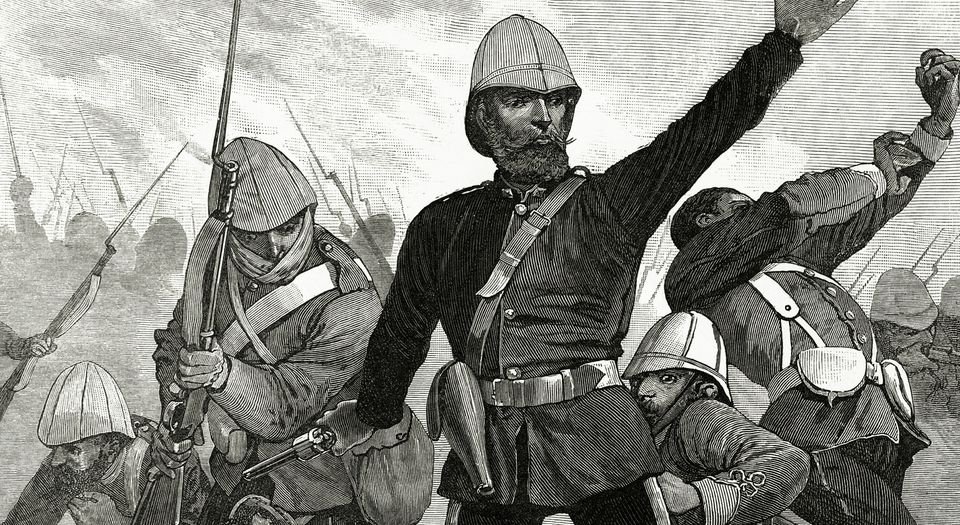
The British did not only shape society. They also created state structures that fit perfectly with their social design. They inducted the same three social categories into military, civil, and judicial institutions. Those tribes that had the potential to rebel were labelled “martial races” and recruited into colonial armies. It was a clever strategy. It neutralized the threat and converted potential rebels into disciplined soldiers under British command.
Inside the colonial state, the British also developed an obsession for public service, an obsession that empowered officials far beyond their roles. Even patwaris, policemen, revenue staff, officers in the deputy commissioner offices, and army personnel were elevated into local nobility. They became the face of the state. They were respected, feared, and obeyed. This created a powerful bureaucratic culture that still exists in Pakistan. Those who hold positions within this structure still carry the legacy of that elevated colonial status.
Because this entire system was structured around colonial objectives, its continuation in Pakistan has limited the country’s political and administrative growth. Many honorable people in Pakistan today are still products of that structure. They either come from westernized backgrounds, or they belong to the landlord class, the religious class, or the bureaucratic elite, classes designed by the British to maintain control.
If Pakistan wants to reform the state, it must begin by reforming society. A society built on colonial foundations cannot produce a democratic, modern, or people-centered state. Social correction is not optional. It is the first step toward genuine reform. Pakistan must move away from a fabricated society toward a localized, rooted, confident society, one that knows its identity, values its people, and demands accountable governance. An organic evolution must take place now.