
Naveed Hussain
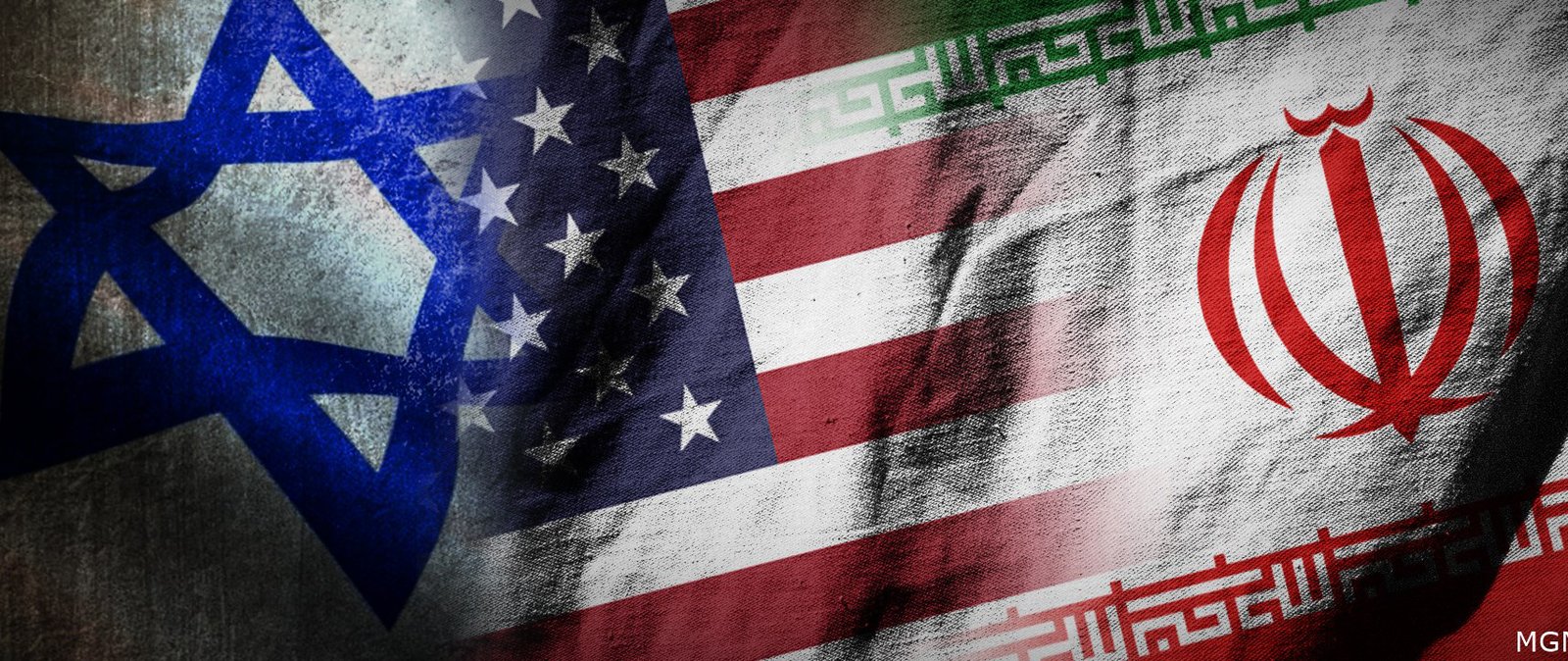
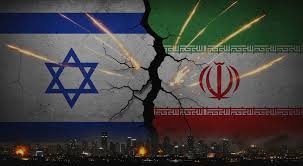
History has a grim habit of repeating itself, and nowhere is this more visible than in the foreign policy of the United States. Twenty-three years ago, a sitting American president committed the full weight of his nation’s military machinery to the destruction of a sovereign state, dressing imperial ambition in the language of liberation and security. The catastrophe that followed reshaped an entire region, leaving behind broken governments, shattered economies, millions of displaced civilians, and a tide of militancy that has not receded to this day. Now, with the launch of joint American and Israeli strikes against Iran on the twenty-eighth of February, and the targeted assassination of Supreme Leader Ayatollah Ali Khamenei, Donald Trump has walked willingly into the same trap that consumed George W. Bush, with the same arrogance, the same blindness to consequence, and the same reckless confidence that overwhelming force can bend history to its will.
Trump spent years positioning himself as the president who would finally end America’s endless wars, the man who understood, better than the Washington establishment, the futility of foreign entanglements. That claim is now exposed as either a profound self-deception or a deliberate lie. The strikes on Iran represent a war of choice in the fullest and most damning sense of that phrase. There was no imminent existential threat requiring immediate military response. There was no Security Council authorisation. There was, in fact, a diplomatic opening actively underway. Oman’s foreign minister had confirmed that Tehran, in negotiations conducted before they were destroyed by this escalation, had agreed to never accumulate enriched uranium. The administration’s case for military action rested on allegations that the facts on the table directly contradicted. What remained after stripping away the justifications was nothing more than a raw assertion of power, the use of force not as a last resort but as a preference, unmoored from the legal and moral constraints that civilised international conduct demands.
The parallels with Iraq in 2003 are not merely rhetorical. They are structural. Both decisions were driven by the assumption that removing a government by force would produce a more compliant and stable successor. Both ignored the deep internal architecture of the targeted societies, their histories, their grievances, their competing factions, and their capacity for prolonged resistance. The American occupation of Iraq did not produce a grateful, pro-Western democracy. It produced a collapsed state, a sectarian civil war, the birth of the Islamic State, and a regional vacuum that Iran itself moved efficiently to fill. Those who designed and cheered that invasion are the same class of policymakers and commentators now applauding the strikes on Tehran, having apparently absorbed nothing from two decades of wreckage.
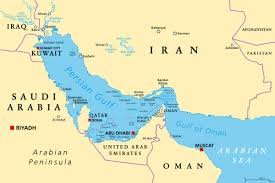
The immediate consequences of this new escalation are already unfolding with a speed that should alarm anyone paying attention. Iran’s retaliation against American installations across Gulf states, including Qatar, the United Arab Emirates, and Saudi Arabia, has drawn nations that spent decades carefully managing their relationships with both Washington and Tehran into the front lines of a confrontation they did not choose and cannot easily escape. The stability of the Gulf, which rested on a calculated and often uncomfortable balance between security dependence on the United States and economic interdependence with Iran, is now under a stress it has not experienced in living memory. The assumption that these states could remain insulated from the consequences of American military adventurism in their immediate neighbourhood has been shattered in a matter of days.
The geographic spillover that follows such ruptures never respects borders, and this crisis carries particular danger for Pakistan. The Iran-Pakistan frontier is not a quiet or well-managed boundary at the best of times. It runs through Balochistan, a province already burdened by its own deep instabilities, insurgent activity, and a security environment that demands constant management. Any significant deterioration inside Iran, whether through prolonged military conflict, internal political collapse, or mass displacement, will not stay on the Iranian side of that border. The pressures will migrate, intersecting with Pakistan’s existing vulnerabilities and adding a new external dimension to crises that are already difficult enough to contain from within. The frontier with Afghanistan compounds this further, since conditions along both borders have a tendency to amplify rather than absorb regional shocks.
Then there is the Strait of Hormuz. Tehran’s decision to close this narrow but irreplaceable passage is not a symbolic gesture. Approximately one fifth of the world’s oil supply moves through that waterway, and its closure translates almost immediately into supply shocks, surging energy prices, and disruption to global markets that are already navigating considerable uncertainty. The economic consequences will not be confined to the Persian Gulf region. They will register in the fuel prices paid by ordinary people in countries that had no role in triggering this crisis, from South Asia to sub-Saharan Africa to the economies of Europe still recovering from previous energy disruptions. The cost of this war of choice will be borne most heavily by those who had no voice in the choosing.
The Iranian people themselves occupy the most tragic position in this unfolding disaster. They have lived through decades of economic strangulation, the accumulated weight of international sanctions imposed in the name of pressuring their government, and the internal repression of a state that answered popular protest with violence. They have not been passive. The waves of anti-regime protest that swept Iran in recent years demonstrated a population demanding change, demanding dignity, demanding a future that their government was unwilling to provide. What they deserved was the space to determine that future for themselves, on their own terms and through their own agency. What they have received instead is a foreign military assault that will deepen their suffering, close the space for internal political evolution, and hand the hardest elements of their own state a ready-made narrative of victimhood and external aggression. The Iranian people will carry the heaviest burden of a war they did not want and a decision they did not make, and for that, history will hold its architects fully to account.