
Zafar Iqbal
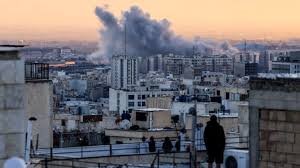
Something extraordinary has happened. The United States military, acting alongside Israel, launched strikes against more than a thousand targets inside Iran. Among the dead is Ayatollah Ali Khamenei, Iran’s supreme leader, the man who sat at the apex of the Islamic Republic for over three decades. This is not a limited skirmish at the margins of geopolitical rivalry. This is a seismic event, and it raises questions that cut to the very heart of constitutional authority, international law, and the limits of presidential power.
President Donald Trump has offered the American public and the world several justifications for the assault, none of them entirely consistent with the other. He argued that Iran was preparing to strike first, that the attacks were meant to neutralise imminent threats to American forces overseas and to its allies. He did not provide the evidence. He also claimed that Iran was weeks away from acquiring a nuclear weapon, a claim that contradicted his own earlier statement from June, in which he declared that the American military had already destroyed Iran’s nuclear programme. These are not minor inconsistencies. They are contradictions that expose the fragility of the legal scaffolding being constructed around this war.
The constitutional question is the most immediate. The American constitution divides the war-making power with deliberate care. The president commands the military and conducts foreign relations. Congress alone holds the authority to declare war. This division was not accidental. The founders feared the concentration of power that allows a single man to drag a nation into conflict. Presidents across generations have tested this boundary, conducting military strikes without congressional approval when actions were limited in scope and duration. Trump, however, is testing a different threshold entirely. Both he and his Secretary of War, Pete Hegseth, have described what is happening as a war, not a targeted strike, not a defensive operation, but a war. Hegseth called it the most lethal, most complex, and most precise aerial operation in history. Trump himself acknowledged it could last five weeks or longer and that American casualties should be expected. These are not the words of an executive conducting a proportionate and time-limited defensive action. These are the words of a commander-in-chief who has stepped into territory the constitution reserves for Congress.
The War Powers Resolution of 1973 exists precisely for moments like this. Enacted in the aftermath of Vietnam to prevent future presidents from conducting undeclared wars indefinitely, it states that the military can only be committed to armed conflict when Congress has declared war, provided specific authorisation, or when the United States itself has been attacked. None of these conditions apply here. The resolution also requires that any unauthorised military action be terminated within sixty days unless Congress acts to extend it. Trump’s administration has begun the required reporting to Congress, but reporting is not authorisation. Members from both parties have signalled their intention to bring a vote this week on withdrawing the military from the conflict. The vote is unlikely to reach the two-thirds majority needed to override a presidential veto. But it will force every senator and representative to go on record in an election year. That political accountability may prove to be, in the absence of legal constraint, the most meaningful check on presidential power that remains.
The international dimension is equally troubled. The United Nations Charter, to which the United States is a signatory, prohibits the use of force by member states against other states. The exceptions are narrow: force authorised by the Security Council, or force used in genuine self-defence against an actual armed attack. Neither condition has been met. There is also the doctrine of pre-emptive self-defence, which would theoretically permit a state to strike if it possessed clear, credible, and imminent evidence of an overwhelming attack. Trump provided no such evidence. Legal experts around the world have concluded that under the framework of international law, as understood by most nations, these attacks cannot be justified. The United Kingdom and Spain have already taken the significant step of restricting the use of their military bases for operations in this conflict, citing the absence of legal justification. America’s veto at the Security Council will shield it from formal censure there, but that veto cannot repair its standing in the eyes of nations who take international law seriously.
The assassination of Khamenei introduces a further layer of legal complexity. Under an executive order signed by Ronald Reagan in 1981, any person working for the United States government or acting on its behalf is prohibited from engaging in, or facilitating, assassination. Israel reportedly conducted the actual strike, while the United States provided intelligence and operational support. Whether that support constitutes participation in an assassination under the meaning of the executive order remains genuinely contested. Legal experts offer a nuanced distinction: what constitutes assassination in peacetime may be a legitimate act of war during armed conflict. Whether the United States was formally at war at the moment Khamenei was killed, and whether he can be classified as a military rather than a civilian leader, are questions that will shape how this act is ultimately judged. These are not comfortable questions. They are important ones.
What is clear is this. The United States has entered a conflict of historic consequence with uncertain legal foundations, shifting justifications, and no formal declaration of war. The constitutional order is being tested. The international legal framework is being strained. The internal checks within the American system, the Congress, the courts, the resolution of 1973, may not be strong enough in the short term to alter the course of events. What legal scholars are quietly saying is that public opinion may be the last meaningful restraint. Governments that wage wars without clear justification, without legal grounding, and without democratic accountability tend ultimately to face the consequences of those choices, not always quickly, and not always cleanly, but inevitably.
The world is watching. The questions being raised are not merely procedural. They are questions about power, about law, and about what happens when the two are no longer aligned.