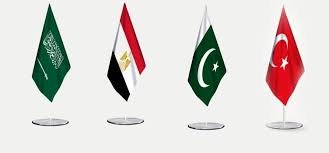

A proposal of historic consequence has emerged from the corridors of Muslim-world diplomacy. Turkey has put forward the framework for a four-nation strategic security alliance comprising Pakistan, Saudi Arabia, Egypt, and Turkey, widely described in international media as an Islamic NATO. The proposal gained momentum at a gathering of foreign ministers in Riyadh on March 21, where the four countries discussed pooling their collective defence capabilities under a unified platform. If realised, this alliance would reshape the security architecture of the Muslim world in ways not seen since the Cold War.
The cornerstone of this proposed alliance mirrors NATO’s Article 5: an attack on any one member constitutes an attack on all. The foundation was already laid last September through the Strategic Mutual Defence Agreement between Pakistan and Saudi Arabia, with Turkey and Egypt now in advanced discussions to formalise their inclusion. Turkish Foreign Minister Hakan Fidan has confirmed Ankara’s commitment to joining a defence framework designed to resolve regional crises without dependence on external powers.
The strategic logic for each member is compelling. Pakistan brings a nuclear deterrent, ballistic missile technology, and a battle-hardened military with unmatched counterterrorism experience. Saudi Arabia contributes vast financial resources, modern defence acquisitions, and unparalleled geopolitical influence across the Arab world. Turkey fields NATO’s second-largest army alongside a formidable domestic defence industry, particularly its celebrated drone technology. Egypt commands the Arab world’s largest standing military and controls two of the world’s most critical maritime corridors: the Mediterranean and the Red Sea.
For Pakistan, the benefits are transformative. A seat at this table elevates Islamabad from a client state perpetually dependent on American goodwill to a principal architect of Muslim-world security. It deepens existing ties with Riyadh, opens new defence-industrial cooperation with Ankara, and broadens Pakistan’s strategic depth eastward into North Africa. This alliance is not directed against any single nation. It is directed toward self-reliance, regional sovereignty, and the collective capacity to manage crises internally rather than inviting superpower interventions that historically serve interests other than those of the Muslim world.
The moment demands vision. Pakistan must engage this alliance fully and urgently.