
By Dr Amir Raza
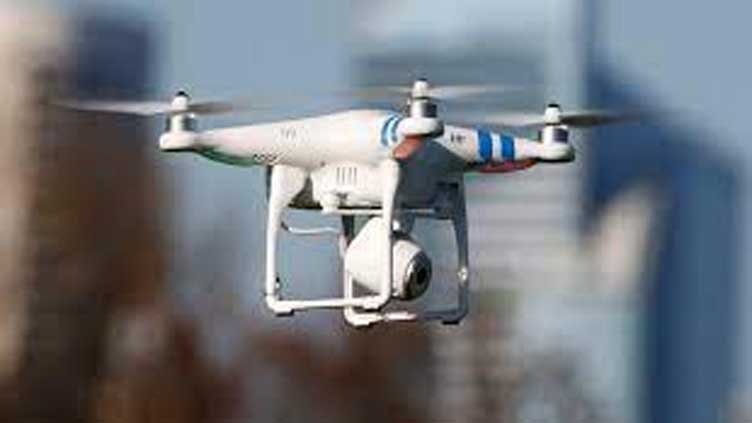
In this heart-pounding tale of technological prowess versus human skill, Swift, the brainchild of University of Zurich researchers, has etched its name in the annals of history. It’s an AI-powered drone that has not just taken on but outperformed the world’s top human pilots in the adrenaline-packed realm of high-speed drone racing. The world watched in awe as Swift soared ahead, winning a remarkable 15 out of 25 races. These races aren’t for the faint of heart; they propel drones to mind-bending speeds of up to 50mph (80 km/h), subjecting them to gravitational forces as high as 5g, an intensity that could easily induce blackouts in most individuals.
Elia Kaufmann, a pivotal figure in Swift’s development, couldn’t contain his excitement, proclaiming, “Our result marks the first time that an AI-driven robot has bested a human champion in a sport crafted by and for humans.”
The world of drone racing, as experienced through the eyes of the pilot, involves skillfully maneuvering a drone through narrow gates along a designated track while deftly avoiding any potential collisions. Pilots heavily rely on real-time video feeds from cameras mounted on their drones to execute their daring maneuvers. In this captivating showdown, Swift, an advanced AI system, went head-to-head with not just any pilots, but three reigning drone racing champions: Thomas Bitmatta, Marvin Schapper, and Alex Vanover.
This remarkable feat leaves us pondering the extent of human ingenuity and the rapid advancement of artificial intelligence. It raises questions about the future of sports, technology’s role in enhancing human capabilities, and the boundaries we continue to push in the pursuit of excellence.
As Swift defied the odds and raced its way into history, it underscores the ever-evolving relationship between humans and machines. With each triumph, AI systems like Swift raise the bar for what is achievable, leaving us to contemplate what else they might conquer in the days to come.
This is more than just a victory for the University of Zurich researchers or for AI technology; it’s a testament to the relentless pursuit of innovation and the boundless possibilities that lie ahead. It’s a glimpse into a future where human and machine collaboration might redefine not only sports but various aspects of our lives.
Drone racing is not just a test of speed; it’s a test of agility, precision, and nerves of steel. Pilots must navigate their drones through a challenging course filled with obstacles and tight turns. The live video feeds from their drones’ cameras provide a first-person view that requires split-second decision-making.
For years, human pilots have dominated this sport, showcasing their exceptional skills and reactions. Drone racing has become a thrilling spectator sport, drawing crowds and enthusiasts from around the world. The pilots’ ability to control their drones with precision has been a testament to human achievement.
However, the emergence of AI-powered drones like Swift challenges the status quo. These machines are not bound by human limitations. They can process data and make decisions at speeds that surpass human capability. In the world of high-speed drone racing, where split-second decisions can make the difference between victory and defeat, AI has demonstrated its prowess.
Swift’s victory raises intriguing questions about the future of sports and competition. Will we witness more instances of machines surpassing human performance in various athletic endeavors? What does this mean for the athletes who have dedicated their lives to mastering their craft? And how will spectators and fans react to the evolving landscape of sports where humans and machines compete side by side?
Beyond the realm of sports, Swift’s triumph highlights the transformative power of AI in various industries. From healthcare to finance, AI is reshaping the way we work and live. It can analyze vast amounts of data, identify patterns, and make predictions with unparalleled accuracy. As AI continues to advance, it will likely become an integral part of our daily lives.
Swift’s victory also underscores the importance of responsible AI development. While AI has the potential to achieve remarkable feats, it must be guided by ethical principles and used for the benefit of humanity. As AI technology becomes more integrated into society, there will be challenges to address, including privacy concerns and the potential for job displacement.
In conclusion, Swift’s historic victory in high-speed drone racing is a testament to the incredible advancements in AI technology. It challenges our perceptions of what is possible and opens up new frontiers in sports and beyond. As we celebrate this achievement, we must also reflect on the ethical and societal implications of AI’s rapid evolution. The future promises exciting possibilities, but it also demands responsible stewardship of this transformative technology.
As human pilots geared up for a week of rigorous practice on the actual racecourse, Swift, the AI-powered prodigy, embarked on a different kind of preparation—a meticulous and demanding training regimen set in a virtual realm painstakingly mirroring the real thing. This wasn’t your typical video game; it was a sophisticated training ground where Swift honed its skills using cutting-edge deep reinforcement learning methods. The essence of this training? Discovering the most effective commands through an exhaustive process of trial and error.
In the virtual world, Swift didn’t just fly gracefully; it endured hundreds of simulated crashes, pushing the boundaries of its capabilities. What makes this training even more remarkable is the flexibility it offered. If things didn’t go as planned, researchers could hit the reset button, allowing Swift to learn from its mistakes and forge ahead. Elia Kaufmann, the lead author of the study, shed light on this process, stating, “To ensure the simulator accurately represented real-world consequences, we developed a method to fine-tune the simulator using real data.”
Swift’s triumph, conquering a physically demanding sport typically ruled by human skill, stands as a towering testament to the relentless march of artificial intelligence across an array of disciplines. It’s a victory that reverberates far beyond the world of drone racing, signaling the boundless potential of AI and paving the way for more electrifying showdowns in the high-speed domain of drone competition.
The journey of Swift, from a virtual novice to a real-world champion, underscores the transformative power of AI and its ever-expanding repertoire of capabilities. This AI marvel has redefined the realm of possibilities, reshaping our understanding of what machines can achieve. It serves as a compelling reminder that the frontiers of human and machine collaboration are constantly expanding.
Don’t forget to Subscribe our channel & Press Bell Icon.
Swift’s ascent to victory wasn’t just a stroll in the park; it was a meticulously designed training process rooted in cutting-edge technology. Deep reinforcement learning, the linchpin of Swift’s training, is a method that allows machines to learn from their actions and optimize their decision-making. It’s akin to teaching a robot to ride a bike by letting it experiment with balance and steering until it gets it just right.
In Swift’s case, this meant navigating a virtual world filled with obstacles, sharp turns, and adrenaline-pumping challenges. The AI-powered drone had to decipher the most effective commands, often through a process of trial, error, and refinement. While the virtual setting might sound like child’s play, it was anything but. Swift’s training was marked by countless simulated crashes, each a valuable lesson in the pursuit of perfection.
What sets Swift’s training apart is its adaptability. If things didn’t go according to plan, there was no need to start from scratch. Researchers could hit the reset button, allowing Swift to learn from its errors and progressively improve. This iterative approach mirrored the way humans learn, emphasizing the importance of experience and resilience in mastering complex tasks.
The fusion of AI and virtual training has profound implications for the future of learning and skill development. It highlights the potential for machines to accelerate the acquisition of expertise in various domains, from sports to healthcare. As AI continues to evolve, we can expect to see more instances where machines learn and excel in ways previously thought to be the exclusive domain of humans.
Swift’s triumph isn’t just about winning races; it’s about pushing the boundaries of what AI can accomplish. It serves as a rallying cry for innovation and exploration, encouraging researchers and developers to aim higher and dream bigger. The AI revolution is still in its infancy, and Swift’s victory is a clear sign that the journey has just begun.
In the world of high-speed drone racing, where precision, split-second decisions, and nerves of steel are paramount, human pilots have long been the undisputed champions. Their exceptional skills and lightning-fast reactions have made drone racing a thrilling spectator sport, drawing crowds and enthusiasts from around the world. The ability of human pilots to control their drones with unmatched precision has been a testament to human achievement.

Check out our monthly English and Urdu magazines on Homepage
However, Swift’s victory challenges this status quo. It demonstrates that AI-powered machines are not bound by the limitations of human physiology. They can process data and make decisions at speeds that surpass human capability. In the realm of high-speed drone racing, where every millisecond counts, AI has showcased its prowess.
Swift’s victory raises intriguing questions about the future of sports and competition. Will we witness more instances of machines surpassing human performance in various athletic endeavors? What does this mean for the athletes who have dedicated their lives to mastering their craft? And how will spectators and fans react to this evolving landscape of sports, where humans and machines compete side by side?
Beyond the world of sports, Swift’s triumph highlights the transformative power of AI across various industries. From healthcare to finance, AI is reshaping the way we work and live. It can analyze vast amounts of data, identify patterns, and make predictions with unparalleled accuracy. As AI technology continues to advance, it will likely become an integral part of our daily lives.
Swift’s victory also underscores the importance of responsible AI development. While AI has the potential to achieve remarkable feats, it must be guided by ethical principles and used for the benefit of humanity. As AI becomes more integrated into society, there will be challenges to address such as privacy concerns, bias in algorithms, and the need for regulation. It’s crucial for researchers, policymakers, and technology companies to work together to ensure that AI advancements align with human values and interests. This includes creating safeguards to protect data privacy, promoting transparency in AI decision-making processes, and establishing regulatory frameworks that balance innovation with ethical considerations. Swift’s triumph serves as a reminder that as AI continues to push boundaries, responsible development and ethical use should remain at the forefront of our efforts.
In conclusion, Swift’s victory in high-speed drone racing is a remarkable milestone in the journey of artificial intelligence. It showcases the boundless potential of AI when paired with rigorous training and cutting-edge technologies. However, this achievement also highlights the need for responsible AI development. As AI continues to advance and integrate into our lives, it’s imperative that ethical principles, transparency, and regulatory frameworks guide its growth. This way, we can harness the full potential of AI while safeguarding against potential risks and ensuring that it benefits humanity. So, let’s embrace AI’s potential while staying vigilant in its ethical and responsible use, paving the way for an exciting future of innovation and collaboration.
Subscribe our website for latest updates:
https://republicpolicy.com/shop/
Read More