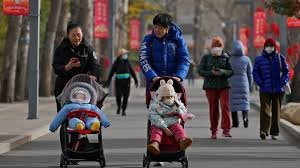

China’s population declined for the fourth consecutive year in 2025, with the birthrate hitting a historic low despite government efforts to encourage families to have children. Registered births fell to 7.92 million, down 17% from 2024, while deaths rose to 11.31 million, pushing the total population down by 3.39 million to 1.405 billion, according to the National Bureau of Statistics.
Experts attribute the decline to high living costs, expensive childcare, and social changes. Raising a child until adulthood costs an average of 538,000 yuan, over six times the GDP per capita, particularly in urban areas. Decades of the one-child policy have also reduced the pool of women of childbearing age and conditioned families to prefer smaller households.
Despite a 90-billion-yuan nationwide childcare subsidy and expanded healthcare coverage for childbirth, young couples remain hesitant, citing economic uncertainty and high unemployment. Marriages, a key driver of births, fell sharply in 2024, though recent reforms allowing couples to marry outside their localities have sparked a modest rebound.
China’s population is aging rapidly, with over-60s now 23% of the total, straining pensions and the workforce. Demographers warn that the shrinking reproductive-age population could drop below 100 million by century’s end, posing long-term economic and social challenges.