
Umara Waqas
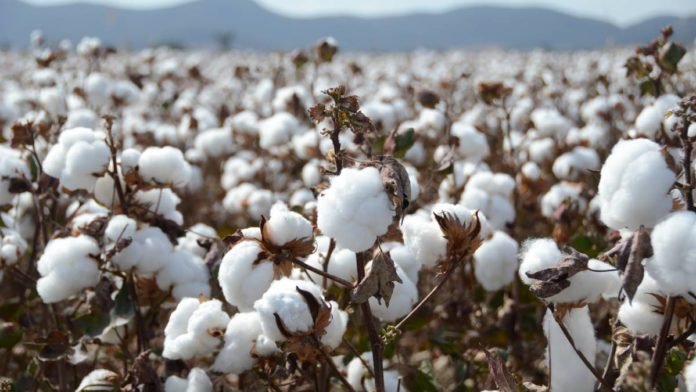
Amidst the tumultuous landscape of Pakistan’s cotton market, turmoil ensues as the international price of cotton phutti takes a nosedive. This global downturn escalates the already existing conflicts between the government and ginners, casting a looming shadow over cotton growers. Alas, the government’s response to this critical issue has been lackluster, showing little concern for the plight of growers who are reeling from the substantial losses inflicted by last year’s floods.
The prevailing global economic concerns have wreaked havoc on the price of cotton phutti both domestically and internationally, painting a gloomy outlook for Pakistan’s cotton sector.
Further complicating matters, the government’s rigid enforcement of a fixed purchase rate of Rs 8,500 for phutti has aggravated the situation. As international prices continue to plummet, factories struggling to meet the support price face the looming threat of closure. Market stakeholders argue that the government should bridge the price gap to incentivize ginners to operate without incurring losses, yet the government has instead opted to clamp down by sealing factories. Such a course of action further exacerbates the crisis rather than offering a viable solution.
Navigating the treacherous waters of challenging international prices, local farmers find themselves grappling to secure fair compensation for their hard work. The liquidity crunch faced by textile manufacturers only adds fuel to the fire, while ginners face roadblocks in processing due to issues with the Central Cotton Institute.
Despite favorable weather conditions and commendable efforts against counterfeit pesticides, cotton’s current price of approximately Rs7,800 per kg falls short of the desired minimum support price of Rs8,500. The intervention from the Trading Corporation of Pakistan may be limited, but millers and exporters remain steadfast in their activities. Projections for this year’s cotton production stand at an estimated 9.5 to 10 million bales.
Adding to the complex equation, the exchange rate volatility creates further obstacles for cotton exporters, leaving their activities in a state of uncertainty. Agriculturist Mahmood Nawaz Shah voices valid concerns about the government’s indifferent attitude and the persisting low rates. Growers have earnestly proposed a rate of Rs10,000, but to their dismay, prices have plummeted to a mere Rs7,000, compelling them to sell at a significant loss. Surprisingly, despite substantial import expenditures, the government chooses to remain disengaged from this critical issue.With cotton exports forming a cornerstone of Pakistan’s economic activities, it is imperative for the government to prioritize addressing the pressing challenges faced by the sector. Immediate and decisive action is the need of the hour to safeguard the interests of growers and restore much-needed stability. Failure to act promptly may spell dire consequences for Pakistan’s cotton industry and the overall economic growth of the nation. The time for proactive measures is now, for the cotton market demands nothing less than a resolute and determined approach.

Click here to read the July issue of Republic Policy Magazine.
In conclusion, the turbulent state of Pakistan’s cotton market requires urgent attention and decisive action. The plummeting international prices of cotton phutti, coupled with internal challenges and government indifference, have placed immense strain on local farmers and stakeholders in the industry. The liquidity crunch faced by textile manufacturers, issues with the Central Cotton Institute, and exchange rate volatility further exacerbate the situation.
Subscribe our website for latest updates:
https://republicpolicy.com/shop/
Read More