
Saba Tanzeel
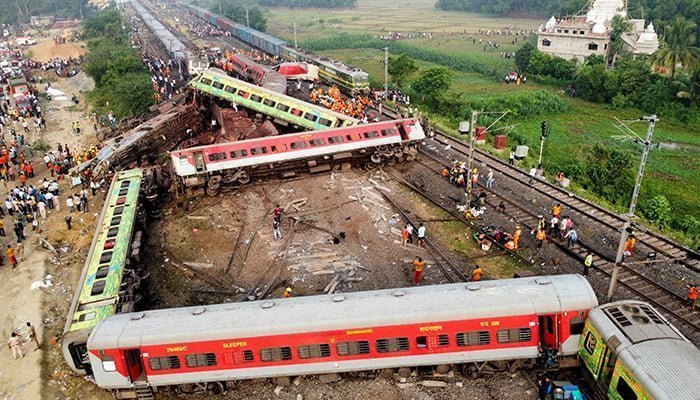
The catastrophic train mishap in India’s eastern state of Odisha should serve as a wake-up call for authorities throughout the subcontinent to thoroughly reassess safety measures and engage in discussions to implement best practices, with the ultimate goal of preventing the recurrence of such heart-wrenching tragedies. Reports indicate that the incident, one of India’s most devastating rail disasters in decades, has claimed the lives of approximately 280 individuals, with nearly 900 sustaining injuries. The calamity unfolded on Friday when the Coromandel Express collided with a freight train, careened off the tracks, and collided with another train. Initial investigations point to a signal malfunction as the primary cause of the accident. While India’s safety record has displayed signs of improvement over time, it is imperative that further action be taken to mitigate the inherent risks associated with the sprawling rail network. With millions of passengers traversing thousands of kilometers on a daily basis, India’s extensive railway infrastructure demands meticulous attention to safety.
Pakistan, too, has grappled with a distressing number of railway accidents resulting in significant casualties in recent years. Among these tragic incidents was the Ghotki crash in 2021, which claimed the lives of over 60 individuals, and the 2019 Tezgam train fire, where over 70 people reportedly perished due to an explosion of a cooking gas cylinder aboard the train. The reality is that train travel remains the most economically viable means of transportation for a majority of individuals commuting between cities. Consequently, it becomes the solemn duty of the state to guarantee the well-being and comfort of passengers as they embark on their journeys.
In the aftermath of such harrowing incidents, a comprehensive evaluation of safety protocols is imperative. Authorities must meticulously examine each facet of the rail system, identifying vulnerabilities, and proactively implementing measures to fortify its integrity. Enhancing safety infrastructure, embracing advanced technologies, and bolstering emergency response mechanisms are vital steps in minimizing the occurrence of catastrophic accidents. Additionally, training programs must be revamped, ensuring that railway personnel are equipped with the necessary skills to handle crisis situations swiftly and efficiently. Only through a tireless commitment to safety can the subcontinent’s rail networks transform into beacons of reliability and secure travel.
Furthermore, it is paramount for India and Pakistan, along with other neighboring countries, to engage in collaborative efforts aimed at sharing knowledge and expertise in railway safety. Establishing forums for dialogue, where key stakeholders can exchange insights, successful strategies, and lessons learned, can foster a culture of continuous improvement in railway operations. By drawing upon the collective wisdom of the region, innovative solutions can be developed, tailored to address the unique challenges faced by each nation’s railway network. Cooperation and coordination among authorities, policymakers, and industry experts will be instrumental in fortifying the safety measures and regulations governing rail transportation.
Pakistan’s failure to allocate sufficient resources to modernize its railway infrastructure, inherited from the British colonial era, is an indisputable reality. The dire state of track maintenance and the substandard signaling system present formidable challenges to passenger safety. Furthermore, the existence of unmanned level crossings poses a grave risk to public welfare. In a striking contrast, India has taken the initiative to address these safety concerns by implementing an anti-train collision system across its vast railway network, albeit at a sluggish pace. Ironically, the realm of railway safety provides an opportune avenue for collaboration between Pakistan and India, given the shared historical roots of their rail systems. While India’s railway network has made significant progress, Pakistan’s railways require a comprehensive overhaul and substantial investments to ensure the well-being and comfort of passengers. Upgrading the tracks is an urgent necessity, and discussions have already commenced regarding the enhancement of the ML-1 under the China-Pakistan Economic Corridor (CPEC). A robust railway network, fortified by rigorous safety measures, serves as an indispensable conduit for affordable and efficient transportation of passengers and goods. By fostering collaborative efforts and exchanging insights among regional states, we can pave the way for a safer and more secure travel experience for all rail commuters.
Regrettably, Pakistan has woefully neglected its responsibility to modernize the railway infrastructure bequeathed by the British colonial era. The deplorable state of track maintenance, coupled with an inadequate signaling system, presents formidable obstacles to passenger safety. Adding to the alarming predicament are the unmanned level crossings that jeopardize public welfare. In stark contrast, India has embarked on installing an anti-train collision system across its expansive rail network, albeit at a sluggish pace. It is ironic that the realm of railway safety offers an opportune avenue for collaboration between Pakistan and India, considering the shared historical lineage of their rail systems. While India’s railway network has raced ahead, Pakistan’s railways urgently demand comprehensive revitalization and substantial investments to ensure passengers’ well-being and convenience. The upgrade of the ML-1 under the China-Pakistan Economic Corridor (CPEC) has been a topic of discussion, emphasizing the pressing need to modernize the tracks. A resilient and secure railway network, fortified by stringent safety protocols, forms the bedrock for affordable and reliable transportation of passengers and goods. Collaborative efforts among regional states can facilitate the exchange of knowledge and experiences, paving the way for a safer and more secure journey for all rail travelers.
It is an unfortunate reality that Pakistan has failed to prioritize the modernization of its railway infrastructure, which traces its origins back to the British colonial era. The deteriorating state of track maintenance, coupled with an inadequate signaling system, poses significant risks to passenger safety. Additionally, unmanned level crossings further compound the precariousness of the situation. In contrast, India has taken steps to address safety concerns by implementing an anti-train collision system across its extensive rail network, albeit at a sluggish pace. Paradoxically, the realm of railway safety presents a unique opportunity for collaboration between Pakistan and India, given their shared colonial legacy in rail systems. While India’s railway network has surged ahead, Pakistan’s railways require urgent revitalization and substantial investments to ensure the safety and comfort of passengers. The upgrade of the ML-1 under the China-Pakistan Economic Corridor (CPEC) has been a topic of discussion, underscoring the critical need to modernize the tracks. A robust and secure railway network, bolstered by rigorous safety measures, is fundamental to facilitating affordable and efficient transportation of passengers and goods. Through collaborative endeavors and the exchange of insights among regional states, we can strive towards making train travel a safer and more reliable experience for all.
In conclusion, it is evident that both Pakistan and India face significant challenges in ensuring the safety and modernization of their respective railway networks. While India has made some strides in addressing safety loopholes, Pakistan lags behind and urgently requires comprehensive reforms and investments. The shared colonial heritage of the rail systems presents an opportunity for cooperation and the exchange of knowledge and experiences in improving railway safety.
Efforts must be made to tackle issues such as track maintenance, signalling systems, and unmanned level crossings, which pose risks to public safety. Modernization projects, such as the upgrade of the ML-1 under the China-Pakistan Economic Corridor (CPEC), hold promise for enhancing the quality and safety of rail travel.
A robust and reliable railway network is essential for providing affordable transportation for passengers and freight. It not only ensures the well-being and comfort of travelers but also contributes to economic growth and regional connectivity. Collaborative endeavors among regional states can play a crucial role in creating a safer and more secure railway environment.
As we move forward, it is imperative for authorities in both Pakistan and India to prioritize the modernization and safety of their railway infrastructure. By investing in upgrades, implementing advanced safety measures, and fostering cooperation, we can work towards a future where train travel becomes a seamless and secure experience for all.
Subscribe our website for latest updates:
https://republicpolicy.com/shop/
Read More