
By Zakir Hussain – Diamar Basha Dam & Resetting of affected community
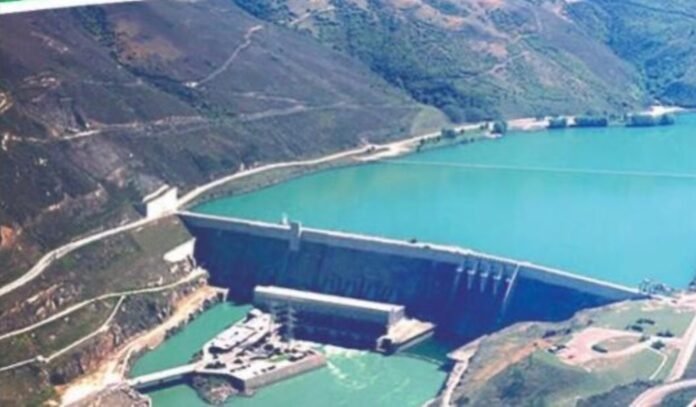
The resettlement and rehabilitation of displaced people of Diamer Bash Dam is a major challenge for government of Pakistan and government of Gilgit Baltistan. Diamer Bhasha Dam is a mega power plant project which is going to be executed in the Diamer region of Gilgit-Baltistan and Basha of Khyber Pakhtunkhwa. This very project involved multiple stakeholders, such as China, the local population, the Government of Pakistan, the Government of Gilgit-Baltistan. This project needs huge acres of land for construction. For this purpose, the Government of Pakistan has acquired land in the selected region through compensations. Almost twenty-three villages are completely acquired and affected. The government of Pakistan has settled these affected people in different regions of Gilgit-Baltistan. For this purpose, the government has also established thirty-three smart villages to settle the displaced people (Sabir, André and Habibullah, 2017).
On 13th May 2020, Pakistan has signed a deal with a Chines owned firm to construct a dam worth PKR-442 billion which is equal to almost $ 3.7 billion, and the height of the dam is 272-metre. The total cost of the dam is at around PKR-1.497 trillion which is equal to $12.15 billion. The Diamer Basha Dam will be constructed on the river Indus in Gilgit-Baltistan and Khyber Pakhtunkhwa. Under the terms deal, China power will hold around 70% of the total share of work while the remaining of the total 30% will be going to the Frontier Work Organization (FWO) . This project covers the diversion system, main dam, an access bridge, and 21 megawatts Tangir Hydropower Project (GoP, 2020). This project will be completed in the year 2028.
The Diamer Bash Dam has long-lasting impacts on the overall wellbeing of the people of Gilgit Baltistan. The dam project is being faced with numerous issues and challenges in terms of distributions of resources, acquisition of land, displacement of population, lack of research and development, payment of compensation , resettlement issues, and rehabilitation problems being faced by the people of Diamer and Basha collectively. Many times, the local people have blocked the Karakoram Highway (KKH) for their royalty rights (Sayira, 2015).
The major part of the Dam project and related facilitaties are located in the Diamer region which is one of the major districts of Gilgit-Baltistan.. The people have been affected socially and economically. The compensation of land given to the people of the region has been a major issue. The total population of the district Diamer is around 12039 households where the majority of the families are living in the joint and extended family system. Among these total populations, almost 4228 households have been affected directly and indirectly. These people have dispersed into 20 different villages where they faced cultural issues, traditions, faced caste system issues.
Moreover, these villages are in tough mountainous regions and areas, where survival is more difficult. During the summers, in most of these villages are being targeted by floods, landslides and faced extreme difficulty to reach these villages by road. However, people of these regions are connected through unpaved rough roads and paths. Further, in winter, due to high cold weather, people from upper regions migrate to the lower regions, like Chilas, etc (Mustafa, 2021).
These people who will be displaced from their permanent residence have numerous socio-economic activities, like agriculture, farming, labour both skill and unskilled, businesses, private employment, and security forces. A study conducted which showed that the majority of 33.5% of the total inhabitant are engaged with agricultural activities, and only 0.6% of the people are in security forces and almost 10.5% of the total population is unskilled labour and almost most of the 19% of the population is doing Government jobs. Further, 15.1% of the inhabitants are doing business and only 4.7% of the inhabitants are doing private jobs .
For resettlement and rehabilitation purposes, the Government of Pakistan with the close cooperation of their stakeholders has done many different projects ranging from the establishment of a smart village system, skill development centres for women, females’ schools, tourism spots.
The majority of the areas of the Dam project in Diamer Gilgit-Baltistan and some areas are also included in Khaybar Pakhtunkhwa.. The project has been started years ago, but due to administrative and some technical issues, such as land acquisition problems, financial constraint, administrative red tape, , have been the main hurdles (Wold Bank, 2021., Kiani, 2020).
However, in the recent era, the Government has signed a deal with Chinese owned firm for the construction of the Dam and resettlement of the displaced people in a peaceful manner .
Due to the project, almost thirty-five (35) villages are directly and indirectly affected, and thousands of families have been displaced. The compensation of land to the affected people was a big milestone. Many locals have settled to the different parts of Gilgit-Baltistan and adjacent areas on their own .
Moreover, the Government of Pakistan has planned to establish some smart villages for the resettlement and rehabilitation of the displaced people with modern facilities, like education, health, and other skill development projects .
Due to the mega project many social and political factors are involved in the rehabilitation and resettlement process of displaced people.
The displaced people have been facing numerous problems, challenges, and issues in the overall process of rehabilitation and resettlement in different villages in Gilgit-Baltistan. Also, the Government of Pakistan gave initial compensation for land and other related properties. Still, due to some socio-political issues, the problems have not been settled completely . The community is facing a range of issues like bad climate effects, flood and landslides, lack of money, employment, cultural issues, and problems and psychological depression.ln order to address the concerns of displaced communities it would be wiser step to adopt a holistic approach towards permanent resettlement of the DBD affectees.
The writer is a civil servant at Gilgit Baltistan
Read More: https://republicpolicy.com/inevitable-political-reforms-in-pakistan/