
Dr Bilawal Kamran
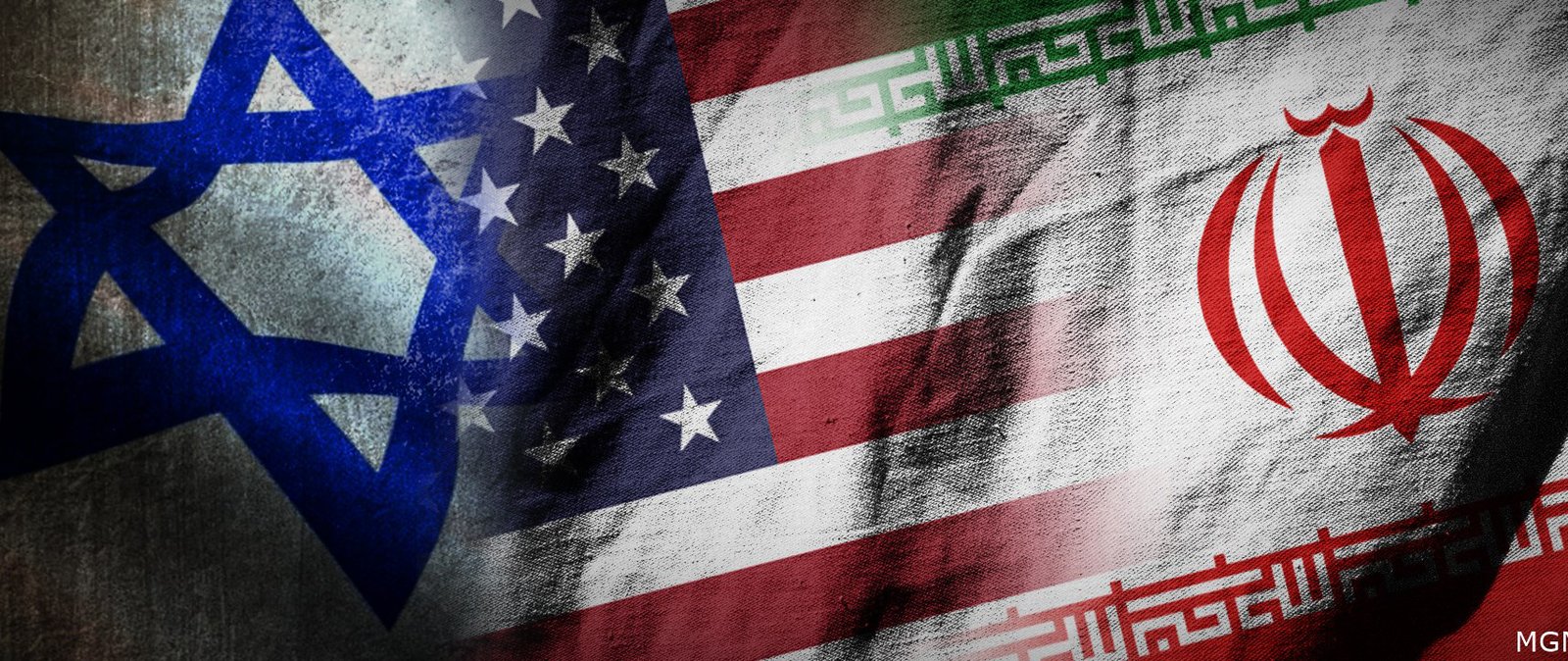
Diplomacy as a Substitute for Economic Courage Pakistan’s recent diplomatic push for de-escalation in the Iran conflict has been widely presented as responsible statecraft, a middle power exercising its regional influence for the sake of stability. That reading is not entirely wrong, but it is incomplete. Behind the diplomatic messaging lies a more uncomfortable truth: Islamabad is trying to use foreign policy to escape an economic adjustment it has long delayed and still refuses to confront directly.
The economic exposure is real and already spreading. A prolonged conflict in the region does not threaten Pakistan merely through oil prices, though that alone would be serious enough. What began as an energy price shock has already radiated outward into rising freight costs, widening insurance premiums, more expensive imported inputs, and softening demand in export markets that Pakistan cannot afford to lose. Taken together, these pressures will squeeze the external account, push down the rupee, and revisit the balance of payments with a force that could materialise as early as the final quarter of this fiscal year. Layer in the remittance risk from the Gulf, where millions of Pakistani workers are employed, and the country’s external vulnerability becomes not a distant projection but an immediate reality.
The policy response to this situation is not genuinely uncertain. Economists broadly agree on what must be done. Fuel prices should reflect their actual cost. Electricity and gas tariffs need honest revision. The fiscal position must be tightened across the board, not managed through deferrals and hidden liabilities that flatter today’s numbers while poisoning tomorrow’s. Borrowing-fuelled consumption must be reined in rather than protected. These prescriptions are analytically uncontroversial. They are, however, politically brutal, which is precisely why the government has not acted on them and shows no real intention of doing so.
This is the core of the problem. The current hybrid arrangement, now well into its fourth year, remains committed to advertising economic progress and a development narrative. Front-loading economic pain does not serve that story. And so the government reaches for the response Pakistan’s political class has always preferred when faced with hard choices: delay the correction, dress it up, and quietly hope that something external intervenes before the reckoning arrives. That something, in this case, is a shorter war.
A quicker de-escalation would reduce the immediate pressure on prices and the exchange rate. It would allow the government to avoid the politically toxic sequence of fuel price hikes, upward tariff revisions, fiscal retrenchment, and demand compression. This is why diplomacy has been elevated with such urgency. It is not purely a foreign policy calculation. It is an economic strategy by other means, an attempt to make external events do the work that domestic policy has declined to do.
The problem is that even this escape route has limits Pakistan cannot control.
The Gulf partners that matter most to Islamabad, those whose financial flows, labour markets, and energy supplies Pakistan depends on most directly, have their own priorities in this conflict. They are not simply waiting for Pakistan to call for a ceasefire so that everyone can stand down. Their concern extends beyond the immediate fighting to the regional architecture that survives after it. From their vantage point, a ceasefire pushed prematurely may not read as de-escalation but as an unwelcome interruption, one that freezes a situation in a form that serves neither their interests nor their longer-term strategic calculations.
This places Islamabad in a genuine bind. Move too aggressively toward a ceasefire, and Pakistan risks getting ahead of the very partners whose goodwill it cannot afford to squander. Wait too long, and the economic damage at home accumulates with every passing week. There is no clean exit from that dilemma. The government is caught between an economic adjustment it is unwilling to absorb and a diplomatic environment that may not cooperate in replacing it.
What makes this especially telling is how familiar the pattern is. Pakistan has done this before, many times. Faced with an efficient but painful response, the state constructs an elaborate detour that appears politically safer. It calls delay a strategy. It treats deferral as relief. It frames the hope for external rescue as active policy. It rarely works. The correction that was postponed returns later, usually carrying additional interest, often arriving at a moment of even greater fragility.
Fuel subsidies extended to soften a price shock do not absorb the cost. They reschedule it. Deferred energy import payments do not reduce the obligation. They push it into the budget, into inflation, and eventually into the external account as a concentrated rupture. Pakistan has experienced this cycle enough times that the pattern should be recognisable without the benefit of hindsight. Yet recognition has not produced a different choice.
The broader point deserves to be stated clearly. What is being presented in diplomatic circles as regional leadership and responsible de-escalation also reveals, quite precisely, the condition of a state that needs diplomacy to double as a macroeconomic shock absorber. A government with adequate reserves, a credible fiscal record, and energy prices that reflect economic reality would not be in this position. It would still pursue de-escalation because stability matters, but it would do so from a position of structural resilience rather than structural desperation.
What is unfolding in Islamabad is therefore two stories running simultaneously. One is about Pakistan’s foreign policy posture in a volatile region. The other is about a government attempting to negotiate away the consequences of its own accumulated reluctance to adjust. Both stories are true, but only one is being told. The question of whether the gamble succeeds depends entirely on how events unfold in a conflict Pakistan did not start and cannot direct. That dependence on outcomes beyond its control is precisely what makes the choice so narrow, the exposure so real, and the cost of continued delay so much higher than anything a shorter war alone could spare it from facing.