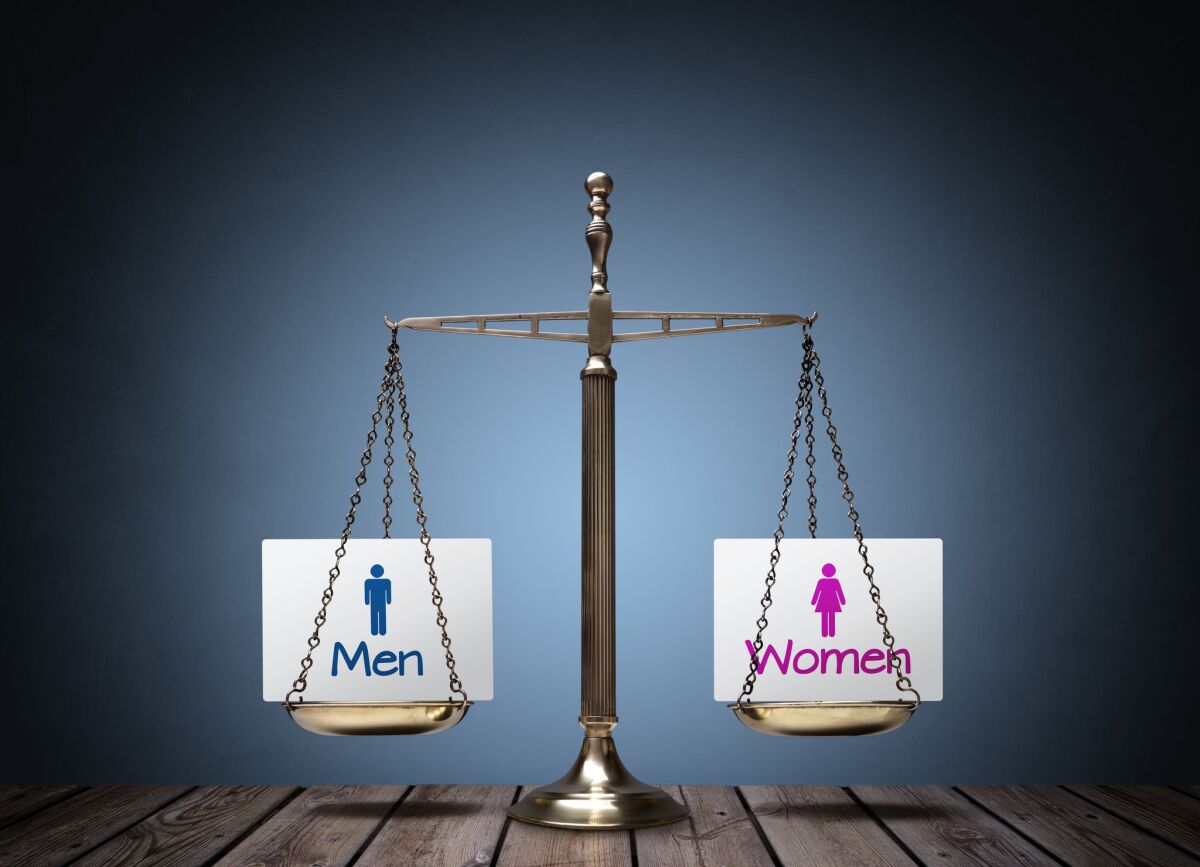

As Chairman Mao Zedong said, women hold half of the sky, which means women are equal in all spheres of this universe. Unfortunately, women are still facing the issue of inequality, and there is not any country in this world that has 100% gender equality. The top nine states in the Global Gender Index have 80% gender equality in 2023. International Women’s Day was celebrated on March 8, 2024, to commemorate and acknowledge the accomplishments of women, promote and protect women’s rights, and gather global support for women’s empowerment. This day was celebrated under the theme “Investing in Women: Accelerating Progress,” which says that progress is impossible without women.
Women are human beings and have the same rights as men. They are different biologically, but this difference doesn’t stop men and women from having equal political, economic, spiritual, social, legal, constitutional, cultural, and other opportunities. However, these opportunities are not available in many parts of the world, and women are facing issues of discrimination, bias, and stereotypes. The phenomenon of women’s empowerment is available on paper, but it is missing in practical life. By looking at sustainable development goals and basic needs across the globe, women are suffering everywhere. First, they are facing issues of unfulfilled sustainable development goal number 1, where 346 million women are victims of extreme poverty, and a quarter of women are facing issues of food insecurity. Each year, 236 million women are food insecure, and such statistics are available in the health sector, such as lack of shelter and lack of access to quality education. The world population consists of 49.7% women, struggling for their rights at political, economic, social, and all other levels across the globe, which is the reason behind the emergence of women’s rights movements.
In Pakistan, women make up half of the population, but they do not have equal opportunities, which is why human development indicators show a dismal state of affairs. Pakistan is at 142 out of 146 countries, which is just better than Afghanistan, Iran, North Korea, and Algeria. It is the second worst in South Asia, and the gender parity rate is 57.5%, whereas the whole region score is 63.4%. The scores of Pakistan in all development indices are very low due to a lack of women’s empowerment; half of the population is burdened on men, and the state needs to capitalize on its human capital. The poor score of Pakistan in all sustainable development goals (SDGs) is due to the need for more women to participate side by side with men. As the Founder of the Nation, Mr. Jinnah, said in 1944, “No nation can rise to the height of glory unless your women are side by side with you. We are victims of evil customs. It is a crime against humanity that our women are shut up within the four walls of houses as prisoners.
There is no sanction anywhere for the deplorable condition in which our women have to live.” The participation of women in Parliament, bureaucracy, and at high offices is approximately 5%; in labor force participation, it is 24%; the literacy rate of females is 48%, and the male literacy rate is 72%; and out-of-school children contain 10% more girls as compared to boys.
Moreover, Pakistani women are facing the issue of harassment at various levels. According to a recent report, 90% of women are facing domestic violence, and half of them have never reported it. Despite various bills passed in provinces, one of them, the Protection Against Harassment of Women at Work (A) Bill 2022, has no implementation in letters and spirits. Issues of child marriages, honor killings, and forced marriages are common in Pakistan. Also, lack of awareness at the individual, societal, and national levels is another reason. Even the women in Parliament, policy circles, and high offices are less concerned about women’s rights. This is also associated with low government funding, fewer schools and colleges for women, and a low enrollment rate of women in educational institutions due to a lack of awareness of women’s rights in certain areas.
On the other hand, women work efficiently and effectively in almost all sectors, such as politics, bureaucrats, senators, doctors, media persons, and many more. Fatima Jinnah, Benazir Bhutto, Asma Jehangir, Sheema Kirmani, Nighat Dad, and Malala Yousafzai are examples of empowered women. It is time to show commitment to the theme of IWD 2024 pragmatically to empower women in Pakistan to make the country peaceful, free of extremism, prosperous, pluralistic, democratic, and inclusive. For this, policymakers have to learn from Bangladesh, where women make up 80% of their labor force and are the leading GDP in Asia; Vietnam, with a growth of 6% due to women’s participation in the economy; and Rwanda, with more than 60% women in Parliament. These three states have risen from ashes in front of our eyes.
To sum up, we need to start at home if we really want to invest in women and accelerate progress. First, we need to empower women at the family level by providing their due rights, like the right to inheritance, education, health facilities, space, all the facilities as men, the right to choose, profession, marriage, divorce, right to body, freedom, abortion, and to have a harassment-free world. Secondly, at the societal level, we need to provide education on a priority basis with access to technology and the internet access, equal opportunities in schools, colleges, universities, scholarships, and research and development. This will bring an educated nation; as Napoleon Bonaparte said, Give me an educated mother, and I shall promise you the birth of a civilized, educated nation. And finally, empower women at the decision-making, financial, and political levels. If this half of the population of women in Pakistan participates in the economy, then it will increase 60% of GDP by 2025. Women in policy circles in Parliament, the cabinet, the judiciary, think tanks, and the media will reduce polarization and develop a democratic political culture and good governance.
Walait Khan
School Leader
Wkhanhrp93@gmail.com
Please, subscribe to the YouTube channel of republicpolicy.com