
Shazia Ramzan
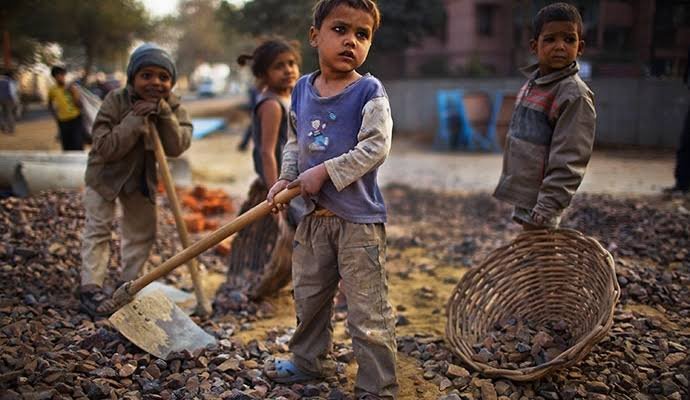
Pakistan has long carried the weight of a number on its conscience. Twenty million out-of-school children is not a statistic that sits quietly in a government report. It is a national indictment, a daily reminder that the country continues to fail an enormous portion of its youngest citizens at the most foundational level possible. Against this grim backdrop, the federal government’s announcement of enrolling 25,000 out-of-school children in Islamabad within three months deserves attention, not merely as a policy target but as a test case with implications far beyond the capital.
The ambition behind the initiative is not in question. What matters is whether ambition can translate into execution, and whether Islamabad, with all its structural advantages, can finally demonstrate to the rest of the country that a serious, sustained push for enrollment is possible. If it can, the ripple effect across Pakistan’s provinces could be significant. If it cannot, the failure will speak volumes about the limits of even the best-resourced efforts at the centre.
To be fair to the federal government, Islamabad is not facing the same scale of challenge that confronts Sindh, Balochistan, or the more remote districts of Khyber Pakhtunkhwa. The capital houses approximately 89,127 out-of-school children, a number that, while alarming in its own right, is operationally manageable compared to the provincial landscapes where millions of children remain invisible to the education system. Islamabad also benefits from a concentration of administrative capacity that the provinces simply do not have. Direct oversight, proximity to policymaking bodies, and a relatively compact geography all work in the capital’s favour. These are advantages that cannot be replicated easily elsewhere, which is precisely why getting this right in Islamabad is a prerequisite before any national replication can be seriously discussed.
Given this context, the 25,000 target, while publicly framed as ambitious, is perhaps better understood as a conservative opening move. The real measure of success should not be whether that specific figure is met. The more honest and demanding standard is how close the government gets to the full 89,000-plus children who are currently outside any school. A campaign that stops at 25,000 and declares victory will have helped a portion of those children while quietly abandoning the rest. Genuine success means treating the larger figure as the actual goal, not a distant aspiration.
There is also a political dimension to this effort that deserves candid acknowledgement. One of the most persistent criticisms directed at the eighteenth amendment and the subsequent devolution of education to the provinces has been the argument that the federal government was better placed to administer the subject. Proponents of centralisation have long maintained that provinces lack the governance infrastructure to manage education effectively. Whether one agrees with that view or not, the consequence is clear: Islamabad is now, whether it invited the scrutiny or not, under pressure to prove the counter-argument. If the federal government cannot bring its own backyard into order, it loses the moral authority to critique provincial performance. The stakes, therefore, are not merely administrative. They are constitutional and political.
The “No Child Left Behind” campaign, as it has been described, rests on what the government calls a Carpet Coverage Plan, designed to reach every union council in the capital through a combination of formal and non-formal education pathways. On paper, this is a thoughtful structural approach. Deploying outreach to the union council level ensures that the effort is granular rather than generic, targeting the specific neighbourhoods and communities where out-of-school children are concentrated. The plan to establish community schools near these hotspots of low enrollment is particularly sensible, as proximity remains one of the most stubborn barriers keeping children out of classrooms. When a school is too far, too unsafe to reach, or simply invisible to a family’s daily geography, the most determined parent can still find themselves without a viable option.
However, proximity alone is not an education. This is the point where the plan’s ambitions risk outrunning its foundations. Getting a child through a school gate is one achievement. Ensuring that the education waiting on the other side of that gate is actually meaningful, stimulating, and capable of preparing that child for a productive future is an entirely different undertaking. The quality of education across Islamabad’s schools is, by any honest assessment, deeply inconsistent. There are schools in the capital that perform reasonably well. There are others that exist in name only, staffed inadequately, furnished poorly, and supervised with little accountability. Enrolling a child in the latter category is better than leaving that child on the street, but only marginally so.
This tension between access and quality is the central unresolved challenge in Pakistan’s education conversation. For years, policymakers have tended to treat enrollment as the primary metric of success, counting heads rather than measuring outcomes. The result has been a system that technically absorbs a large number of children while failing to educate them in any meaningful sense. Learning poverty, which refers to the inability of children to read and understand a simple text by the age of ten, remains alarmingly high in Pakistan. Enrollment figures, however impressive they may look on a chart, do not tell that story.
The government must therefore approach this initiative with a dual mandate. The first task is enrollment, getting those 89,000 children off the streets and into classrooms. The second, equally urgent task is quality assurance, ensuring that the classrooms those children enter are environments where genuine learning occurs. These two mandates must run in parallel, not in sequence. Waiting until enrollment targets are met before turning attention to quality is a luxury Pakistan cannot afford and a delay its children have already paid for far too long.
If Islamabad succeeds on both fronts, it will have achieved something genuinely worth celebrating and, more importantly, worth replicating. Pakistan’s provinces are watching. Twenty million children are waiting.