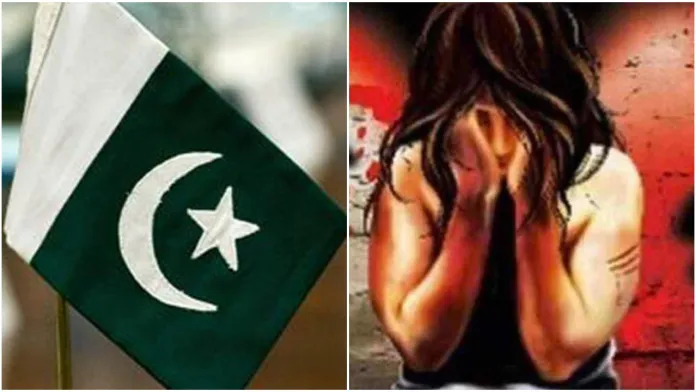

The moral compass and worth of women are pivotal in shaping the ethical landscape of a nation. However, regrettably, Pakistan finds itself treading on unstable terrain. In a disheartening turn of events, the Lahore police recently documented eight instances of rape within a mere 48-hour timeframe, victimizing individuals spanning across different demographics, including a teenager, a maid, and a nurse. These innocent souls were ensnared, manipulated, and ensnared under the false pretense of promising employment opportunities by their perpetrators. To compound the distress, two suspects violated the rights of a mentally challenged 14-year-old girl in Hafizabad. These appalling incidents shed light on the unsettling reality that confronted Pakistan in 2022, where it ranked a disheartening 145th on the gender equality index. This ranking was a direct consequence of the harrowing data that exposed a pervasive “rape epidemic,” with a shocking occurrence of rape taking place every two minutes, primarily due to an alarmingly low conviction rate of a mere 3 percent. Adding to the grim picture, Sindh witnessed an alarming 200 percent surge in reported rape cases during the same year, coupled with a conviction rate of less than 1 percent. Notably, the highest concentration of reported cases, a staggering figure of 185, emanated from Karachi East.
The safety and dignity of women should be sacrosanct in any civilized society. Yet, Pakistan’s current state of affairs regarding this matter is dishearteningly fragile. Recent events in Lahore serve as a stark reminder of the prevalent horrors faced by women in the country. Within a span of just 48 hours, the local police recorded a distressing number of rape cases, involving victims ranging from a vulnerable teenager, a hardworking maid, to a dedicated nurse. These unsuspecting individuals were shamelessly preyed upon by their captors, who lured them into a web of deceit under the guise of promising employment opportunities. Adding to this appalling narrative, another incident unfolded in Hafizabad, where the rights of a mentally challenged 14-year-old girl were brutally violated by two suspects.
The gravity of the situation is further magnified when we examine Pakistan’s position on the gender equality index. In 2022, the country’s ranking plummeted to a dismal 145th place. This downward spiral is a direct consequence of the staggering prevalence of what can only be described as a “rape epidemic.” Shockingly, statistics reveal that a rape occurs every two minutes in Pakistan, painting a chilling picture of the pervasive violence against women. The root cause of this crisis lies, in large part, with the abysmally low conviction rate, which stands at a mere 3 percent. These distressing figures expose a systemic failure in delivering justice and protecting the rights of victims.
A deeper analysis of the situation in Sindh, one of Pakistan’s provinces, unveils an even more distressing reality. In 2022, the region witnessed an alarming 200 percent surge in reported rape cases. This shocking increase is coupled with a conviction rate that falls below 1 percent, highlighting the sheer magnitude of the problem. Among the various districts within Sindh, Karachi East stands out with the highest number of reported cases, a staggering figure of 185. This sobering statistic serves as a stark reminder of the urgent need for effective measures and comprehensive reforms to address the deeply rooted issues that perpetuate such heinous crimes.
In our narrow-minded milieu, an enlightened and well-informed discourse holds the key to fostering harmony. To achieve this, it is crucial to shift the focus towards raising boys who respect women and understand the importance of consent. This shift in mindset should aim to eradicate victim-blaming and the excessive surveillance of women. Unfortunately, our national leaders and institutions often trivialize the grave issue of rape. This was evident when PPP’s Nabil Gabol made insensitive remarks in April, when Imran Khan advocated for outdated concepts of purdah by claiming that “men are not robots,” and when a high court set aside a life sentence because the perpetrator agreed to marry his victim. It is hardly surprising, then, that in the face of indifference from influential figures and platforms, victims themselves are subjected to censure instead of the heinous crimes committed against them.
While significant strides have been made in amending rape laws to address antiquated clauses, regressive interpretations that rely on notions of “virtue” to justify sexual assault still persist. Additionally, the misogyny prevalent among law enforcement agencies and members of the judiciary further exacerbates the issue. The language used in these contexts perpetuates a climate that fosters crimes, ultimately undermining the very principles of justice. It is crucial to recognize that rape is not an act driven by sexual desire but rather a manifestation of power and a desire for revenge. Therefore, even within the confines of their homes, women are far from safe, as they remain vulnerable to offenses such as marital rape. Pakistan must abandon its casual approach to this grave matter and instead prioritize the establishment of safe spaces, the cultivation of an informed citizenry, and the swift implementation of accountability measures that are long overdue.
It is high time we discard our narrow perspectives and engage in a discourse that fosters empathy, understanding, and equality. The onus is on each and every one of us to challenge the existing societal norms and attitudes that perpetuate violence against women. Raising awareness and education are vital components of effecting lasting change. We must teach our sons to be allies and advocates for women’s rights, instilling in them the values of respect, consent, and empathy from an early age. Simultaneously, we must empower women to speak up, to demand justice, and to support one another in their quest for a society free from the shackles of gender-based violence.
In order to achieve meaningful progress, the legal system must play its part by ensuring that laws are robust, comprehensive, and responsive to the needs of survivors. Law enforcement agencies should be held accountable for their actions, with a zero-tolerance policy towards any form of misconduct or negligence. Furthermore, the judiciary must demonstrate unwavering commitment to delivering justice swiftly and impartially. It is essential that survivors are provided with the necessary support services, including counseling and rehabilitation, to aid in their healing process.
Pakistan stands at a crossroads, faced with the urgent task of dismantling the prevailing culture of silence and complicity. We must collectively reject the notion that violence against women is acceptable or inevitable. By working together, we can build a society where the safety and well-being of women are upheld as non-negotiable values. Let us strive for a Pakistan that not only values its women but actively works towards creating an environment where they can thrive, free from the fear of violence and discrimination. The time for change is now.
In conclusion, Pakistan’s current state of women’s safety and value is disheartening and calls for urgent attention. The alarming frequency of rape cases and the low conviction rates highlight the deep-rooted issues within society and the justice system. It is crucial to shift the narrative towards respect, consent, and eradicating victim-blaming. National leaders and institutions must take responsibility and refrain from trivializing or perpetuating harmful stereotypes. Amendments in rape laws have been made, but language that reinforces misogyny and archaic notions of virtue continue to hinder progress. It is vital to recognize that rape is not about sex but about power and revenge. Creating safe spaces, promoting awareness, and ensuring swift accountability are long overdue measures. Pakistan cannot afford to remain complacent; it is time to dismantle the barriers and work towards a society where women are truly valued and protected.
Read more: