
Tariq Mahmood Awan
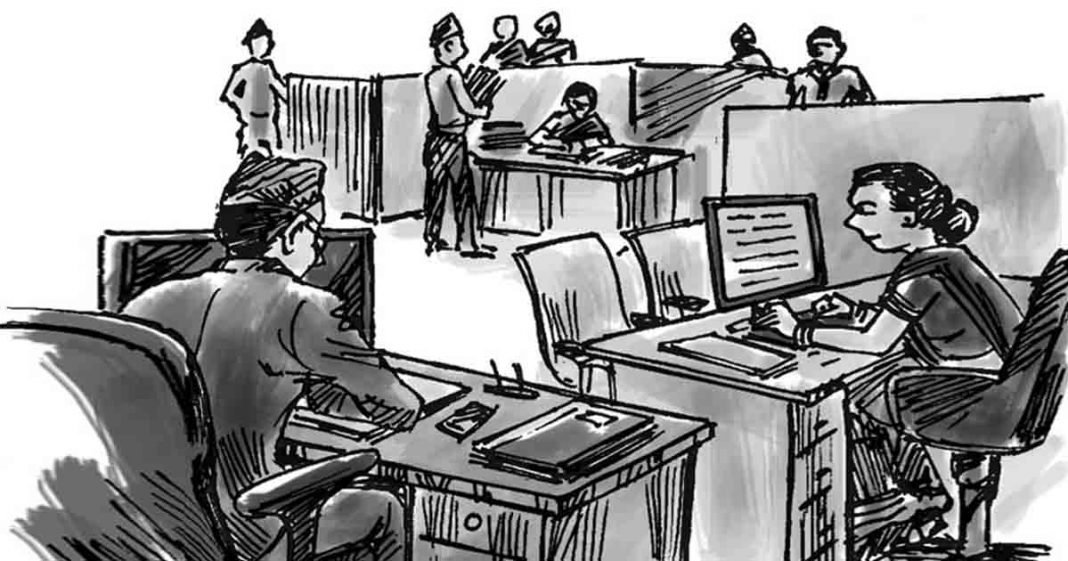
Pakistan’s civil bureaucracy is often casually described as “generalist,” but this label does not fully capture its true character. In reality, Pakistan’s bureaucracy is less a generalist force and more a gatekeeper elite. It is a class that constructs pathways between all major power centres of the state, filters information, provides selective feedback, and ultimately steers decision making in specific directions. This is why the political executive, cabinet, legislature, judiciary, military institutions, and other power corridors interact less directly with one another and far more through the bureaucracy.
<a href=”https://www.republicpolicy.com” target=”_blank”>Follow republicpolicy.com</a>
If one examines the scope of Pakistan’s largest so-called generalist service, the Pakistan Administrative Service, formerly known as the DMG, this gatekeeping role becomes unmistakably clear. At the federal level, the President’s Principal Secretary, the Prime Minister’s Principal Secretary, and the Secretary Cabinet are almost always drawn from PAS. Through the office of the Secretary Cabinet, access not only to the cabinet but also to the Prime Minister himself is effectively controlled. Likewise, secretaries of nearly all key federal ministries predominantly belong to PAS, positioning them as gatekeepers between policy formulation and implementation.
<a href=”https://www.youtube.com/@TheRepublicPolicy” target=”_blank”>Follow Republic Policy on YouTube</a>
A similar pattern exists within the judiciary. Whether it is the Registrar of the Supreme Court or the Registrar of the Islamabad High Court, these crucial administrative positions are also typically held by PAS officers. As a result, the administrative doors of the judicial system are opened and closed through the same cadre. In many federal constitutional bodies, eligibility criteria quietly require a Grade 22 officer, which in practice almost always translates into a PAS officer. The presence of PAS officers as heads of election bodies, accountability institutions, commissions, authorities, and task forces reflects the continuation of this gatekeeping structure.
<a href=”https://x.com/republicpolicy” target=”_blank”>Follow Republic Policy on X</a>
When these same officers are posted to the provinces, they become Chief Secretaries and effectively bring the entire provincial administrative system within their control. In the provinces as well, key offices such as Principal Secretary to the Chief Minister, Secretary Cabinet, and Secretary to the Governor are usually occupied by PAS officers. Sensitive departments like the Home Department are also commonly under their control, serving as the primary linkage between security institutions and the civilian provincial government.
<a href=”https://facebook.com/republicpolicy” target=”_blank”>Follow Republic Policy on Facebook</a>
At the district level, PAS officers serve as Deputy Commissioners, at the tehsil level as Assistant Commissioners, and the entire local government structure largely operates through them. Any intervention by the federal government, provincial government, military institutions, or the Council of Common Interests practically passes through these same administrative gates. This makes PAS the connective tissue across all layers of governance.
<a href=”https://www.tiktok.com/@republic_policy” target=”_blank”>Follow Republic Policy on TikTok</a>
For this reason, Pakistan’s so-called generalist bureaucracy cannot be understood merely as a service lacking specialization. Behind it lies a complete power system through which the bureaucracy manages and controls interactions with the judiciary, political executive, cabinet, assemblies, and even military regimes. Whether it is legislation, policymaking, implementation, or fundamental decision making, the state cannot function without the filtered information and curated feedback provided by these officers.
<a href=”https://instagram.com/republicpolicy” target=”_blank”>Follow Republic Policy on Instagram</a>
This reality has been clearly articulated by Tariq Mahmood Awan in his book Fixing the Executive Branch of Government in Pakistan. He argues that in Pakistan it is these generalist gatekeepers who actually “fix” the executive branch, because all pathways of power converge in their hands. In this sense, the Pakistan Administrative Service is not merely a cadre but the custodian of the state’s power corridors, and this custodianship forms the real foundation of its influence.
<a href=”https://whatsapp.com/channel/0029VaYMzpX5Ui2WAdHrSg1G” target=”_blank”>Follow Republic Policy on WhatsApp</a>
The core and fundamental question that emerges from this analysis is whether the gatekeeping that exists in practice at the federal government, provincial government, Council of Common Interests, and local government levels is consistent with law and the Constitution. From a constitutional and legal perspective, this system appears not only questionable but openly inconsistent with the constitutional concept of governance. In a parliamentary system, every tier of government has its own political executive, must have its own administrative machinery, and that machinery must be directly accountable to the legislature that produced the political executive. This is the foundational spirit of federalism and parliamentarianism.
The Constitution of Pakistan, particularly Article 240, clearly reflects the principle that federal and provincial civil service structures should be organised in line with their respective constitutional responsibilities. For example, if the Punjab Assembly elects the Chief Minister, then by administrative logic and constitutional principle the province’s Chief Secretary should be part of that same provincial system and ultimately answerable to the provincial assembly. In practice, however, this is not the case. Instead, a unitary civil bureaucracy spans the federal government, provincial governments, the Council of Common Interests, and local governments, binding four distinct governments together with a single administrative thread. This is the gatekeeping mechanism that distorts constitutional balance.
The consequence of this unitary bureaucracy is that the natural relationship between the political executive and the administrative executive, which is the cornerstone of a parliamentary system, fails to develop. Chief Secretaries, Cabinet Secretaries, Principal Secretaries, and Deputy Commissioners tend to align their primary loyalties not with a specific elected forum but with a central cadre and its power corridors. As a result, provincial autonomy, local government self-rule, and even federal balance are undermined. Gatekeeping thus ceases to be a mere administrative issue and becomes a constitutional deviation.
If Pakistan genuinely intends to move forward and modernise its civil bureaucracy, the first essential step is to federalise this unitary system. The federation should have its own civil service, each province should have its own distinct civil service, the Council of Common Interests should have a limited and specialised administrative structure, and local governments should be granted their own independent bureaucracy. Only after this structural separation can meaningful specialization emerge. As long as a single cadre continues to gatekeep across all four governments, whether the power corridors are military, political, or judicial, the dominance of the Pakistan Administrative Service will persist and constitutional governance will remain weak.
Therefore, the real problem in Pakistan is not the existence of a generalist bureaucracy. The real problem is the presence of a gatekeeper bureaucracy that violates constitutional boundaries and occupies all the doors of state power. The only way out of this condition is through civil service reforms grounded in the true spirit of law and the Constitution, dismantling the unitary bureaucracy and providing each tier of government with its own accountable administrative machinery. Only then can the state move toward genuine public representation, constitutional balance, and effective governance.
Tariq Mahmood Awan