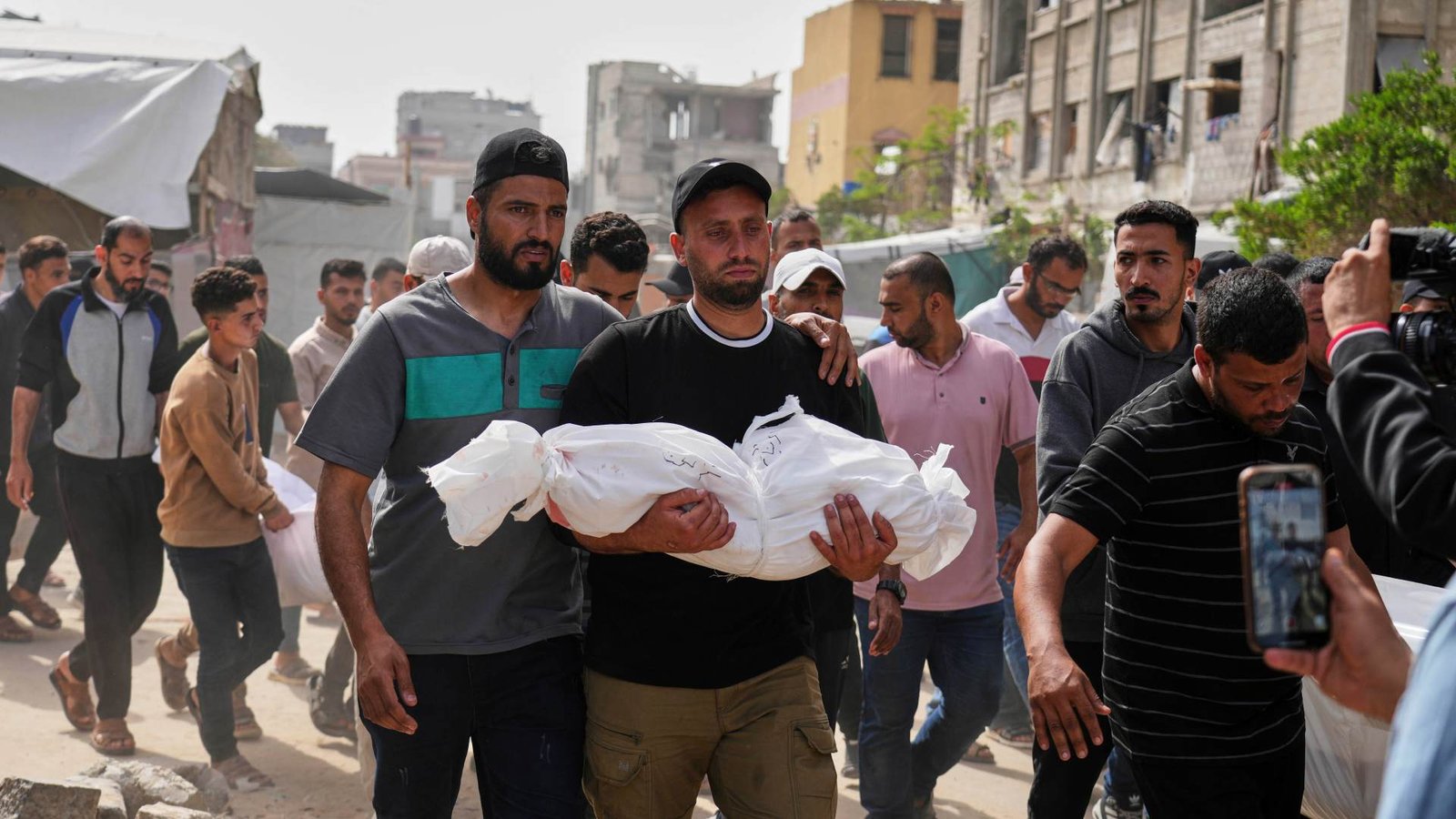

Despite announcing daily 10-hour humanitarian pauses in select areas of Gaza, Israeli military operations have resulted in the deaths of at least 63 people across the territory. The temporary suspension, intended to facilitate the movement of humanitarian aid between 10am and 8pm, covers parts of central and northern Gaza, including al-Mawasi, Deir el-Balah, and Gaza City. Additional aid corridors were promised for food and medical convoys, yet within hours of the first declared pause, Israeli airstrikes resumed, even targeting sites like bakeries in areas designated as safe.
The ongoing attacks come as the international community intensifies its criticism of Israel over the escalating humanitarian catastrophe in Gaza. Famine-related deaths continue to mount, with the Health Ministry reporting that six more Palestinians, including two children, died from hunger in the last 24 hours—bringing the toll of starvation deaths to 133 since October. Among the latest victims was five-month-old Zainab Abu Haleeb, whose mother lamented her loss after months in hospital due to malnutrition. The World Food Programme now estimates that one in three Gaza residents has gone days without food, with nearly 500,000 people suffering famine-like conditions. Over 20 percent of pregnant and breastfeeding women are reported to be malnourished.
Personal accounts underscore the desperation. Gaza resident Falestine Ahmed shared that she and her son are severely malnourished, unable to afford scarce food even when it is available. Aid from the United Arab Emirates and Jordan has been airdropped into the territory, but distribution remains dangerous and inadequate; recent aid deliveries have caused injuries when supplies fell on overcrowded tent camps. Meanwhile, Israel maintains it is improving humanitarian access, yet denies that famine conditions exist.
Scenes of despair play out daily as mothers risk their lives searching for basic food for their children, and cancer patients go untreated amid severe shortages. Aid organizations, overwhelmed by the scale of need, report that much of Gaza’s population is at risk of acute malnutrition, with society at large enduring devastating shortages.
The United Nations has stressed that meaningful aid delivery is only possible if Israel allows rapid passage of convoys through checkpoints. UN aid chief Tom Fletcher acknowledged some recent improvements but warned that far more is required to prevent famine and a public health disaster.
International diplomatic pressure is mounting. French President Emmanuel Macron, after discussing Gaza with Turkish and Egyptian leaders, announced plans to co-host a conference focused on a two-state solution and affirmed France’s intention to recognize Palestinian statehood. Australian Prime Minister Anthony Albanese denounced Israel’s aid blockade as a breach of international law, while US Secretary of State Marco Rubio indicated that ongoing ceasefire negotiations are making progress, potentially leading to the release of more hostages.
Despite these diplomatic efforts and the supposed humanitarian pauses, the violence and humanitarian suffering in Gaza show no signs of abating. According to Gaza’s Health Ministry, 88 Palestinians were killed and 374 wounded in the past 24 hours alone, with total casualties since October exceeding 59,800 killed and 144,000 injured. The crisis in Gaza persists, underscoring the urgent need for sustained international intervention and a lasting resolution.