
Professor Muddasir
Universities are meant to be institutions that broaden young minds, fostering cultural diversity and encouraging a range of perspectives. However, in Pakistan, some higher education authorities seem determined to do the opposite—closing minds and promoting a regressive agenda.
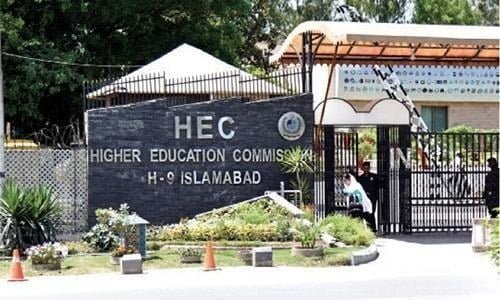
A recent incident involving a Holi celebration at an Islamabad university highlights this narrow-minded approach. In a letter addressed to university managements, an executive director of the Higher Education Commission expressed offense and voiced concerns about the event, claiming it had a detrimental impact on the country’s image.
Surprisingly, the HEC is now seeking to distance itself from the letter, perhaps realizing the repercussions of such a stance. It’s important to note that just a few months ago, hooligans affiliated with a religious party’s student wing attacked participants at a Holi gathering in Punjab University. When officials within the education bureaucracy express such sentiments, it only emboldens obscurantists and allows them to further their divisive agenda.
It is disheartening to witness these attempts to stifle cultural celebrations and limit the freedom of expression on university campuses. Instead of embracing diversity and promoting an inclusive environment, the focus seems to be on conforming to a narrow definition of societal norms. This not only hampers the intellectual growth of students but also restricts the exchange of ideas and the exploration of different perspectives.
By discouraging events like the Holi celebration, the authorities are inadvertently suppressing the rich tapestry of cultures that make up Pakistan. They fail to recognize that cultural festivities contribute to a vibrant and tolerant society. Such celebrations provide an opportunity for students to engage with one another, fostering understanding and respect for diverse traditions.
Moreover, it is crucial to distinguish between the actions of a few troublemakers and the vast majority of students who genuinely seek to promote harmony and intercultural dialogue. Punishing the entire student body for the misdeeds of a few only serves to create an atmosphere of fear and intolerance.
Instead of clamping down on cultural events, the higher education authorities should focus on nurturing an environment that encourages critical thinking, free expression, and the exchange of ideas. Embracing cultural diversity enriches the educational experience and prepares students for the complexities of a globalized world.
The HEC’s interference in matters unrelated to its core responsibilities is entirely uncalled for. Its primary duty is to enhance the educational framework of Pakistan, not to engage in cultural policing. Unfortunately, the authorities in this country disdain anything that remotely resembles amusement or promotes inclusivity and diversity.
Whether it’s the festivities of various religious communities, the vibrant Basant festival, or even events that celebrate our rich ethnic tapestry, our cultural overseers promptly intervene to suppress any activities that might tarnish our conservative image.
Furthermore, it is worth noting that the HEC’s actual mission is to elevate the standards of higher education, a realm where it is evident that the commission is woefully lagging behind. With the exception of a handful of private institutions and only a meager number of public universities, our educational establishments are hardly renowned for their academic eminence.
Since the inception of the HEC during the Musharraf era, the focus of the higher education bureaucracy has been on quantity rather than quality. Consequently, numerous campuses and sub-campuses have sprouted across the country, yet their impact has been minimal at best.
Adding to the bleak state of affairs is the widespread plague of plagiarism, which has cast a dark shadow over Pakistan’s educational landscape. Shockingly, even some vice chancellors have been exposed for stealing the intellectual work of others. In such a dire situation, the HEC should consider Holi celebrations organized by students as the least of their concerns.
It is high time for the HEC to realign its priorities and address the pressing issues that truly hinder the progress of education in Pakistan. By refocusing on quality, combating plagiarism, and investing in academic excellence, the commission can fulfill its mandate and contribute meaningfully to the advancement of higher education.
Instead of stifling cultural expression and diverting attention from its primary objectives, the HEC should channel its efforts towards fostering an environment where intellectual curiosity thrives, students are encouraged to think critically, and academic institutions become centers of innovation and knowledge dissemination.
The pursuit of educational excellence demands a comprehensive approach that recognizes the value of diversity, embraces inclusivity, and promotes a vibrant intellectual atmosphere. Only then can Pakistan’s universities truly serve as beacons of enlightenment, shaping the minds of future generations and paving the way for a brighter and more progressive society.
It is time for the HEC to shed its role as a cultural censor and assume its rightful position as a catalyst for educational transformation, ensuring that our universities stand tall on the global stage and contribute significantly to the intellectual and socio-economic development of the nation.
In conclusion, it is evident that the Higher Education Commission (HEC) in Pakistan has overstepped its boundaries by engaging in cultural policing and suppressing activities that promote diversity and inclusion. Instead of focusing on its primary objective of improving higher education, the HEC seems more interested in enforcing a regressive agenda and maintaining a conservative image. This misplaced focus has resulted in a lack of academic excellence in most universities, with the issue of plagiarism further tarnishing the education landscape. In light of these pressing concerns, it is clear that the HEC’s priorities need to be realigned to address the fundamental challenges faced by the education system in Pakistan. Only through a shift in perspective and a renewed commitment to quality can the HEC truly fulfill its mandate and foster an environment that promotes learning, innovation, and cultural enrichment.
Subscribe our website for latest updates:
https://republicpolicy.com/shop/
Read More