
Dr Shabana Safdar Khan
Pakistan’s decision to tighten surveillance at all entry points following confirmed cases of the Nipah virus in India is a timely and sensible move. It signals that the authorities recognise the seriousness of the disease while also showing restraint by avoiding alarmist measures. In public health, this balance — between preparedness and panic — is critical, and for now, Pakistan appears to be striking it well.
Nipah is not a new or mysterious virus. Since it was first identified in the late 1990s, it has surfaced periodically in parts of South and Southeast Asia. These outbreaks have generally been contained, but they have often been deadly. With fatality rates that can climb beyond 70 per cent and no approved vaccine or specific treatment available, the virus has rightly earned its place on the World Health Organisation’s list of priority pathogens. That classification alone makes vigilance a necessity, not a choice.
Yet vigilance must not slide into fear. Despite the severity of Nipah, health experts agree that the immediate risk to Pakistan remains low. The current outbreak in India is localised, involving a limited number of confirmed cases. There is no evidence so far of widespread community transmission. Moreover, Nipah does not spread as easily as airborne viruses such as Covid-19 or influenza. Human-to-human transmission requires close contact, typically through exposure to bodily fluids like saliva, respiratory secretions or blood. This is why most outbreaks remain confined to families, healthcare settings or specific communities rather than spreading rapidly across populations.
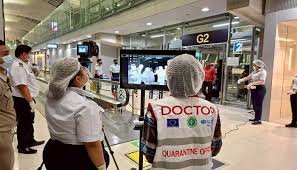
Still, infectious diseases do not stop at borders. Pakistan’s geography, dense population centres and uneven healthcare capacity mean that preparedness is essential, even when the threat appears distant. In this context, the Border Health Services’ advisory mandating full screening at entry points is a necessary first step. Measures such as thermal scanning, verification of travellers’ 21-day travel history, and the immediate isolation of suspected cases are basic but effective tools in reducing the risk of importation.
However, it would be a mistake to assume that airport and border screening alone can provide complete protection. One of the biggest challenges with Nipah — as with many infectious diseases — is its incubation period, which can extend up to two weeks. A person may be infected but show no symptoms while travelling, passing through screening unnoticed. This reality makes it clear that surveillance must continue well beyond points of entry.
Provincial health departments therefore have a crucial role to play. Designated tertiary care hospitals must be fully prepared, with functional isolation wards, clear protocols and adequate protective equipment for healthcare workers. Laboratory capacity also needs attention. Staff must be trained in the safe handling and testing of samples, given the high risk associated with the virus. Delays or errors at this stage could have serious consequences, both for patient outcomes and for containment efforts.
Special focus should also be placed on rural and semi-urban areas. In many parts of the country, close contact between humans and animals is common, and access to quality healthcare is limited. These factors can increase vulnerability if the virus were to enter such settings. Strengthening surveillance, awareness and referral systems in these regions is just as important as monitoring international travellers.
Equally vital is how the situation is communicated to the public. Poor communication can do as much damage as the disease itself. Authorities must avoid sensational language that fuels fear, while also resisting the temptation to downplay legitimate concerns. Clear, consistent and factual messaging is key. People should know what Nipah is, how it spreads, and what symptoms to watch for, without being made to feel that an outbreak is imminent.
Simple preventive guidance can go a long way. Advising citizens to avoid close contact with visibly ill individuals, practise good hand hygiene, and seek medical help promptly if symptoms such as fever, headache or respiratory distress appear can reduce risk significantly. Encouraging early reporting, rather than hiding illness out of fear or stigma, is essential for timely intervention.
The broader lesson from past outbreaks — whether of Nipah, Covid-19 or other infectious diseases — is that calm preparedness works best. Coordinated planning between federal and provincial authorities, readiness within the healthcare system, and transparent communication with the public form the strongest line of defence. Nipah is undoubtedly a dangerous virus, but it is not uncontrollable. With sensible precautions, informed citizens and a health system on alert, Pakistan can manage the risk effectively.
In times like these, measured action matters more than dramatic gestures. Heightened surveillance, yes — but grounded in science, guided by experts and communicated responsibly. That approach protects public health without sowing unnecessary fear, which is precisely what the moment demands.