
By Fatima Basheer
Christian Glass, a young man grappling with a mental health crisis, tragically called 911 in need of assistance to free his car from a Colorado mountain town’s grip. When sheriff’s deputies arrived at the scene, what unfolded would become a harrowing episode captured by body cameras. Glass, his mind besieged by supernatural fears, refused to exit his vehicle. The officers employed a spectrum of tactics, shouting, threatening, and pleading in an attempt to diffuse the situation. Throughout this ordeal, Glass formed heart shapes with his hands and fervently prayed for the safety of his car window: “Dear Lord, please, don’t let them break the window.”
Regrettably, the window was shattered, and in a desperate turn of events, the 22-year-old retrieved a small knife. The encounter escalated with the deployment of bean bag rounds, stun gun charges, and ultimately, fatal gunshots. These tragic events not only cost Glass his life but also resulted in a murder charge against one deputy and a criminally negligent homicide charge against another.
In a significant stride towards reform, Colorado’s Clear Creek County recently became a participant in a $19 million settlement with Glass’ parents. This agreement signifies a growing trend in various U.S. communities that are altering their responses to nonviolent mental health crises. Instead of dispatching police officers, they are turning to clinicians and emergency medical technicians (EMTs) or paramedics.
This shift in approach has gained momentum in recent years, particularly among the nation’s largest cities. Data compiled by The Associated Press reveals that at least 14 of the 20 most populous U.S. cities have already implemented or initiated such programs. They are often referred to as civilian, alternative, or non-police response teams. These initiatives span from metropolises like New York and Los Angeles to cities like Columbus, Ohio, and Houston. Collectively, their budgets exceeded $123 million as of June, with funding sources varying widely.
The reasoning behind this shift is clear: when individuals are experiencing mental health crises, law enforcement intervention is often ill-suited to address their needs. Tamara Lynn, representing the National De-Escalation Training Center, a group that trains police in handling such situations, succinctly states, “If someone is experiencing a mental health crisis, law enforcement is not what they need.”
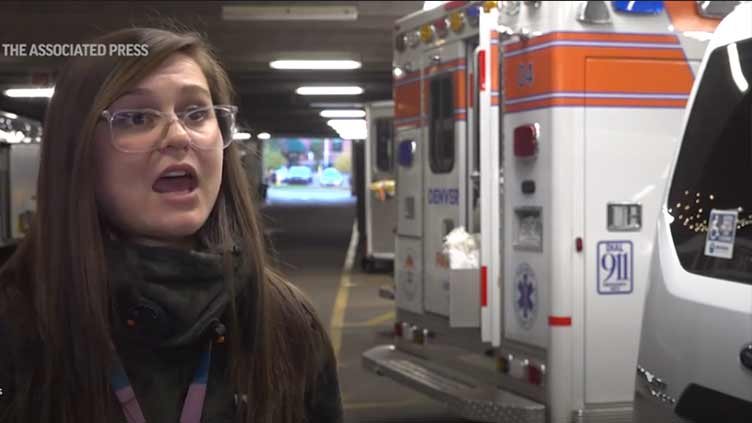
However, as of yet, there is no comprehensive aggregate data on the effects of these programs, which vary significantly in scope and public reception. In Denver, for instance, a program known as STAR (Support Team Assisted Response) responded to 5,700 calls in the past year and is frequently hailed as a national model. It has received $7 million in funding since 2021. Conversely, New York’s B-HEARD program, with an annual budget of over $40 million, responded to approximately 3,500 calls last year and has faced criticism from mental health advocates who deem it inadequate.
Representatives from several cities candidly acknowledge the challenges they face, such as staffing shortages, the process of acclimating 911 dispatchers to send unarmed civilians, and other logistical issues. However, officials in cities like New York see these non-police response teams as a crucial shift in how they handle individuals in crisis.
This change is of paramount importance, considering that mentally ill individuals constitute a significant portion of those killed by police, as revealed by various studies and statistics. Tragically, this demographic often includes people of color, although Christian Glass, the subject of our initial story, was not a person of color.
This alternative approach has its roots in history but gained renewed momentum following calls for sweeping police reform in the wake of George Floyd’s tragic killing in Minneapolis in 2020. Specific demands for improved responses to psychiatric crises emerged after other incidents, such as the 2020 death of Daniel Prude in Rochester, New York. Prude, fresh from a psychiatric hospital, was found running unclothed through snowy streets when police were called to assist him. Regrettably, he was suffocated by the officers. Both Prude and Floyd were Black.
Though there isn’t yet nationwide data on the prevalence of mental distress-related calls, a 2022 study involving nine police agencies found that such calls accounted for about 1% of all police calls. A well-established civilian response program in Eugene, Oregon, reports diverting 3% to 8% of calls away from the police. The Vera Institute of Justice, a police reform advocacy organization, suggests that alternative teams could handle up to 19% of such calls, especially those related to homelessness, intoxication, and similar issues.
Don’t forget to Subscribe our channel & Press Bell Icon.
In Denver, STAR teams operate out of vans stocked with an array of supplies, from medical equipment to blankets and even snacks like Cheez-Its. These teams dedicate substantial time to individuals in crisis, often exceeding what traditional police responses allow. For instance, they recently spent three hours assisting a newcomer to Denver who was living on the streets. During this time, the team helped him obtain a Colorado ID voucher, provided groceries and medications, and facilitated his transition to a shelter.
The tragic incident involving Christian Glass, while deeply saddening, has played a role in sparking this important shift in how communities respond to mental health crises. It serves as a poignant reminder of the urgent need for alternative approaches when individuals are in crisis. In his moment of despair, Christian Glass sought assistance, only to find himself in a situation that tragically escalated. His story resonates with countless others who have faced similar circumstances, where mental health challenges intersect with encounters with law enforcement. By acknowledging the critical need for change and working towards more compassionate and specialized responses, communities aim to prevent such heart-wrenching tragedies from occurring in the future. Glass’s memory lives on as a catalyst for reform, propelling us toward a future where individuals in crisis receive the care and support they need without the fear and violence that can accompany traditional police responses.
In the ever-evolving landscape of public safety, there is a fundamental shift underway in how communities respond to mental health crises. A profound realization has taken root: when individuals face such challenges, the arrival of law enforcement may not always be the most appropriate or effective response. Instead, communities are beginning to deploy teams of clinicians and emergency medical technicians (EMTs) or paramedics to intervene in these situations, a stark departure from the traditional police response.
Carleigh Sailon, a former manager with the Support Team Assisted Response (STAR) program, succinctly captures the essence of this transformation: “It’s really about meeting the needs of the community and making sure we are sending the right experts so we can actually solve the problem.”
STAR’s impact is striking. The program responded to 44% of eligible calls last year, reflecting a responsive and effective approach. Stanford University conducted a study that yielded encouraging results. In areas where STAR was deployed in its initial phases, reports of petty crimes decreased by a third, while violent crime remained steady. Notably, throughout the program’s three-year existence, police have never been called for backup due to safety concerns. Instead, they have provided auxiliary support, such as directing traffic.
Nonetheless, as these non-police programs continue to grow, concerns about safety are emerging. While the concept of removing law enforcement from psychiatric crisis calls is appealing, there are challenges associated with identifying these calls accurately. Stephen Eide, a senior fellow specializing in mental health issues at the conservative Manhattan Institute think tank, raises this critical issue. Dispatchers in New York, for example, must assess the potential for “imminent harm” while interpreting often frantic 911 calls. These calls frequently come from bystanders or relatives rather than the individuals in crisis, making the task even more complex.
In the case of New York’s B-HEARD program, officials report that it answered 53% of eligible calls in the last six months of 2022, according to the most recent available data. However, this figure accounts for only 16% of all mental health crisis calls within the program’s limited territory, which covers a portion of the city. When considering the broader context of the city, B-HEARD staff handled a mere 2% of the approximately 171,000 mental health crisis calls made throughout the city in the past year.

Check out our monthly English and Urdu magazines on Homepage
The program’s reach and impact have faced criticism. Ruth Lowenkron, an attorney involved in a federal lawsuit seeking changes in B-HEARD, deems its performance “very unimpressive.” However, city officials are exploring ways to expand the program and increase the number of qualifying calls. They emphasize that B-HEARD’s social workers and EMTs resolve approximately half of the calls by engaging individuals in conversation or transporting them to social service or community health centers. This approach diverges from the traditional practice of bringing individuals in crisis to hospitals, often accompanied by armed officers.
Laquisha Grant of the New York Mayor’s Office of Community Mental Health acknowledges the program’s significance in broadening the range of options available to individuals in crisis. It communicates that individuals can remain safely in their homes and communities while accessing the necessary resources.
However, challenges persist. John Barrett’s experience underscores the complexity of these situations. When Barrett sought assistance for both physical and mental health concerns, he called 911 requesting an ambulance. However, police officers arrived instead. To his surprise, two additional individuals appeared on the scene, dressed in bulletproof vests and face masks. Barrett, feeling overwhelmed by the presence of these responders, later learned they were associated with B-HEARD. Although teams from this program can be summoned by on-scene police, staff members have the option but are not obligated to wear ballistic vests.
Despite these initial tensions, the B-HEARD team engaged in various medical procedures, such as monitoring Barrett’s blood pressure. Ultimately, a plain-clothes social worker attempted to engage with him, but Barrett declined the conversation. Subsequently, an ambulance transported him to a hospital. The response to his call for help left Barrett profoundly shaken.
While these programs represent a significant step towards improved responses to mental health crises, they also highlight the need for continued refinement and public education. Barrett’s experience underscores the importance of individuals understanding the response they can expect when seeking help in such situations. With ongoing adjustments and a commitment to refining these initiatives, communities can gradually shift towards more compassionate and effective responses to individuals in crisis, ensuring that those who need assistance receive it without undue trauma.
In conclusion, the adoption of non-police response programs for mental health crises is an essential step toward creating safer, more compassionate communities. While these initiatives have made significant strides, there is room for improvement and expansion to ensure that those in crisis receive the help they need promptly. Funding, training, and public awareness are key areas that require attention and investment. Moreover, collaboration between law enforcement, mental health professionals, and community organizations is vital for the success of these programs. As the tragic events like the one involving Christian Glass continue to remind us of the urgency, it is imperative that communities across the nation prioritize the development and enhancement of alternative response strategies to ensure the well-being of all their residents.
Subscribe our website for latest updates:
https://republicpolicy.com/shop/
Read More