Bilawal Kamran
There is a particular kind of hubris that announces itself most loudly at the precise moment it is being dismantled. India is living through that moment. As Pakistan’s diplomatic relevance grows on the world stage — quietly, methodically, and with increasing international acknowledgment — New Delhi’s response has not been to recalibrate or reflect. It has been to reach for the gutter.
Indian External Affairs Minister S. Jaishankar recently declared that India cannot play the role of a broker in geopolitical affairs. The remark itself was unremarkable, even if self-serving. What was remarkable — and deeply revealing — was the language he chose to accompany it. In characterising Pakistan’s diplomatic role, Jaishankar deployed a local term that functions as an expletive across the region. From a senior cabinet minister of a country that presents itself to the world as a rising democratic civilisation, the choice of words was not a slip. It was a window into a state of mind.
Pakistan’s Foreign Office responded with the precision such an occasion demands. The ministry noted that such language betrays a deeper sense of frustration, and that when arguments run thin, invective appears to fill the gap. It added, with admirable composure, that Pakistan does not subscribe to megaphone theatrics. The rebuke was measured, but its meaning was unmistakable: India’s foreign minister had embarrassed his country, and the world had noticed.
Across social media and editorial columns on both sides of the border, the reaction was swift and scalding. Politicians, journalists, and commentators lined up to register their contempt for the remark. But the episode would be less significant if it were isolated. It is not. Jaishankar has made a habit of statements that would, in any other diplomatic tradition, prompt questions about fitness for office.
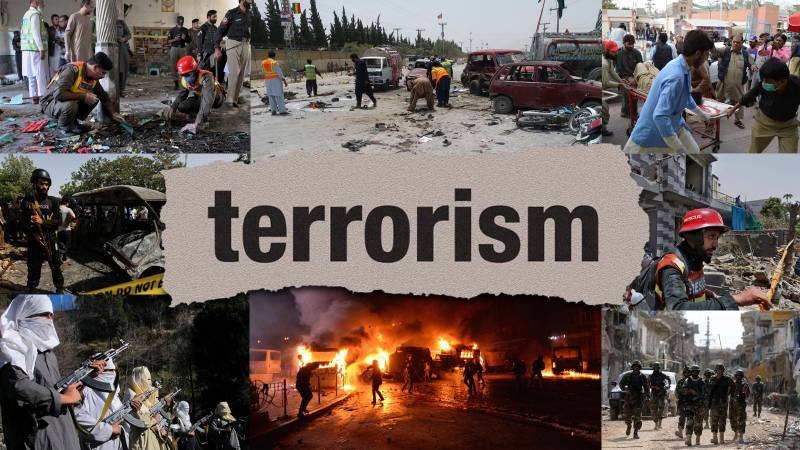
Last year, in the aftermath of the military standoff between the two countries, he declared that India had the right to strike Pakistan — a claim as legally baseless as it is strategically reckless. He accused Pakistan of employing terrorism as an instrument of state policy, a charge that carries considerable irony given the mounting evidence of India’s own covert operations abroad. He has spoken of Azad Kashmir as a stolen part of Kashmir that must be returned to India before any resolution is possible — a formulation so removed from international law and political reality that it functions less as a negotiating position than as a confession of maximalism dressed up as principle.
What binds these statements together is the governing philosophy of the BJP, the ruling party that Jaishankar serves with apparent enthusiasm. That philosophy treats hostility toward Pakistan not as a policy instrument to be deployed when useful, but as an end in itself — a permanent ideological posture that leaves no room for sophisticated diplomacy, regional statecraft, or the kind of sustained engagement that actual great powers practise. India’s foreign minister appears to have internalised this posture completely, preferring partisan theatrics to the patient work of international negotiation.
Here it is worth pausing to ask a pointed question. When Prime Minister Narendra Modi offered to mediate between Russia and Ukraine, travelling to both capitals and positioning himself as a potential peacemaker, was India then a broker nation? The offer was widely praised in the Indian press and carefully cultivated as evidence of New Delhi’s global stature. By Jaishankar’s own logic, his prime minister was performing precisely the role his foreign minister has now chosen to mock when performed by Pakistan. The contradiction is too obvious to require elaboration. It simply requires honesty — and that, in New Delhi’s current political climate, is apparently in short supply.
India’s narrative of victimhood — the claim that it is perpetually targeted, surrounded by hostile forces, and justified in its every act of aggression and subversion — has increasingly few takers internationally. The world is not blind. Poisonous rhetoric directed at Pakistan cannot erase the documented evidence of Indian covert activities on Afghan soil, in Balochistan, and in other theatres where New Delhi’s fingerprints have been identified. It cannot redirect global attention away from the systematic oppression of India’s own religious minorities, the documented cases of targeted killings on foreign soil — including in Canada and the United Kingdom — and the sustained assault on democratic norms within India’s own borders. These are not Pakistani talking points. They are matters of international record, reported by credible foreign governments and independent human rights organisations.
India’s withdrawal of this support for Israel would also serve its global standing considerably better than the current trajectory. In a region and a world increasingly attentive to questions of moral consistency, New Delhi’s alignment with Israeli military operations against civilian populations in Gaza has cost it goodwill it can ill afford to lose, particularly in the Muslim world and across the Global South where India once commanded genuine respect and solidarity.
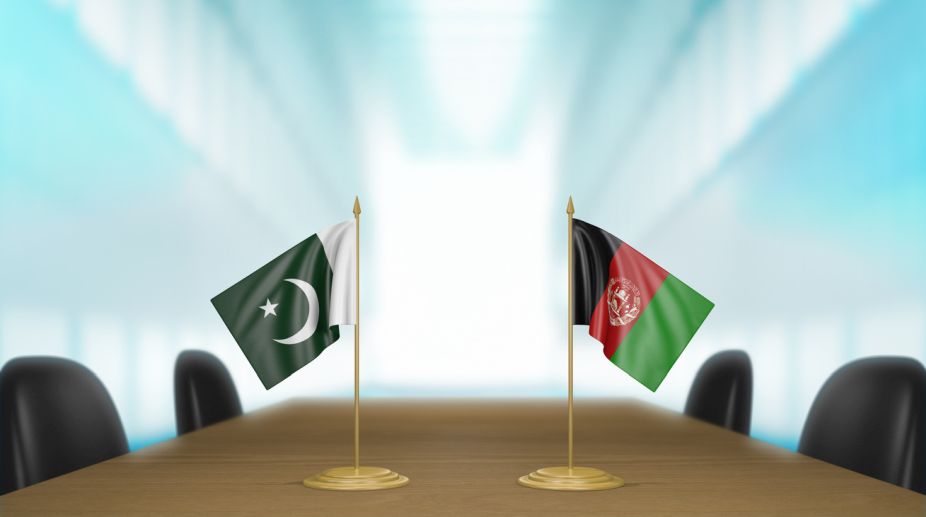
Pakistan, by contrast, has demonstrated in recent years that restraint and diplomatic engagement are not signs of weakness. They are instruments of influence. The willingness to absorb provocation without abandoning principle, to pursue dialogue even when the other party prefers confrontation, and to position itself as a responsible and collaborative actor in international affairs has delivered Pakistan a degree of global relevance that India’s belligerence has been unable to diminish — and which, judging by Jaishankar’s outburst, has clearly begun to cause genuine irritation in New Delhi.
That irritation is itself a form of acknowledgment. Nations do not bother with expletives directed at irrelevant neighbours. The vulgarity of the remark is, in a perverse way, a compliment.
The emerging global order is being shaped not by the loudest voices but by the most reliable partners. Diplomacy, restraint, and the principled pursuit of dialogue are not anachronisms. They are, in a world increasingly exhausted by conflict, the currencies of real influence. India’s leadership would do well to learn this before its diplomatic unravelling becomes irreversible. For in the end, it is not the country that shouts the loudest that earns the world’s respect. It is the country that knows when to speak, what to say, and how to say it with dignity.