
Masood Khalid Khan
India’s renewed efforts to fast-track several hydropower projects on the Indus basin rivers under Pakistan’s control are far from coincidental. While these projects are often presented as measures to meet domestic energy needs, the timing, scale, and location of these initiatives suggest a much deeper, more strategic motive: using shared water resources as an instrument of coercion against Pakistan. The recent approval of the Dulhasti Stage-II hydropower project on the Chenab River, along with the revival of environmental clearances for the decades-old Sawalkote scheme, underscores a deliberate acceleration of upstream dam construction on rivers that, under the Indus Waters Treaty (IWT), are allocated to Pakistan.
This move comes in the wake of India’s unilateral suspension of the IWT following the Pahalgam attack in occupied Kashmir. By halting treaty-based cooperation, New Delhi has signaled its intention to exert greater control over river flows that directly affect Pakistan downstream. Reports indicate that India is actively planning to expand water storage capacity on these rivers, giving it the ability to regulate or manipulate flows as a tool of political pressure. Recent disruptions in the Chenab flow suggest a pattern: upstream manipulation for strategic leverage. India’s prior failure to share data on water levels and discharges in a timely manner has already contributed to devastating floods in Punjab, highlighting the consequences of uncoordinated or deliberately opaque management.
Pakistan has consistently opposed Indian hydropower and storage projects on its rivers for good reason. Many proposed schemes violate IWT guidelines by allowing storage capacities that exceed requirements for power generation. Such excess storage provides the potential to disrupt downstream river flows at will. Pakistan has raised specific concerns about gated spillways that allow sudden stoppage or release of water, enabling the creation of artificial shortages during sowing seasons or floods during monsoons. Past experiences confirm these risks: uncontrolled releases and delays have already caused significant agricultural and economic losses downstream. The prospect of India weaponising water is no longer theoretical—it is a growing reality.
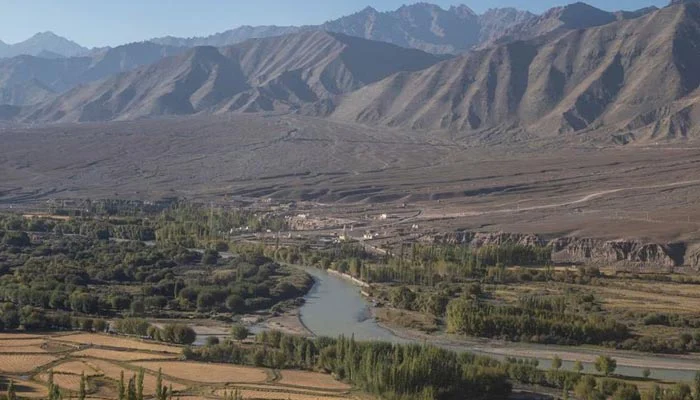
Beyond the geopolitical dimension, there are serious environmental concerns associated with hydropower expansion on the Chenab. Experts warn that these projects could have irreversible ecological consequences. The Chenab basin is one of the most climate-vulnerable regions in South Asia, dependent on glacial melt from the Himalayas. Studies indicate that glaciers feeding the river have lost roughly a third of their volume in a few decades. With climate change intensifying, river flows are likely to become more erratic, threatening water security for both Pakistan and India. Constructing dams in this fragile ecosystem accelerates environmental degradation, increasing the risk of landslides, soil erosion, and biodiversity loss. The Modi government appears indifferent to these long-term ecological threats, prioritising short-term geopolitical advantage over environmental sustainability.
Former Pakistani climate minister Sherry Rehman aptly warned that India’s approach represents a dangerous form of “weaponisation of water” in a region already under severe environmental stress. Manipulating river flows for political leverage is not only unsustainable but also destabilising, heightening bilateral tensions and undermining regional cooperation on climate and water management.
From Pakistan’s perspective, Indian actions threaten both national security and livelihoods. The Indus basin supports millions of farmers and is the backbone of Pakistan’s agriculture. Artificial regulation of flows upstream can disrupt irrigation cycles, reduce crop yields, and create food insecurity. Hydropower projects with excessive storage capacity provide India with the ability to create precisely these conditions, giving it leverage in broader political negotiations. The dual threat of floods and droughts becomes an instrument of coercion.
International observers have long cautioned against such unilateral manipulation of transboundary water systems. Water security is inseparable from regional stability. Treaties like the IWT exist not merely to allocate water but to provide predictability and reduce conflict. By accelerating hydropower projects in violation of both the treaty’s spirit and its technical provisions, India risks destabilising not only Pakistan’s economy but also the broader Indus ecosystem on which millions depend.
Experts also emphasise that energy gains from such projects come at a high environmental and social cost. The Chenab’s headwaters are in a region already prone to seismic activity and ecological fragility. Dam construction in such conditions can trigger landslides, sedimentation, and changes in river morphology. Downstream communities bear the brunt, facing risks to agriculture, infrastructure, and water quality. In the long term, these actions undermine sustainable development in the region, threatening both human and ecological well-being.
Pakistan has repeatedly sought dialogue and engagement to address these concerns. Proposals for joint monitoring, data sharing, and compliance with treaty provisions have been put forward. Yet India’s actions suggest a preference for coercion over cooperation, prioritising short-term strategic advantage over the long-term stability of a shared river system. Such a posture increases distrust, reduces transparency, and complicates efforts to manage water resources in a way that benefits all stakeholders.
The urgency of this issue is amplified by climate change. Himalayan glaciers, the lifeline of the Indus basin, are retreating rapidly. Erratic rainfall and changing melt patterns are already making river flows unpredictable. Under these conditions, damming and manipulating river systems upstream magnify vulnerability rather than mitigating it. Climate experts warn that future water disputes will be aggravated not by scarcity alone but by poorly coordinated, politically motivated interventions in shared watersheds.
For Pakistan, the way forward requires a dual strategy. Diplomatically, Islamabad must continue to engage regional and international stakeholders to uphold the principles of the Indus Waters Treaty. Technical solutions, such as real-time monitoring, hydrological modeling, and legal frameworks for dispute resolution, can help mitigate risks. Internally, Pakistan must strengthen its water management infrastructure, enhance flood forecasting capabilities, and promote climate-resilient agriculture to reduce vulnerability to both natural and human-induced disruptions.
India’s aggressive hydropower expansion on Pakistan’s rivers is more than an energy policy—it is a geopolitical maneuver. By converting shared rivers into instruments of political leverage, New Delhi is undermining regional trust and violating the cooperative spirit that has historically maintained relative stability in water relations between the two countries. If unchecked, such policies risk not only worsening Indo-Pak relations but also contributing to long-term ecological collapse in the fragile Himalayan region.
In conclusion, India’s accelerated dam-building on the Chenab and other Indus basin rivers cannot be viewed in isolation. It is a calculated strategy with multiple objectives: coercion, political leverage, and strategic dominance over Pakistan’s water resources. The consequences are severe: ecological disruption, threats to water and food security, and the deepening of bilateral tensions. Pakistan must continue to assert its rights under the Indus Waters Treaty while simultaneously preparing for the environmental and hydrological challenges that lie ahead.
The path forward requires vigilance, scientific expertise, and sustained diplomacy. While India pursues unilateral projects, Pakistan must invest in adaptive water management, strengthen institutions, and build resilience into its agriculture and energy sectors. Only by combining legal, technical, and diplomatic measures can Pakistan safeguard its rivers, protect its people, and ensure that shared water resources do not become weapons of political coercion.
The Indus basin is a lifeline for millions in both countries. Its waters should be a source of cooperation, not conflict. India’s current trajectory threatens this delicate balance, risking not only regional stability but also the future sustainability of one of the world’s most important river systems. The time for decisive action—diplomatic, technical, and legal—is now, to ensure that water remains a bridge for collaboration rather than a tool for confrontation.