
Zafar Iqbal
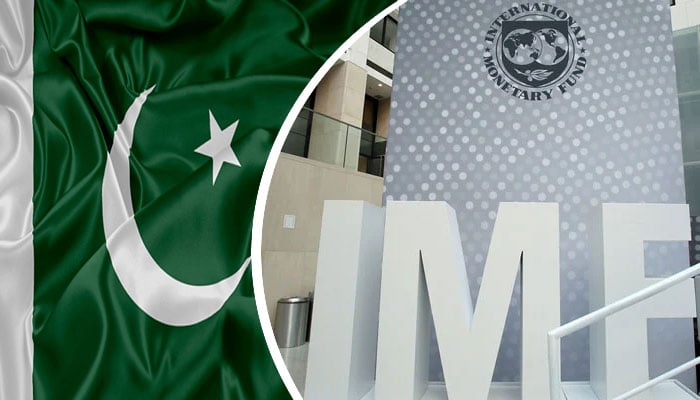
Pakistan Bureau of Statistics reports that the Consumer Price Index for November stands at 6.1 percent. The number was 6.2 percent in October and the fluctuation is linked to the floods of June 2025. The PBS data shows CPI at 3.2 percent in June, then 4.1 percent in July and 3 percent in August, and the rapid rise starts only by September when CPI reaches 5.6 percent. This timeline aligns with the technical assistance of the International Monetary Fund which pointed out shortcomings across a major part of the national accounts and pushed for new price measurement tools including an updated Producer Price Index.
<br><a href=”http://republicpolicy.com”>Follow republicpolicy.com</a>
The IMF has maintained pressure that Pakistan must operate a tight and data dependent monetary policy. The objective is to keep inflation anchored within the 5 to 7 percent band. This emphasis appears regularly in Fund press releases and programme documents since the approval of the Extended Fund Facility in October 2024. The core argument is that inflation should remain predictable and stable because price volatility undermines both investment and growth.
<br><a href=”https://www.youtube.com/watch?v=uL3-dG9koD4&t=229s&ab_channel=RepublicPolicy”>Follow Republic Policy YouTube</a>
Despite softening inflation, the discount rate has stayed at 11 percent since June. This policy rate is more than twice the average inflation of 5.01 percent between July and November 2025. Traditionally the rate moved two to three percent above the CPI. The current stance is therefore unusually tight. It is unclear whether the State Bank continues to rely on CPI as the benchmark for policy decisions. Back in 2019 the monetary policy framework shifted under an IMF programme and the discount rate was tied directly to CPI, a decision supported by the then governor who had served at the IMF.
<br><a href=”https://twitter.com/RepublicPolicy”>Follow Republic Policy Twitter</a>
Before 2019 the central bank relied more on core inflation which excludes food and energy. If core inflation is still the preferred indicator then the numbers would support a cut. Weighted trimmed mean rural core inflation rose 6.4 percent year on year in November compared to 6.8 percent in October and 7.5 percent in November 2024. This downward path suggests easing inflationary pressure. If core inflation is the key driver the Monetary Policy Committee could have reduced the rate by 50 to 100 basis points in its last meeting on 27 October 2025.
<br><a href=”https://facebook.com/RepublicPolicy”>Follow Republic Policy Facebook</a>
The wider environment remains pressured by climate shocks. The National Institute of Disaster Management and the National Disaster Management Authority prepared a detailed report on flood events from 1950 to 2025. The report advises strengthening climate resilience by building adaptive infrastructure and robust warning systems, developing sustainable urban planning, constructing modern drainage systems and improving transboundary water cooperation particularly in the Indus Basin. These proposals are critical yet remain unimplemented. The lack of progress compounds the economic stress that natural disasters bring. Diplomatic relations with India remain tense thus limiting the coordination needed for effective basin management.
<br><a href=”https://tiktok.com/@republic_policy”>Follow Republic Policy TikTok</a>
The delay in adopting climate adaptation reforms influences economic stability because floods disrupt supply, trigger price spikes and burden the fiscal framework. Inflation management therefore cannot be isolated from disaster management. A misalignment between monetary policy and climate vulnerabilities creates uncertainty for both households and investors. The lesson is that inflation numbers must be read alongside environmental risks.
<br><a href=”https://instagram.com/republicpolicy”>Follow Republic Policy Instagram</a>
Pakistan must also ensure independence in its economic data. The role of the IMF is important but cannot replace domestic institutional clarity. If the central bank relies entirely on Fund prescriptions the policy becomes reactive rather than sovereign. The MPC must state clearly whether CPI or core inflation is the anchor. Transparent criteria allow businesses and citizens to anticipate policy changes and plan accordingly. Without clarity the economy remains trapped between technical expectations and political pressures.
<br><a href=”https://whatsapp.com/channel/0029VaYMzpX5Ui2WAdHrSg1G”>Follow Republic Policy WhatsApp Channel</a>
The concluding point is simple. The State Bank needs to clarify the basis of its discount rate. Inflation is easing and core indicators are declining. If the rate continues to stay high without justification the monetary stance becomes an unnecessary drag on the economy. If the Fund’s framework is the operative force then the country must acknowledge that monetary sovereignty is suspended during the programme period. In either case clarity is essential because both inflation management and economic credibility depend on transparent and predictable policy signals.