
Masood Khalid Khan
There is a strategic trap being laid in the Middle East, and the concerning possibility is that Washington may not fully see it for what it is. The current escalation between the United States, Israel, and Iran is being read in most Western capitals as a story about air power, missile exchanges, nuclear timelines, and the technological superiority of American and Israeli forces. That reading is not wrong. But it is incomplete in a way that could prove catastrophic if it shapes the decision to move from air campaigns to ground engagement.
Iran knows exactly what it cannot survive. It also knows exactly what it can.
The Iranian regime has lived under the threat of American and Israeli air superiority for decades. It has watched what precision air campaigns do to conventional military infrastructure. It has observed the destruction of air defence systems, command structures, and weapons programmes from a careful distance, and it has drawn the only rational conclusion available: a sustained air campaign is painful and damaging, but it is survivable. Infrastructure can be rebuilt, dispersed, buried deeper, and reconstituted. A regime that survives an air campaign can claim victory simply by remaining standing. It has happened before. It will happen again.
What Iran cannot survive, and what its entire strategic architecture is designed to prevent, is a conventional military defeat on its own territory. A destroyed nuclear facility does not topple a regime. A destroyed regime does. And the only thing that topples regimes is boots on ground, control of cities, and the physical dismantling of the structures of power. Iran understands this completely. Which is precisely why everything about its current strategic posture is designed not to prevent American air strikes, which it cannot prevent, but to invite American ground engagement, which it is extraordinarily well prepared to make catastrophic.
This is the trap. And it is a sophisticated one.
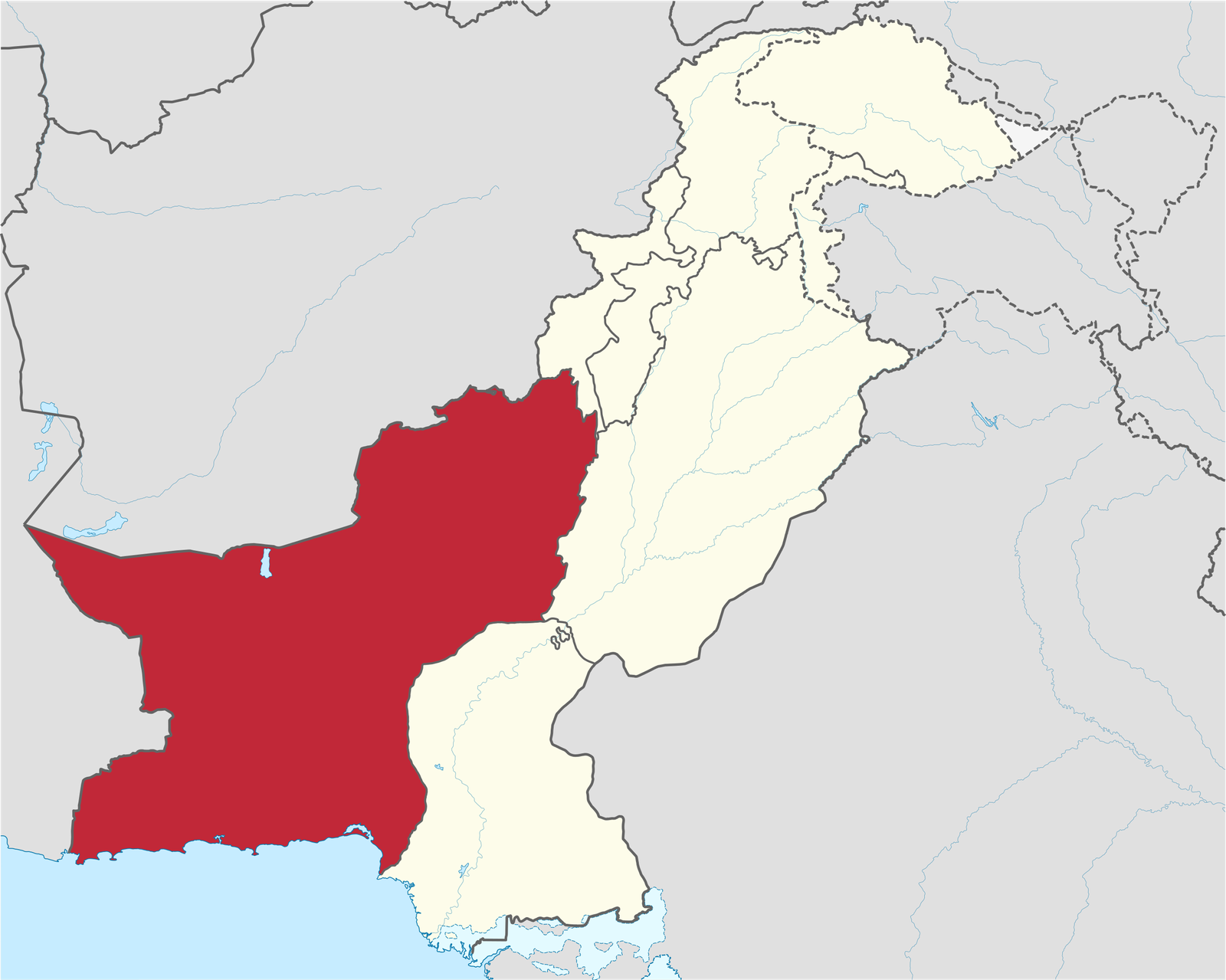
Begin with the human geography. Iran and the broader arc of Shia population concentration across the Middle East represents one of the most formidable irregular warfare environments on the planet. Iraq, Syria, Lebanon, Yemen, Bahrain, the eastern provinces of Saudi Arabia, western Afghanistan, and significant portions of Pakistan’s border regions together form a contiguous human terrain in which Iranian strategic influence runs deep, long, and is in many places indistinguishable from the local social fabric. These are not satellite relationships that can be severed by destroying a headquarters. They are relationships built across generations, through religious institutions, economic networks, family connections, and shared historical memory of resistance to outside intervention.
The Shia militia networks that Iran has cultivated, funded, trained, and in many cases ideologically shaped represent a combined fighting force that has been continuously battle-hardened across the Syrian civil war, the Iraqi counter-ISIS campaign, the Yemen conflict, and multiple Lebanese confrontations with Israel. These are not ceremonial forces. They are combat-experienced, highly motivated, geographically distributed, and operating in environments where they hold every local advantage over any invading conventional force. Hezbollah alone has more combat experience than most standing armies. The Iraqi Popular Mobilisation Forces have been tested in some of the most brutal urban warfare of the twenty-first century. The Houthi movement has fought the wealthiest Arab military coalition on earth to a standstill for a decade.
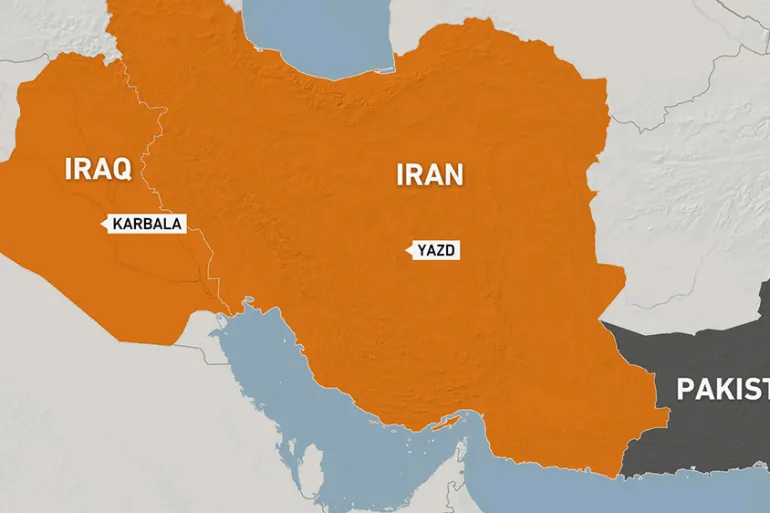
Now consider what ground invasion actually means in this environment. An American ground force entering Iran does not fight Iran. It fights Iran plus every militia network Tehran can activate across a geographic arc stretching from the Lebanese coast to the Pakistani border. Supply lines become targets. Forward operating bases become targets. Every checkpoint, every convoy, every military installation becomes a target in a theatre where the attacking force is always visible and the defending force is almost never visible until it chooses to be. The borders are porous by design, maintained by governments too weak or too ambivalent to seal them, and in several cases governed by administrations that have their own reasons not to cooperate fully with American operational requirements.
This is not theoretical. The United States spent twenty years in Afghanistan and Iraq learning precisely this lesson at extraordinary cost. The Iranian strategic calculus is built entirely on that lesson. Every American casualty in those conflicts was studied. Every tactical adaptation was noted. Every political pressure point that irregular warfare creates inside American domestic politics was carefully mapped. The Iranian regime’s survival strategy is not to defeat the United States militarily. It is to make the cost of staying so unbearable, so politically toxic, and so strategically unresolvable that American withdrawal becomes the only option a domestic audience will accept.
The air campaign changes this calculation very little from Iran’s perspective. Air strikes destroy infrastructure. They do not destroy will, they do not destroy distributed human networks, and they do not destroy the ideological conviction that sustains irregular resistance across multiple countries simultaneously. Iran can absorb air strikes and present the rubble to its own population and to the watching Muslim world as evidence of imperial aggression. That narrative recruits. Every destroyed building becomes a reason for another young man in Basra or Beirut or Sanaa to pick up a weapon.
A ground invasion converts that narrative into a total war of civilisational resistance, and Iran wins that war not by defeating American forces in pitched battle but by making the occupation of any Iranian territory the most expensive military commitment in American history, bleeding resources, lives, political capital, and global reputation simultaneously across a theatre that spans half a continent.
The rational American interest is to understand this trap before stepping into it. Air campaigns against specific military targets carry their own complications and regional consequences, but they do not trigger the full activation of Iran’s actual strategic arsenal, which is not missiles or drones but millions of battle-hardened human beings distributed across a geography that conventional military power cannot pacify at any price America is willing to pay.
Iran wants the ground invasion. It has prepared for the ground invasion. It has built its entire deterrence architecture around making the ground invasion so costly that it becomes a strategic defeat for the invader regardless of who holds the territory at the end.
The greatest military mistake America could make right now is to give Iran exactly what it wants.