
Mubashir Nadeem
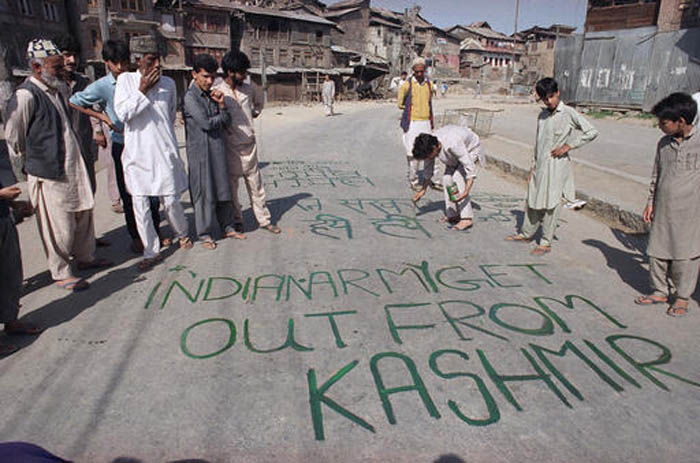
For over seven decades, the people of Jammu and Kashmir have endured one of the longest and bloodiest struggles for self-determination in modern history. Despite India’s persistent efforts to portray normalcy, the Kashmiris remain resolute in their quest for freedom. The recent elections in Indian-occupied Jammu and Kashmir (IIOJK) mark yet another chapter in India’s long-standing narrative of denial. Touted as a “festival of democracy,” these elections were anything but. Under the shadow of a million-strong military presence, with fortified polling stations and an atmosphere of fear, can this be called a democratic process? Or is it, as many Kashmiris view it, a mere puppet show to maintain the status quo of domination? As voter turnout plunged from 52.14% in 2014 to a mere 22.33% in key areas in 2024, it’s clear that the people of Kashmir are not deceived. Their boycott speaks louder than any ballot ever could.
By shifting demographics and redrawing boundaries, the Indian government blatantly attempts to reshape the political future of Jammu and Kashmir. But can consent be engineered where none exists? No amount of gerrymandering or proxy parties can obscure the fundamental truth: Kashmiris remain resolute in rejecting Indian rule. This so-called democratic process is a hollow exercise that serves only to reinforce the occupation. Democracy flourishes in environments of freedom, transparency, and genuine public participation. But how can democracy thrive in a region where nearly a million soldiers turn the voting process into a militarized spectacle? With reports of voter intimidation, arrests of dissenters, and restrictions on political gatherings, one must ask: is this an election, or an occupation? Yet, despite these oppressive tactics, the people of Kashmir remain steadfast. Their election boycott is a profound act of resistance, a rejection of a process they see as illegitimate and exploitative. It is not merely a response to the BJP’s political maneuvers, but a broader refusal to accept the entire framework of Indian rule. This defiance speaks to the heart of Kashmir’s struggle – a fight for self-determination that no staged election can erase.
India’s insistence on presenting these elections as evidence of progress stands in stark contrast to the reality on the ground. The militarization of Kashmir, where more than a million security personnel oversee the electoral process, creates an atmosphere of intimidation rather than freedom. Voters are coerced by fear, not conviction. Yet, despite this heavy-handed approach, Kashmiris continue to assert their right to determine their own future. The bloodshed, sacrifices, and silenced voices tell a story that no amount of political theatre can rewrite. Pakistan, for its part, has consistently supported the Kashmiri people’s right to self-determination, advocating for a peaceful resolution of the conflict in line with UN resolutions. Islamabad has called for international attention on India’s human rights abuses in the region, urging global powers to intervene and support a just solution. While India’s attempts to normalize the situation in Kashmir through staged elections continue, Pakistan remains a steadfast ally of the Kashmiri people, pushing for their voices to be heard on the world stage.
As the international community observes this facade of democracy, one thing is clear: India’s elections are a distraction from the real issue. The core of the Kashmir conflict lies in the people’s right to decide their own future, a right denied to them for decades. The UN and other global bodies have repeatedly recognized Kashmir as a disputed territory, yet meaningful action remains absent. Instead of addressing the root causes of the conflict, India has relied on suppression, staging elections to legitimize its occupation. But how long can the world continue to look away? In the face of these efforts, the resilience of the Kashmiri people remains unshaken. No amount of political manipulation can suppress their fight for freedom. Kashmiris reject India’s imposed version of democracy because they understand what true democracy entails – the right to choose their future without fear or coercion. The critical question now is whether the international community will continue to be complicit in this charade, or stand up for the principles of democracy and human rights. The world must recognize that Kashmir’s struggle for self-determination is far from over. The elections may attempt to obscure the truth, but the voices of Kashmir cannot be silenced, and their fight for justice continues.