
Mudassir Rizwan
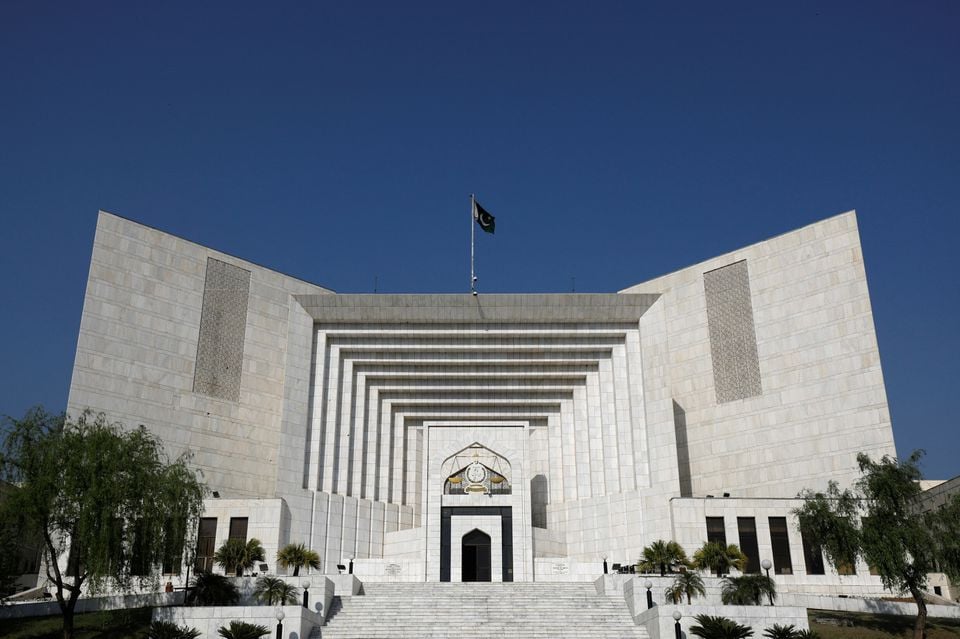
When Courts Must Teach Government How to Be an Employer It should not require a Supreme Court bench to explain to the government that it must behave as a responsible employer. Yet this is precisely what has happened. The court has been forced to spell out in explicit terms that administrative delays, bureaucratic inaction and internal inefficiencies cannot justify denying employees their promotions, service entitlements or fundamental employment rights. The very fact that such a reminder proved necessary reveals more about the pathetic state of public administration in Pakistan than about any groundbreaking legal principle.
The judgment written by Justice Ayesha A. Malik addressed a problem that is both familiar and deeply embedded in government functioning. An employee satisfied all eligibility criteria for promotion. Vacancies existed in the relevant grade. Yet the departmental promotion committee responsible for considering such cases was not convened for years. During this extended period the individual was repeatedly assigned duties on current charge basis, performing the responsibilities of a higher position without receiving the corresponding rank, pay, security or formal recognition. This practice is not some isolated anomaly. It represents standard operating procedure across vast stretches of Pakistan’s public sector.
The Supreme Court made clear that such behavior violates both law and basic principles of fairness. Promotion is not some discretionary gift bestowed by benevolent superiors. It flows from merit, demonstrated performance and the operational requirements of state institutions. Once an employee meets the eligibility conditions a legal duty arises to consider that case within a reasonable timeframe. If genuine obstacles prevent immediate action those obstacles must be documented in writing and properly explained. Silence, prolonged delay and bureaucratic drift cannot be treated as neutral administrative postures. They constitute failures of governance with real consequences for individuals and institutions.
The broader context surrounding this judgment matters considerably. Pakistan ranks poorly on international indicators measuring civil justice and government effectiveness. These rankings specifically highlight failures in timeliness and predictability when it comes to administrative decision making. Such international assessments are not merely exercises in external criticism designed to embarrass the country. They reflect concrete everyday realities experienced inside government departments where files accumulate dust for years, committees never actually meet and responsibility gets diffused across so many desks that genuine accountability becomes impossible to establish.
What makes this situation particularly disturbing is that none of these principles represents new or revolutionary thinking. The concept that the state should function as a fair, transparent and accountable employer has been embedded in service rules for decades. It appears in constitutional norms. Pakistan has endorsed it through various international commitments. Beyond legal obligations it simply reflects basic managerial logic that any competent organization would recognize. No institution can reasonably expect efficiency, dedication or integrity from its workforce if career progression operates arbitrarily, gets delayed indefinitely or becomes hostage to discretionary whims of individual officers.
The damage inflicted by this administrative culture accumulates over time in ways that steadily corrode institutional capacity. When promotions are treated as benefits to be withheld rather than processes to be managed according to clear rules, employee motivation inevitably erodes. Officers learn through bitter experience that performance matters far less than patience or personal proximity to power centers. Informal influence and connections fill the vacuum created by the absence of formal transparent processes. Over extended periods competence gets systematically crowded out by conformity. Institutions lose their capacity for self renewal as merit-based advancement gives way to other considerations entirely.
The systemic costs extend beyond individual injustice. A state that cannot manage its own personnel processes in a predictable rule-bound manner cannot credibly enforce discipline on its employees or demand results from its departments. Litigation becomes the default substitute for proper administration. Courts find themselves forced to resolve routine service matters that should have been settled internally years earlier through simple application of existing rules. This phenomenon burdens an already overloaded judicial system while transforming straightforward service issues into prolonged exhausting legal battles.
The Supreme Court’s emphasis on transparency and proper documentation therefore addresses a critical institutional need. When delays occur in promotion processes the reasons must be recorded in writing and individual responsibility must be fixed. Without such documentation institutional memory vanishes. The same failures repeat themselves endlessly across different departments and successive generations of officers. The widespread reliance on acting arrangements and current charge postings reflects a deep unwillingness among senior bureaucrats to take clear decisions that might expose past negligence or disturb entrenched hierarchies that benefit from opacity.
None of this dysfunction should require judicial intervention to correct. Any reasonably competent employer in the private sector understands that predictable promotion pathways and fair evaluation systems are essential to organizational health and productivity. When the state fails to apply this elementary logic to its own operations it undermines both its authority and its legitimacy in profound ways.
The court has fulfilled its constitutional role by clarifying applicable law and correcting a specific injustice. The burden now rests entirely with the executive branch. Timely promotion boards, enforceable timelines and internal accountability mechanisms are not ambitious reforms requiring years of study. They represent minimum requirements for functional administration. If government continues requiring judicial reminders to meet basic obligations as an employer the consequences will remain painfully self evident: demoralized workforces, weakened institutions and steady erosion of whatever governance capacity still exists.