The Kremlin issued a warning on Tuesday, stating that U.S. President Donald Trump’s latest pledge to provide additional military support to Ukraine and his threat to impose sanctions on Russia’s trading partners could embolden Kyiv and further derail already-stalled peace negotiations.
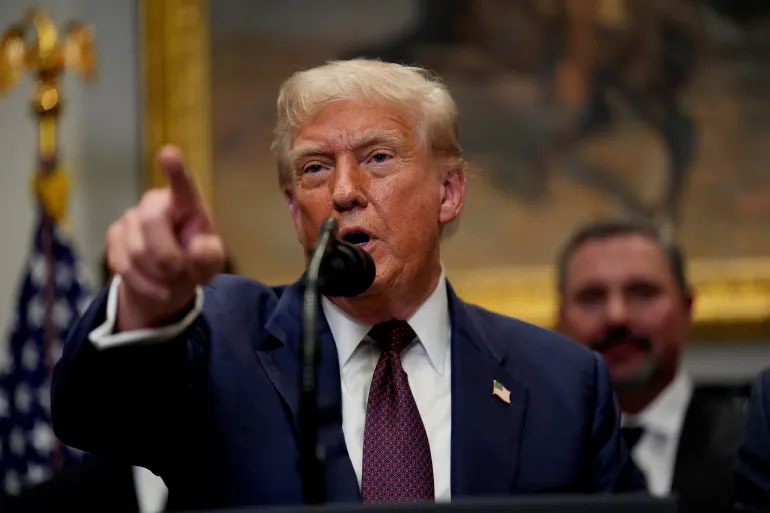
The reaction followed Trump’s announcement a day earlier, in which he gave Moscow a 50-day deadline to reach a peace agreement with Ukraine. Expressing growing frustration with the Kremlin, Trump outlined a new arrangement with NATO to supply Kyiv with fresh military assistance, backed by alliance members.
Although Trump previously played a role in pushing both Moscow and Kyiv toward negotiations aimed at ending the conflict—now entering its fourth year—Russia has continued rejecting calls for a ceasefire. In recent months, Moscow has intensified its attacks, launching record numbers of missile and drone strikes on Ukrainian targets.
Responding to the developments, Kremlin spokesperson Dmitry Peskov indicated that Moscow needed time to fully assess Trump’s remarks. However, he suggested that the statements were unlikely to create a favorable environment for negotiations.
“It appears that decisions taken in Washington, in NATO countries, and directly in Brussels, will be interpreted by Kyiv not as a signal for peace, but as encouragement to prolong the conflict,” Peskov said in the Kremlin’s first official reaction.
He added, “President Trump’s statement is a serious one. We certainly require time to analyze what was said.”
Trump also warned that failure to reach a peace agreement would prompt the U.S. to impose heavy tariffs on countries still trading with Russia—a move aimed at curtailing the Kremlin’s capacity to finance its war effort.
Despite facing a barrage of Western sanctions, Russia’s economy has remained resilient, bolstered by massive military spending and a strategic shift in energy exports toward countries such as China and India.
Meanwhile, two rounds of peace talks between Russia and Ukraine, held in Turkiye in recent months, have yielded little progress. Although large-scale prisoner swaps were achieved, the negotiations failed to bring the warring sides any closer to a ceasefire.