
Arshad Mahmood Awan
There is a brutal simplicity to how wars reshape economies. The bombs fall in one place, and the lights go out in another. That is precisely what is happening to Pakistan right now. As the United States and Israel wage war against Iran and the Strait of Hormuz convulses under the pressure of military confrontation, Pakistan, thousands of miles from the battlefield, is discovering once again how dangerously exposed it is to the fractures of the global energy order.
The immediate signal came quietly but ominously. Sui Northern Gas Pipelines Limited, Pakistan’s largest gas distributor, issued a notice to its industrial customers informing them it could no longer guarantee regasified LNG supplies to fertiliser plants from midnight on Wednesday. The company had received just five days’ notice from its own supplier, Pakistan State Oil, that disruptions were coming. Five days. That is how thin the margin is between normalcy and crisis when a country’s energy infrastructure is built on the assumption that the world’s most volatile waterway will remain open.
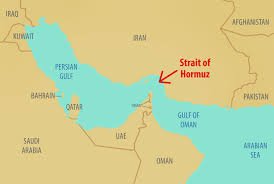
The Strait of Hormuz is not simply a geographic feature on a map. It is the jugular vein of global energy trade. Stretching just twenty-one miles at its narrowest point, with usable shipping lanes of only two miles in each direction, this sliver of water between Oman and Iran carries an extraordinary share of the world’s oil and liquefied natural gas. Qatar’s Ras Laffan, one of the largest LNG export facilities on the planet, sits effectively behind this chokepoint. When that strait is disrupted, the consequences do not stay in the Gulf. They travel outward, invisibly and rapidly, to every economy that has built its energy calculations around the assumption of uninterrupted flow. Pakistan is one of the most dependent of all.
The scale of the current disruption is being described by analysts as the most severe blow to global energy trade since Russia’s invasion of Ukraine in 2022. That comparison should arrest attention. The Ukraine war sent energy prices spiralling across Europe and beyond, triggering economic pain on a continental scale. What is happening now carries similar structural weight, and Pakistan enters this crisis in a position of well-documented fragility.
Four years ago, during the last major energy crunch, Pakistan was brought to its knees. The government could not afford spot LNG prices that had risen to levels entirely beyond its fiscal reach. The result was hours of daily power blackouts across the country, an energy crisis that compounded an already severe economic deterioration. The trauma of that period has not faded. Industries remember it. Households remember it. The government remembers it. And now, the same structural vulnerabilities are being exposed once more under similar external pressures.
The near-term arithmetic is not entirely catastrophic. For March, Pakistan has already received two LNG cargo shipments, and analysts believe any shortfall for the current month can be managed through a combination of domestic gas production and coal imports. The real danger lies ahead. As Evan Tan, an LNG analyst from commodities research group ICIS, has assessed, the shortfall in April and May could extend from half a shipment to as many as two or three full cargoes. That is a gap too large to paper over with domestic fixes. It is a gap that would, if unaddressed, ripple through the industrial sector with direct consequences for fertiliser production, manufacturing output, and ultimately, the livelihoods of millions.
The pricing dimension adds another layer of difficulty. Masanori Odaka, an analyst at Rystad Energy, has been blunt about Pakistan’s position in the global LNG spot market. Current spot prices, elevated by the crisis, are almost certainly beyond what Pakistan is prepared or able to pay. The country also carries the burden of a difficult payment history and a record of deferred obligations to suppliers, which weakens its negotiating position precisely when it needs leverage most. In a tight market, where buyers compete for limited cargoes, Pakistan is not the customer that sellers prioritise.
There is, however, an argument being made that the crisis contains within it an unexpected opportunity. Samiullah Tariq, head of research at Pakistan Kuwait Investment, has suggested that disruptions to Qatari LNG supplies could actually relieve Pakistan of expensive long-term purchase commitments it has struggled to honour financially. If cheaper alternatives, particularly imported coal, become viable substitutes in the short term, there is a case to be made that Pakistan could use this period to diversify away from its costly LNG dependency. Tariq has described this possibility as a blessing in disguise. The argument has merit in principle, though it demands that the government move quickly, competently, and with strategic clarity. None of those qualities have been reliably present in Pakistan’s energy policy management over the past decade.
What is already happening on the diplomatic front suggests the government understands the gravity of what it faces. Petroleum Minister Ali Pervaiz Malik has moved to engage Saudi Arabia directly, raising with Riyadh’s ambassador the possibility of rerouting oil supplies through the Red Sea port of Yanbu, bypassing the Strait of Hormuz entirely. This is a sensible contingency. Yanbu sits on the western coast of Saudi Arabia and is connected to the Kingdom’s eastern oil fields through an overland pipeline system. Whether Saudi Arabia can and will accommodate Pakistan’s request at the scale required remains to be seen, but the diplomatic outreach signals that Islamabad is not simply waiting for the storm to pass.
The deeper problem, however, cannot be resolved through emergency meetings or alternative shipping routes. Pakistan’s energy crisis is structural. It is the product of years of underinvestment in domestic energy capacity, an overreliance on imported fuels financed through arrangements the country can barely sustain, and a power sector riddled with circular debt and institutional dysfunction. Every external shock simply makes visible what has always been there.
The war in the Middle East did not create Pakistan’s energy vulnerability. It has merely illuminated it, with the same brutal clarity that wars always bring to the weaknesses nations prefer not to examine in peacetime.