
Tahir Maqsood Chheena
There is a particular ritual in Pakistani governance that recurs with such regularity it has become almost ceremonial. A crisis strikes, public anger rises, and the ruling class announces sacrifices. Ministers will forgo salaries. Official cars will be grounded. Government offices will hold fewer meetings, buy fewer air-conditioners, and pretend, for a season, that the age of austerity has finally arrived. Then the pressure subsides, the cameras move on, and everything quietly returns to what it was. Pakistan is currently performing this ritual once again, and the public, which has watched this production many times before, is not applauding.
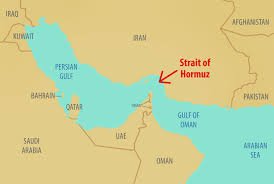
Prime Minister Shehbaz Sharif’s announcement of austerity measures in response to the fuel crisis triggered by the US-Israel war against Iran was, in its framing, a moment of apparent seriousness. The government seemed to be acknowledging that something had gone wrong, that ordinary Pakistanis were bearing the weight of a crisis not of their making, and that the state had an obligation to share the burden. The provinces followed the federal government’s lead. The language was urgent. The optics were carefully managed.
But language and optics are not policy. What was actually announced amounts to grounding sixty percent of official vehicles, trimming fuel allowances for a two-month period, suspending some government purchases, and asking ministers and legislators to temporarily waive their salaries. Temporarily. The word does considerable work in that sentence. A two-month salary waiver for a minister who draws multiple allowances, maintains a staff at public expense, travels in official convoys, and enjoys subsidised housing is not a sacrifice. It is arithmetic theatre. The numbers involved are negligible relative to the actual cost of running Pakistan’s bloated federal and provincial governments. The fiscal impact of these measures, if measured honestly, would be barely visible in the national accounts.
The announcement itself arrived only after the government faced a sharp public backlash against a steep hike in fuel prices. That sequencing matters. Austerity that is announced in response to public anger, rather than in anticipation of a genuine fiscal emergency, is not austerity. It is crisis management dressed in the language of responsibility. The distinction is not merely semantic. It reveals the government’s actual priorities: public perception first, fiscal reform somewhere much further down the list.
What makes this particular episode especially difficult to accept is the context in which it arrives. In the months leading up to this announcement, Prime Minister Sharif undertook a series of expensive foreign trips. The Punjab chief minister acquired new aircraft at considerable public cost. High-end vehicles were procured for senior bureaucrats. These were not quiet expenditures buried in line items. They were visible, discussed, and resented by a public that was simultaneously being told that Pakistan’s economic situation required careful management. The message those choices sent was unambiguous: the comforts of the ruling class are not subject to the same constraints being imposed on everyone else.
The State Bank of Pakistan has added its own sober note to this picture. In deciding to continue the pause on monetary easing, the SBP acknowledged that rising energy costs now threaten inflation, fiscal stability, and the country’s external balances. It warned that geopolitical tensions have significantly increased risks to the economic outlook, even as macroeconomic buffers are stronger than they were in 2022. That warning deserves to be read carefully. It means the current fuel crisis is not a brief disruption that will pass in a few weeks. Its consequences will feed through the economy in the form of higher transport costs, rising food prices, increased utility bills, and compressed household budgets for months to come.
Against that reality, the question that must be asked is a simple one. Will any of the announced austerity measures actually reduce the burden on ordinary citizens? The honest answer is no. Whether ministers attend official dinners or skip them does not change the price of petrol at a pump in Rawalpindi or Quetta. Whether government offices switch to teleconferencing does not reduce the transport fare that a daily wage worker in Karachi pays to get to his job. The measures are directed at managing the government’s public image, not at managing the genuine economic pain of the population.
True austerity, if that phrase is to mean anything at all, cannot be episodic. It cannot arrive with a sunset clause built into its design, quietly expiring once the immediate political pressure has been absorbed. It requires sustained, credible, and institutionalised limits on state expenditure. It requires a willingness by those who govern to permanently align their own consumption with the realities that most Pakistanis navigate every day. It requires transparency about what the state actually spends on sustaining the lifestyles of its political and bureaucratic elite, much of which operates well outside public scrutiny or any meaningful accountability mechanism.
Pakistan’s shadow economy is well documented. Less discussed, but equally real, is the shadow economy of government expenditure itself. The allowances, the protocol costs, the discretionary funds, the residential perquisites, the travel budgets, and the institutional expenses that sustain the comfortable existence of those at the top of the system rarely appear in the same conversations as austerity. They are treated as fixed costs of governance, immune from the belt-tightening that is invariably prescribed for everyone else.
A public that has watched this pattern repeat itself across multiple governments, multiple crises, and multiple austerity announcements is not a naive public. It understands the difference between a government that is genuinely reforming its own conduct and one that is performing reform for the cameras. It has learned to read the signs: the temporariness of the measures, the absence of structural change, the rapid return to business as usual once the immediate storm has passed.
The real question, then, is not whether austerity has been announced. It has been. The real question is whether anyone in power intends to actually live it, sustain it, and extend it into the structural reforms that Pakistan’s fiscal situation has required for decades. Until that question receives a credible answer, each new announcement of sacrifice will be received exactly as it deserves: with the weary scepticism of a people who have heard it all before.