Arshad Mahmood Awan
Pakistan’s automobile industry is standing at a decisive moment. After years of stagnation under a narrow set of manufacturers, the sector is now more diverse, more competitive, and more technologically updated than ever before. The two most recent auto policies — 2016-21 and 2021-26 — have clearly left their mark. Their incentives and regulatory pathways have opened the door for new entrants, pushing the number of automobile assemblers from the traditional three Japanese companies to nearly 13 operators. As a result, Pakistani consumers are now seeing 16 to 18 different brands on the road, with South Korean and Chinese manufacturers leading the wave of change.
This growth in variety has created a lively market for consumers. More than three dozen new car models have entered showrooms in the past year alone, most of them from Chinese companies. These models come equipped with modern features that were once rare in Pakistan — advanced infotainment systems, enhanced comfort, built-in safety sensors, and energy-efficient engines. For ordinary buyers, the choices are wider, the technology is better, and the comfort level is higher compared to what the industry historically offered.
However, this impressive expansion hides one uncomfortable reality: the market itself is not growing. Pakistan’s total auto-assembling capacity is around 500,000 units annually, yet last year only about 180,000 locally assembled cars were sold. Plants are being established, portfolios are expanding, and manufacturers are introducing more options — but the number of buyers is not keeping pace. Economic instability, high interest rates, and reduced purchasing power have shrunk the pool of potential car buyers. In this paradox, consumers enjoy diversity, but the industry struggles to achieve sustainable production volumes.
The most pressing challenge remains localisation. Even with multiple assemblers, the manufacturing of local parts has not taken off in a meaningful way. Auto-parts suppliers cannot achieve economies of scale when each model registers only a few thousand units annually. Without large-scale production of individual models, local component manufacturing becomes commercially unattractive. This bottleneck hurts the entire ecosystem, leaving Pakistan dependent on imported kits and completely built units.
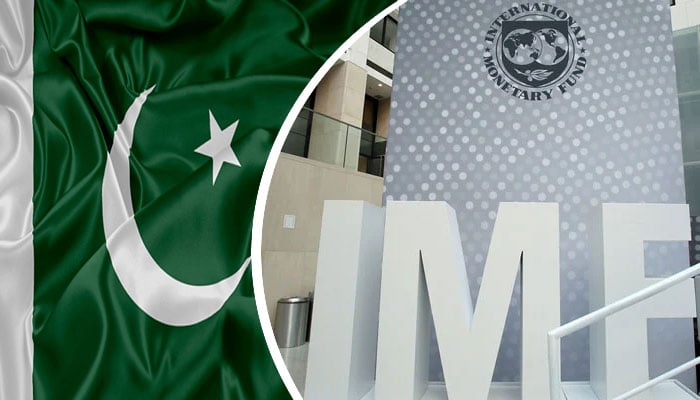
At the same time, the government is preparing the next major roadmap: Auto Policy 2026-31. It is being shaped under difficult circumstances. The International Monetary Fund is pressing Pakistan to reduce protectionist tariffs for local assemblers and to ease restrictions on used-car imports under the National Tariff Policy. Such reforms might create competitive pressure, but they will also weaken the fragile localisation base and make life harder for local assemblers trying to invest in the domestic market.
The government must now decide what direction it wants the automobile industry to take. Broadly, there are three policy paths. The first is to continue supporting local assemblers with tariff protections and incentives. The second is to liberalise imports of new cars in CBU form. The third is to fully open the door to used-car imports. Each path comes with trade-offs. But whichever direction the government chooses, what matters most is consistency. Industrial planning requires policies that last long enough for manufacturers to make investments and absorb risks.
A central area of confusion is the continued existence of outdated import schemes under “gift,” “baggage,” and “transfer of residence” categories. These schemes were originally intended for overseas Pakistanis bringing personal vehicles home. In reality, they have become a channel for commercial importers who misuse the rules. Payments are frequently routed through hundi and hawala systems, valuations are often inaccurate or manipulated, and under-invoicing remains common. Last year alone, 30,000 to 35,000 used cars entered Pakistan under these schemes. Today, monthly imports range from 3,000 to 4,000 cars. Such practices distort the market, undermine local manufacturers, and result in substantial revenue loss for the state.
The government has recently allowed the commercial import of used cars, but strangely, it has not abolished the old schemes. This creates an absurd overlap where two different sets of rules exist for the same type of vehicle. Under the new commercial framework, cars face a 40 percent regulatory duty and 55 percent customs duty. But under the old schemes, regulatory duty does not apply. This discrepancy makes the older routes far more attractive for importers and encourages continued misuse.
If used-car imports are to be allowed — and there are legitimate arguments in favour of giving consumers more choices — the system must be transparent. All imported cars should meet safety standards, and a credible valuation mechanism must be enforced. Anything less will continue harming local assemblers while failing to protect consumers.
Even if these schemes are reformed, weak governance makes enforcement uncertain. That is why the policy debate ultimately narrows to the choice between CBUs and CKDs. Localisation in CKD assembly is possible only when production volumes for individual models exceed significant thresholds. Pakistan briefly achieved this during FY18 when three Japanese models each crossed 40,000 units. In FY25, however, only one model reached this scale. Without high volumes, substantial localisation is impossible.
Today, with new models launching almost every month and no single brand expected to sell more than 10,000 units annually, localisation becomes even more impractical. Most Chinese models remain cheaper to import as fully built units (CBUs) than to assemble locally as CKDs, primarily due to packing and freight costs. CKD assembly survives only because of tariff protection, raising important questions about whether such protection still makes economic sense.
The strongest argument for CKD assembly is job creation — particularly in the auto-parts industry. Yet localising modern components requires high-tech investment and reliable production volumes, neither of which Pakistan currently offers. At the same time, older assemblers continue lobbying for higher duties on parts they claim to have localised, even though they already benefit from high tariff protection on critical components, including engine assemblies. If the new policy bows to these pressures, older models will gain an artificial cost advantage over newer, more technologically advanced entrants. Consumers will suffer, innovation will slow, and competition will weaken.
The government must now take stock of the entire sector. The auto industry needs clear direction, stable policies, and a level playing field. Pakistan must balance job creation, foreign-exchange savings, modernisation, and consumer welfare. Above all, it must avoid policies that create confusion or favour specific groups at the expense of the wider market. The goal should be simple: a fair, competitive auto sector that brings safe, high-tech, efficient, and affordable cars to the people of Pakistan.