
Zafar Iqbal
Pakistan’s latest Debt Policy Statement 2026, prepared under the Fiscal Responsibility and Debt Limitation (FRDL) Act for submission to the National Assembly, paints a stark picture of a country struggling to manage its finances. Once again, the statement underscores a worrying trend: fiscal rules, designed to impose discipline and restraint, are being treated as optional by successive governments.
In the fiscal year 2024-25, public debt surged past the statutory ceiling by a staggering Rs16.8 trillion, reaching 70.7 percent of GDP against the parliament-approved limit of 56 percent. In simple terms, Pakistan’s public debt exceeded legal limits by nearly 15 percent of GDP. This breach is not a one-off miscalculation but reflects a deep-rooted structural flaw: the government’s operating model prioritizes spending first, borrowing second, and retrofitting justifications afterward.
Under the FRDL Act, Parliament is supposed to play a role in overseeing fiscal discipline. In practice, it is often looped in only after the ceilings are breached. Meanwhile, the executive branch faces few, if any, immediate consequences for overstepping limits. The state continues to run on a consumption-driven model, heavily reliant on debt, and largely indifferent to enhancing the productive capacity of the economy.
The consequences of this approach are severe. Debt servicing now consumes roughly half of the federal budget, leaving little room for development expenditure. The Public Sector Development Programme (PSDP), meant to invest in infrastructure and growth, has been hollowed out, while taxes on citizens continue to rise, straining an already overburdened population.
A recent think tank report highlighted the magnitude of Pakistan’s debt crisis: over the last decade, from FY2015 to FY2025, public debt ballooned by 365 percent — from Rs17.3 trillion to Rs80.5 trillion. During the same period, debt servicing costs consistently outpaced revenue growth, leaving the country in a precarious position. More concerning is the fact that domestic debt servicing has emerged as the largest contributor to expenditure growth over the last three years, effectively crowding out investment in the productive economy.
Despite these alarming figures, the Finance Ministry continues to assure Parliament of its commitment to fiscal consolidation. The ministry promises to reduce debt through primary surpluses, lower fiscal deficits, and careful debt management. Yet, the Debt Policy Statement itself shows that core fiscal anchors are being breached: the federal fiscal deficit exceeded the parliament-approved ceiling by 2.7 percent of GDP. Claims of a near-term turnaround lack credibility when both debt and deficit limits are simultaneously violated.
Early indicators for FY2026 provide little reason for optimism. The Federal Board of Revenue (FBR) has already missed its revenue target for the July-January period by Rs347 billion. Meanwhile, the government is leaning heavily on financial engineering, seeking to ease immediate pressures by lengthening maturities, issuing more medium- and long-term debt, shifting toward fixed-rate instruments, and attracting new domestic and foreign investors, including through proposed Panda bonds.
While these measures may reduce short-term refinancing and interest rate risks, they do little to address the structural imbalance at the heart of Pakistan’s fiscal woes: a persistent gap between spending and revenue. Without correcting this, debt management merely postpones the inevitable reckoning.
The problem is not just numbers; it is a mindset embedded in governance. Departments routinely exceed allocated budgets, state spending favors consumption over investment, pension obligations continue to swell, and the bureaucracy remains bloated. As a result, borrowing is required not only to cover past debt but also to finance ongoing expenditures, creating a self-perpetuating cycle that undermines meaningful reform.
Breaking this cycle will require a fundamental shift in approach. Fiscal discipline cannot be achieved merely through debt instruments and clever accounting; it demands a government willing to prioritize productive investment, broaden the tax base, and rein in consumption-driven spending. It also requires strengthening institutional oversight so that legal limits are respected, not treated as advisory.
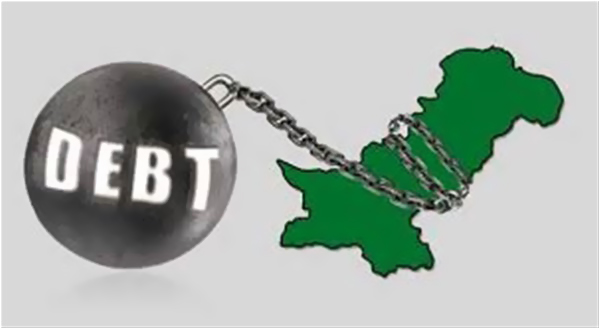
If these steps are not taken, Pakistan risks remaining trapped in a cycle of debt dependence. Each year, more of the budget will be absorbed by interest payments, leaving less for development, social programs, and investment in economic growth. The cost of inaction will not only be fiscal but social: higher taxes, reduced public services, and continued economic stagnation.
The Debt Policy Statement 2026 is more than a report on numbers; it is a mirror reflecting Pakistan’s governance challenges. The country’s fiscal framework is sound in principle, but the execution is severely lacking. Until spending culture, accountability mechanisms, and revenue generation are overhauled, Pakistan will continue to borrow, spend, and fall deeper into the debt trap — a cycle that undermines the very foundations of sustainable economic growth.
In short, Pakistan’s fiscal indiscipline is not a temporary setback but a structural problem. Unless policymakers confront it head-on, the nation will continue to pay a heavy price for its reliance on debt, while opportunities for productive investment and economic development slip further out of reach.