Zafar Iqbal
Pakistan’s economy is not in crisis because of bad luck. It is in crisis because of bad choices made repeatedly over decades, and because the people who make those choices have rarely faced the consequences of making them. The model has not changed. The faces change, the slogans change, the international partners change, but the underlying structure of how wealth is generated, distributed, and consumed in Pakistan remains essentially what it has always been. The result is predictable. A shrinking pie, more hands fighting over it, and the majority of the population standing outside the room entirely.
This is the core reality that Pakistan’s policymakers must confront honestly. Inequality is rising. Poverty is rising. The federal government’s fiscal position is deteriorating to the point where the word bankruptcy is no longer an exaggeration. Yet the urgency that this situation demands is absent from the policy conversation. There are speeches. There are slogans. There is rhetoric about export-led growth and social mobility and economic transformation. But between what is said at conferences and what is actually happening on the ground, the distance is vast.
The path forward is not a mystery. History has shown it clearly enough. Within a single generation, countries across Asia and elsewhere lifted millions of people out of poverty by creating genuine economic opportunities, primarily through export-led growth. They invested in their people, opened their economies to competition, reformed their public institutions, and built education systems that gave ordinary citizens a real chance at a better life. Pakistan knows this story. It has studied these examples. It has cited them in policy documents. What it has not done is implement the lessons with any seriousness or consistency.
The fiscal architecture of the country is part of the problem. Under Pakistan’s constitutional arrangement, significant fiscal power now rests with the provinces. That devolution had a legitimate purpose: to bring government closer to the people and make it more responsive. But in practice, the larger provinces have used their fiscal resources not to uplift their populations but to sustain bloated administrative structures and patronage networks. They spend lavishly on themselves. They resist devolving power further to the third tier of government, the municipal level, because doing so would reduce their own control. They have little incentive to expand their own tax bases, because taxing land, services, and agriculture within provincial domains would require confronting powerful constituencies that support the very parties in power.
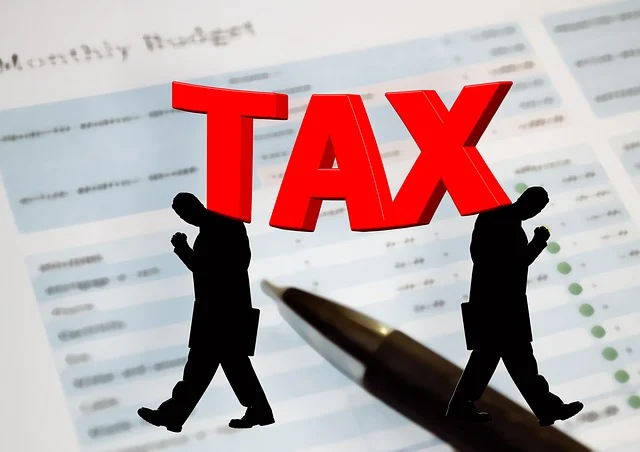
The numbers expose the scale of this failure. Punjab, Pakistan’s largest and most populous province, collects less in property-related taxes than a single major city across the border in India. Agricultural income tax remains a fraction of what it should be. Sales tax on services is similarly under-collected. Meanwhile, the burden of financing the state falls disproportionately on the federal government, which squeezes the formal sector while the informal economy and large landholdings remain largely outside the tax net. Manufacturing, the sector that should be driving export growth, is burdened with high taxation and energy costs that make it uncompetitive in international markets.
The energy sector is its own crisis within a crisis. Inefficiencies accumulated over years of mismanagement, circular debt, and politically motivated pricing decisions have created a debt burden that is actively eroding Pakistan’s industrial competitiveness. Exporters cannot compete globally when their energy costs are this high. The government must reduce its footprint in the sector, share the debt burden with the provinces, and allow market rationality to eventually restore some semblance of efficiency. This will be painful. But the alternative is to continue watching the export sector stagnate while the debt burden grows.
State-owned enterprises present a similar challenge. Pakistan International Airlines has been the most visible example of an attempt at privatisation, but the broader problem extends across dozens of enterprises that drain public resources year after year without delivering commensurate value. Cleaning up these entities and moving them out of government ownership is not an ideological preference. It is a fiscal necessity.
None of this structural adjustment will matter, however, unless Pakistan resolves the deeper problem of policy consistency. This is arguably the single greatest obstacle to investment in the country today. Foreign direct investment has nearly dried up. Local investment in export-oriented sectors shows few signs of revival. The reason is not hard to identify. Every change of government in Pakistan brings with it a dramatic reversal of policy priorities, often by a full one hundred and eighty degrees. Businesses that invested under one set of rules find those rules rewritten when a new administration arrives. Contracts are revisited. Agreements are questioned. The focus shifts from building the economy to weakening political opponents and the business groups associated with them.
This pattern has a cost that goes beyond any individual policy reversal. It destroys credibility. And without credibility, no amount of government reassurance or incentive scheme will bring serious long-term investment into the country. Investors, whether domestic or foreign, need to believe that the rules will remain stable long enough for their investments to generate returns. That belief does not currently exist in Pakistan. Restoring it requires not just better policies but a political culture that treats economic continuity as a national interest rather than a partisan variable.
There is one more structural weakness that deserves attention. Pakistan has become increasingly dependent on workers’ remittances to finance its trade deficit. Remittances have grown significantly and have provided short-term relief to the balance of payments. But this is not a path to structural economic development. Remittance income flows largely into consumption, which in turn drives up imports. The result is an illusion of external stability that masks the underlying failure to develop a productive, export-oriented industrial base. As long as Pakistan relies on money sent home by workers abroad to balance its external accounts, it is deferring the structural transformation that alone can deliver sustainable growth.
The reset that Pakistan needs is not cosmetic. It requires broadening the tax base across all tiers of government, empowering municipalities, rationalising energy costs, privatising state enterprises, reducing the size of the federal and provincial governments, and above all, establishing the policy consistency without which no serious economic renewal is possible. These are not new ideas. They have been on the table for years. The question is whether Pakistan’s leaders have the political will to implement them, or whether the cycle will simply continue until there is nothing left to manage.