
Mubashar Nadeem
There is a particular kind of national embarrassment that carries within it the seed of reform. It arrives not through internal conviction or moral awakening but through external pressure, the kind that attaches itself to economic consequences serious enough to compel action where decades of advocacy have produced nothing. Pakistan now finds itself at precisely such a juncture. The decision by the United States Trade Representative to place Pakistan among sixty countries under investigation for forced labour practices is a moment of public humiliation on the international stage. But humiliation, if it is taken seriously, can be a catalyst. Pakistan’s history suggests it rarely acts before the consequences of inaction become impossible to absorb. That moment may now have arrived.
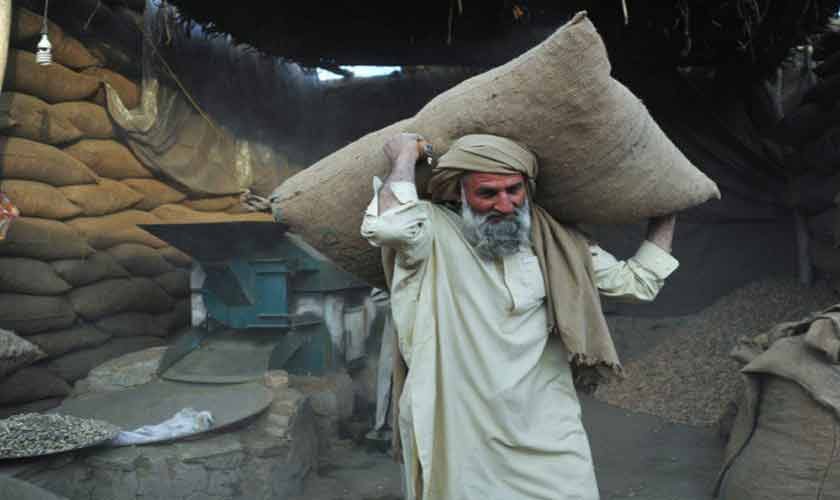
The investigation is not a surprise to anyone who has watched Pakistan’s labour rights landscape with honest eyes. Child labour and bonded labour have been features of the country’s economy for as long as the country has existed. Brick kilns, agricultural estates, domestic service, textile factories, carpet weaving, and a dozen other sectors have operated for generations on the exploitation of workers who have no meaningful legal protection and no practical recourse. The laws against these practices exist on paper. The Constitution prohibits bonded labour. Legislation against child labour has been on the books for decades. International conventions have been signed. Commitments have been made. And yet the practices persist, because the gap between what Pakistan’s law says and what Pakistan’s economy does has never been seriously addressed by those with the power to close it.
That gap persists for reasons that are structural and deliberate. Entry-level workers in Pakistan’s export industries represent a specific kind of vulnerability. They are typically above average in productivity relative to their cost, which makes them attractive to employers whose competitive advantage depends on suppressing wage bills. Exploitative hiring arrangements, including debt bondage, unpaid overtime, the use of child labour in supply chains, and systematic denial of workers’ rights to organise, are not random failures of oversight. They are rational economic choices made within a system that does not enforce the rules that would make those choices costly. Weak enforcement during periods of high labour demand, particularly in export-oriented sectors, is not coincidental. It reflects an implicit accommodation between regulatory authorities and industry that prioritises output and profit over the dignity and rights of the people doing the work.
The United States remains Pakistan’s largest single export destination. The bilateral trade relationship is not merely significant in economic terms. It is foundational to the viability of several of Pakistan’s most important industries, particularly textiles, which dominate the country’s export portfolio. If the Trade Representative’s office concludes that Pakistan is in violation of standards against forced labour, the consequences could be severe and swift. Sanctions and trade restrictions targeting Pakistani goods could result in the loss of billions of dollars in export earnings, damage that would cascade through supply chains, affect employment across the formal and informal sectors, and deepen the country’s already chronic foreign exchange pressures. The economic stakes are not abstract. They are existential for significant segments of Pakistani industry.
What makes this moment historically striking is the contrast it presents with everything that preceded it. Thousands of labour rights activists have spent careers, and some have spent their lives, attempting to compel the Pakistani state to protect its workers. They have documented abuses, filed petitions, approached courts, lobbied legislators, and built civil society organisations dedicated to the cause. Their work has produced some incremental gains, but the fundamental structures of exploitation have remained intact. The political will to confront powerful landowners, industrialists, and employers who benefit from cheap and coerced labour has simply not existed. Now, in a matter of weeks, an administrative decision in Washington has placed on the table consequences that three quarters of a century of domestic advocacy could not manufacture. It is a sobering reflection on the priorities of Pakistan’s political class that foreign economic pressure may accomplish what the suffering of Pakistani workers could not.
The remedial steps that the United States would likely require as conditions for continued market access are not technologically demanding or administratively complex. A transparent track-and-trace system for goods bound for the American market would allow verification that products have not been produced using forced or child labour at any point in the supply chain. Stronger enforcement of existing human trafficking laws would address the most severe abuses at the lower end of the labour market. Meaningful upholding of labour rights, including the right to organise, collective bargaining, and safe working conditions, would bring Pakistan into compliance with international standards it has already formally endorsed.
Regular workplace inspections and basic recordkeeping and data sharing by employers would together satisfy the core requirements of any compliance framework. These are not extraordinary interventions. They are the routine instruments of labour governance in any country that takes its obligations to workers seriously. The cost of implementation is real but manageable, particularly when weighed against the cost of losing access to the American market. And the benefits would flow not only to Pakistani exporters seeking to retain their most important trading relationship, but to the millions of Pakistani workers who would find their conditions improved as a direct result.
Here lies the deeper lesson and the deeper irony. Pakistan does not lack the legislative framework to protect its workers. The laws exist. The constitutional provisions are clear. The international commitments are on record. What has been absent is the political will to enforce them, a will that has consistently yielded to the interests of those who profit from exploitation. If American trade pressure now supplies that will where moral obligation and domestic advocacy could not, then the embarrassment of this investigation will have served a purpose that transcends the bilateral trade relationship.
Pakistan’s leaders have a pattern of doing the right thing, but only when the alternative has become too costly to sustain. The cost has now been named. The choice is clear. Enforce the laws that already exist, protect the workers who have long deserved protection, and build a labour governance system worthy of a country that presents itself as a serious actor in the global economy. The moment for that choice is now.
The Republic Policy book The Bureaucratic Coup is available at vanguard books LHR, ISB and across Pakistan.
PL contact at
+92 300 9552542